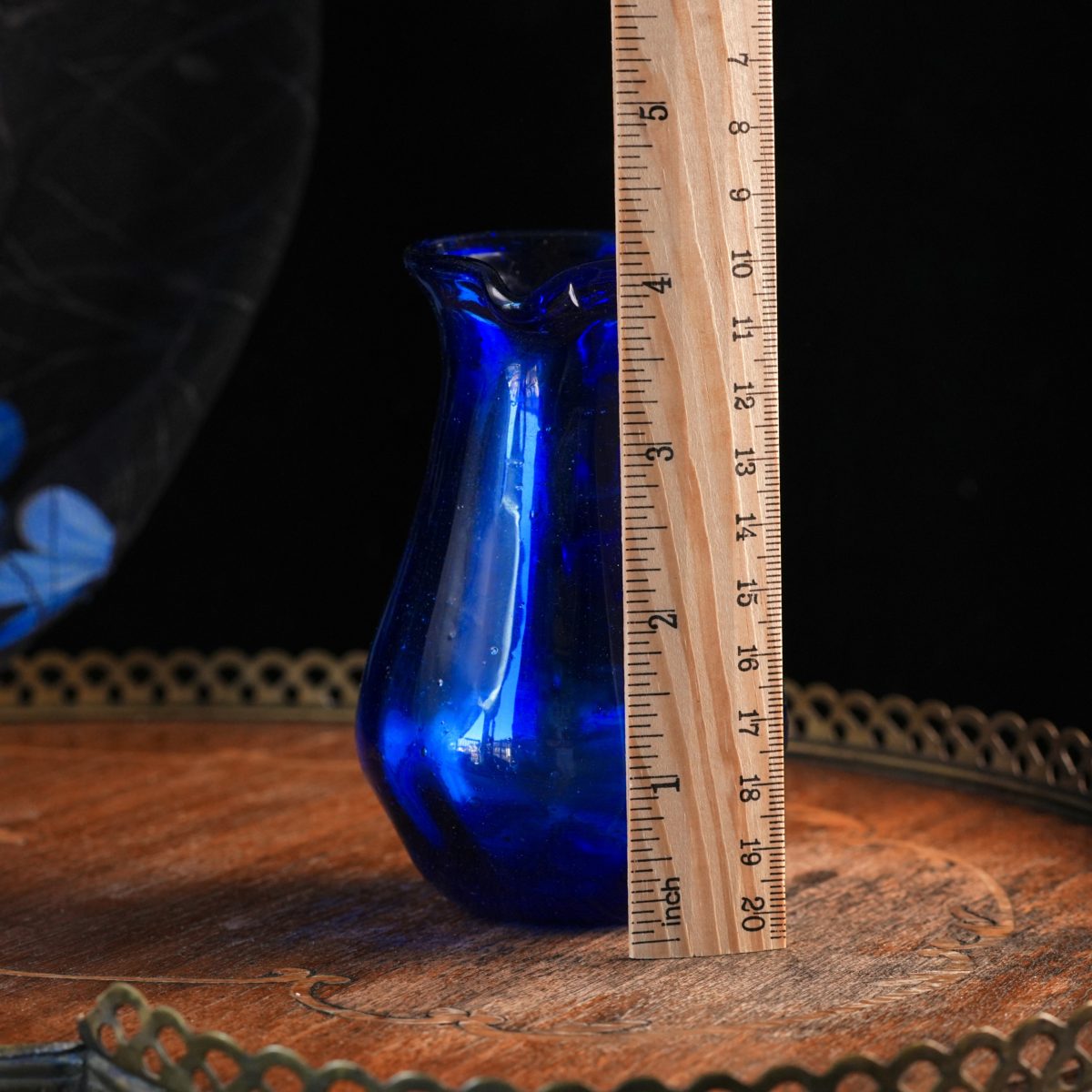
Vintage Hand Blown Cobalt Blue Glass Cream Jug – Rough Pontil Base, Seed Bubbles, Applied Handle, Pinched Spout, Small Pitcher, Early 1900s
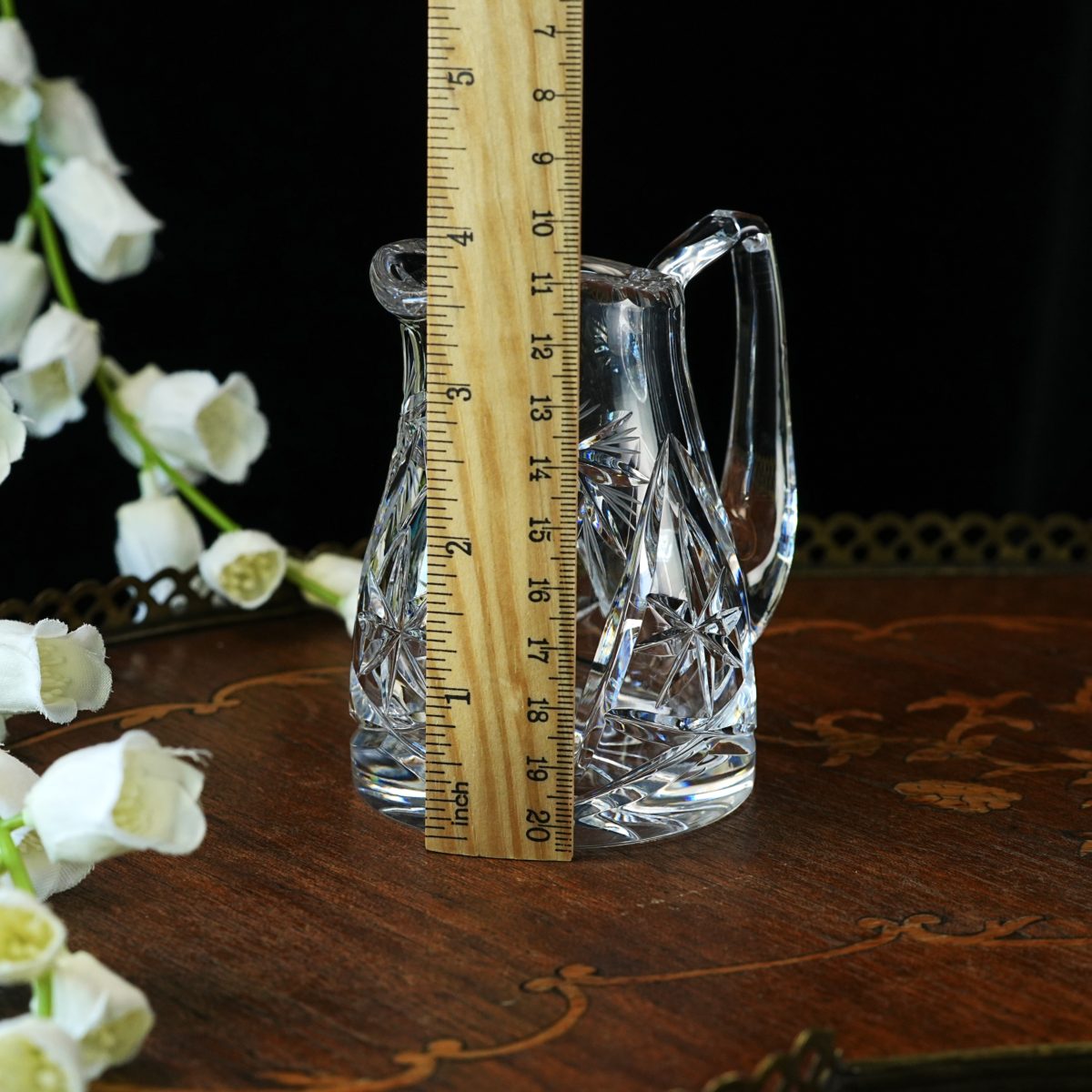
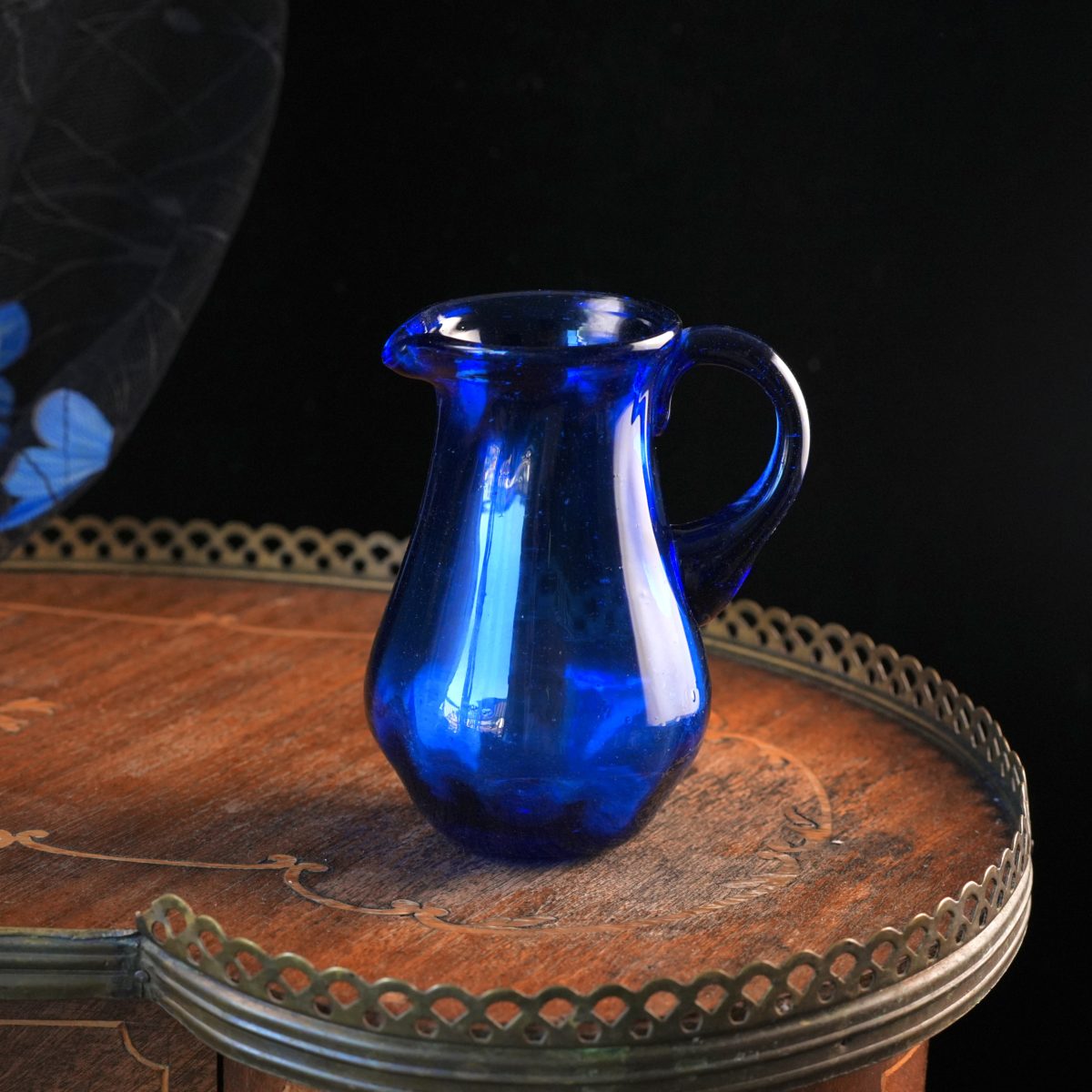
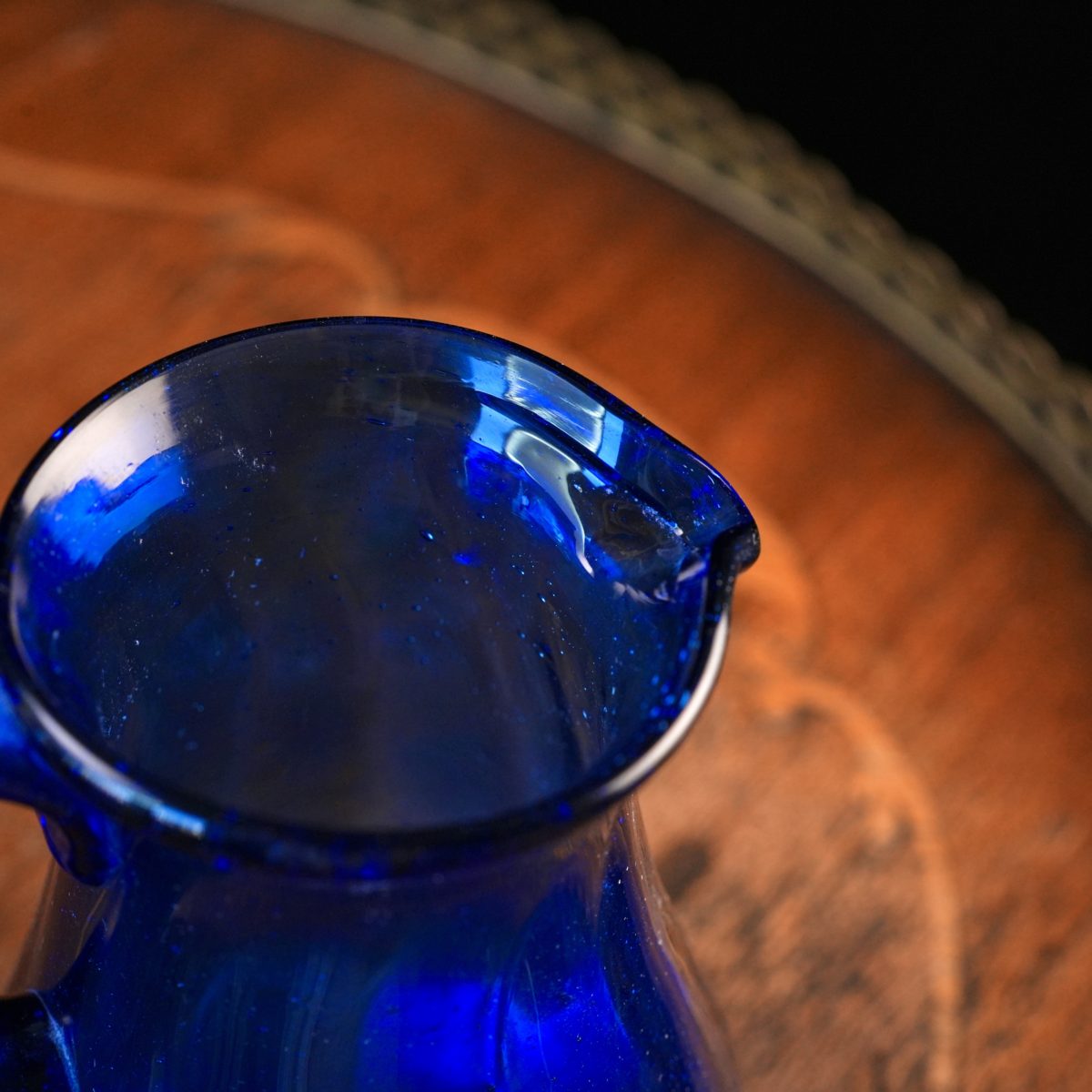
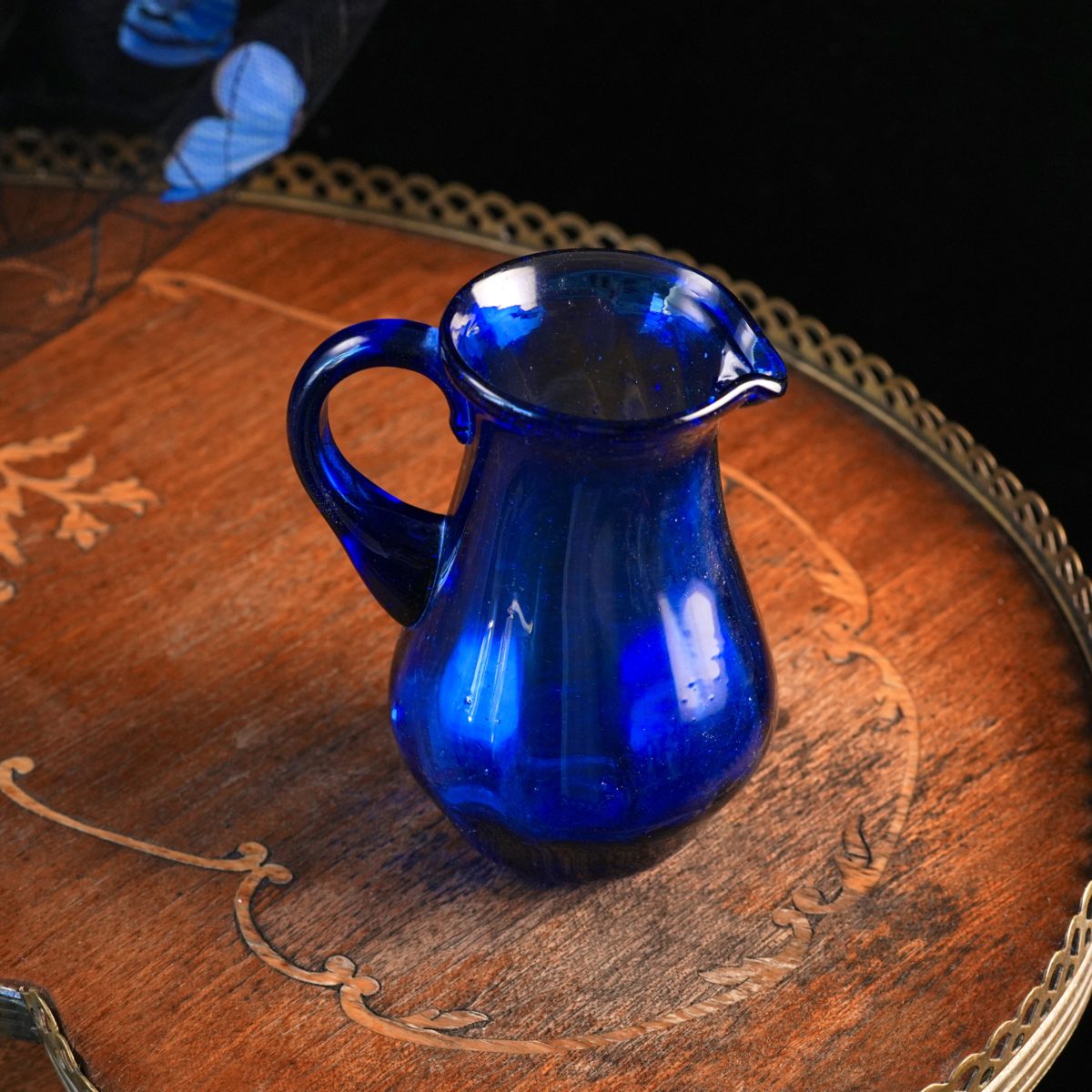
AvailableA small cobalt jug in hand-blown glass, just over four inches tall. The body swells and draws in to a flared neck, the rim pinched into a lip on one side and a handle applied to the other. The blue reads almost black where the glass is thick, clear where it thins. It holds a single stem, or a little cream.
Turn it over and the story is on the base: a rough circular scar, sharp-edged and unground, with a raised nub at the centre — a pontil mark. To finish the rim the blower reversed the piece onto a solid iron rod, then knocked the rod away. A moulded jug has a flat base or a seam, and a finer blown one has the scar ground off. Left rough, it marks the jug as blown by hand.
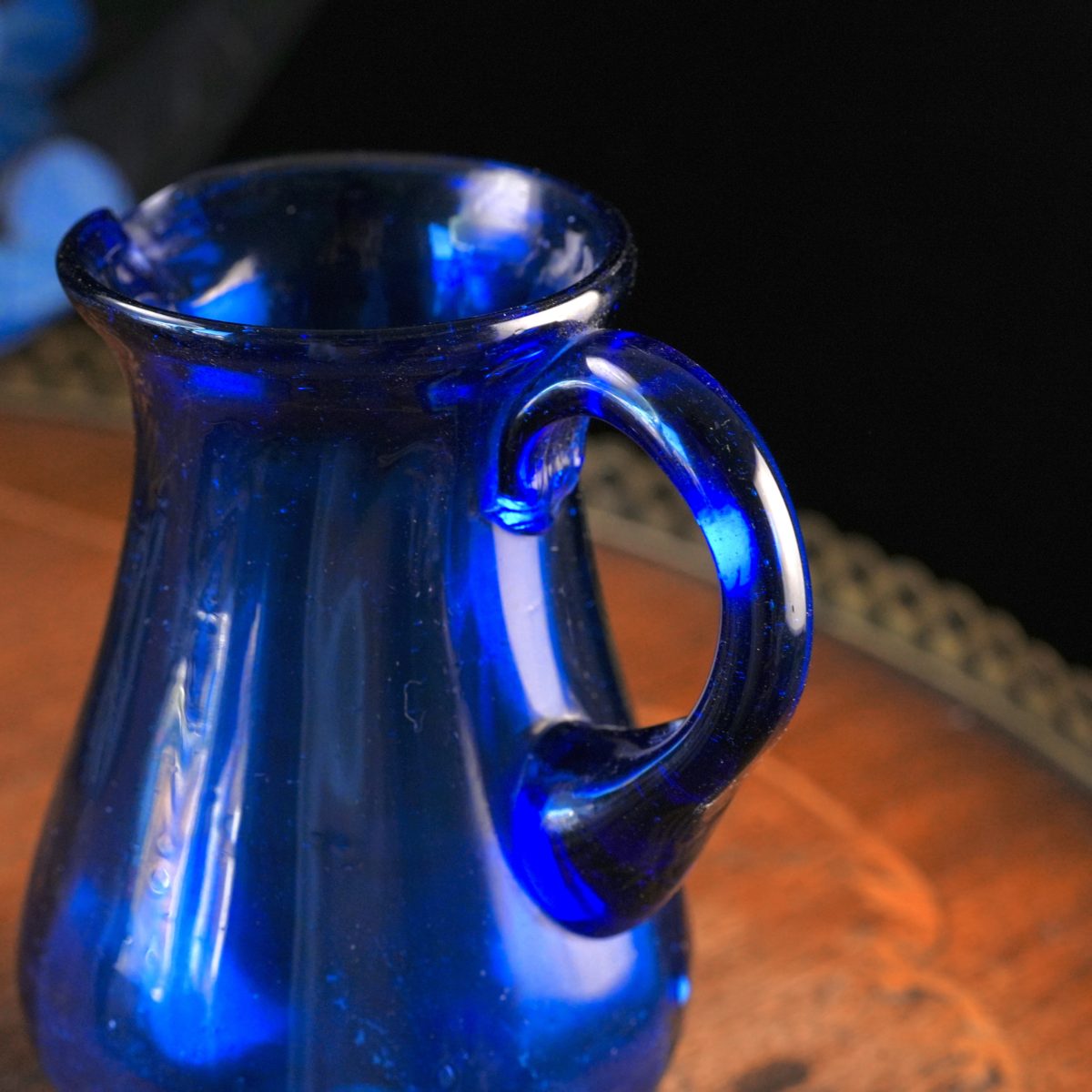
Two other things agree. The glass carries seed bubbles throughout, from a pot furnace never hot enough for long enough to drive them out. The handle was applied — laid on as a separate trail, pulled to shape while hot, pressed flat at the shoulder and drawn to a tail below.
Somewhere between the nineteenth century and the middle of the twentieth. Glass of this kind was almost never marked, and this piece carries none, so the age comes from the making: blown by hand at a small pot furnace rather than pressed out by machine. Any narrower date would be a guess.
No name, and in glass that is usual — porcelain has a flat foot to print on, a blown jug has only a scar. The cobalt goes a long way: a few parts per thousand of the oxide colour a whole batch, and it will not fade in a window. The bubbles the furnace left are the surest sign of hand work in glass.
Details
- Type
- Small jug / cream pitcher
- Maker
- Unmarked — no maker's mark or country of origin
- Era
- Hand-blown; twentieth century or earlier, by the making rather than any mark
- Material
- Cobalt blue glass, free-blown
- Shape
- Swelling body with a flared neck, pinched pouring lip, applied handle
- Size
- 4.25" / 10.8 cm tall
- Making marks
- Rough unground pontil scar to the base; seed bubbles throughout; applied handle with pressed upper join and drawn tail
Backstamp & Pattern
- Maker
- Unmarked — no maker's mark or country of origin
- Era
- Hand-blown; twentieth century or earlier, by the making rather than any mark
The base carries the maker's printed mark; the wording — especially “England” versus “Made in England” versus “Bone China” — together with any pattern or registration number are the main clues to its age.
Read the full backstamp & pattern guide → How to date English china →