Antique Meissen Porcelain Golden Oriole Bird Figurine – Kandler Model 820, Hand Painted, Applied Flowers, Crossed Swords, Germany 1891-1918
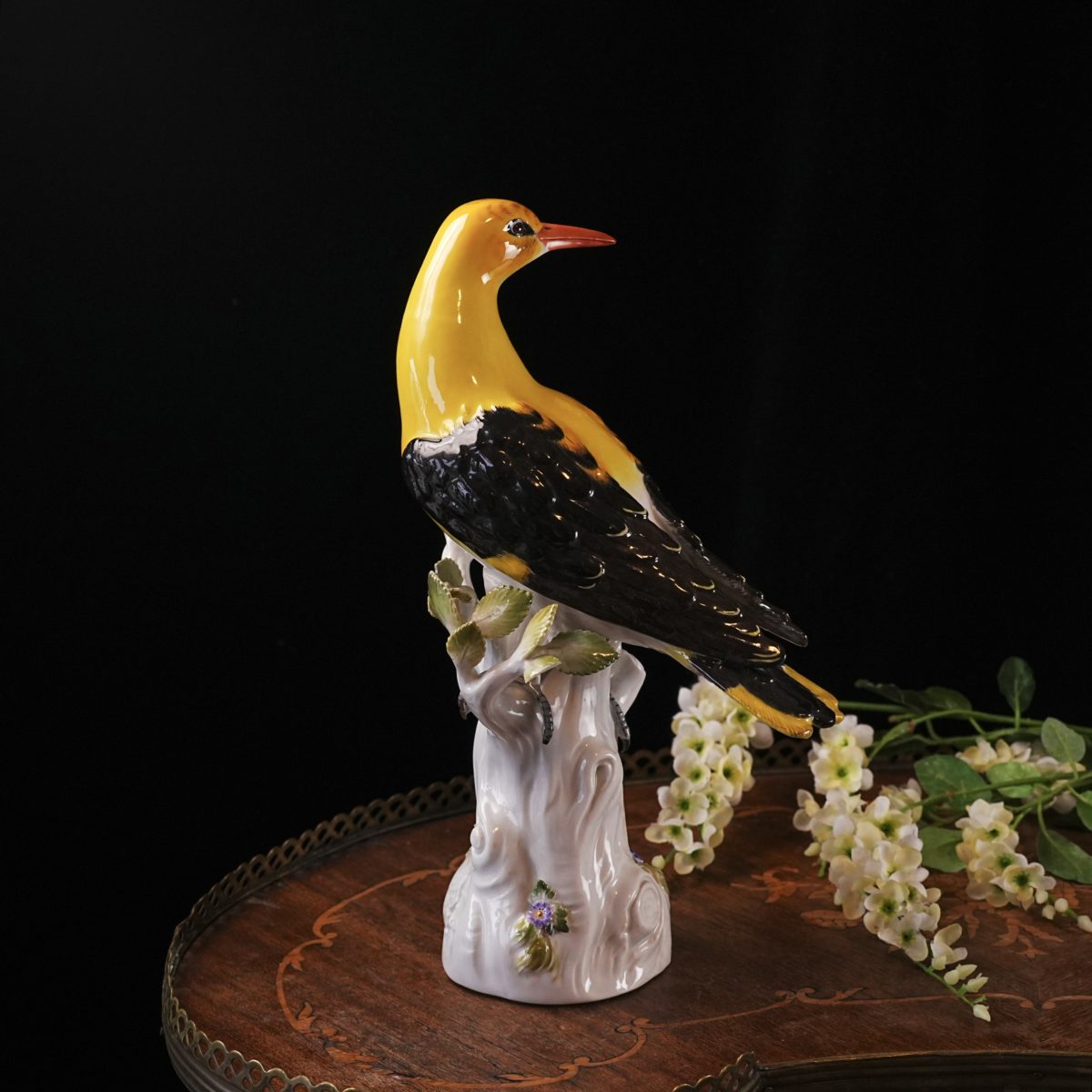
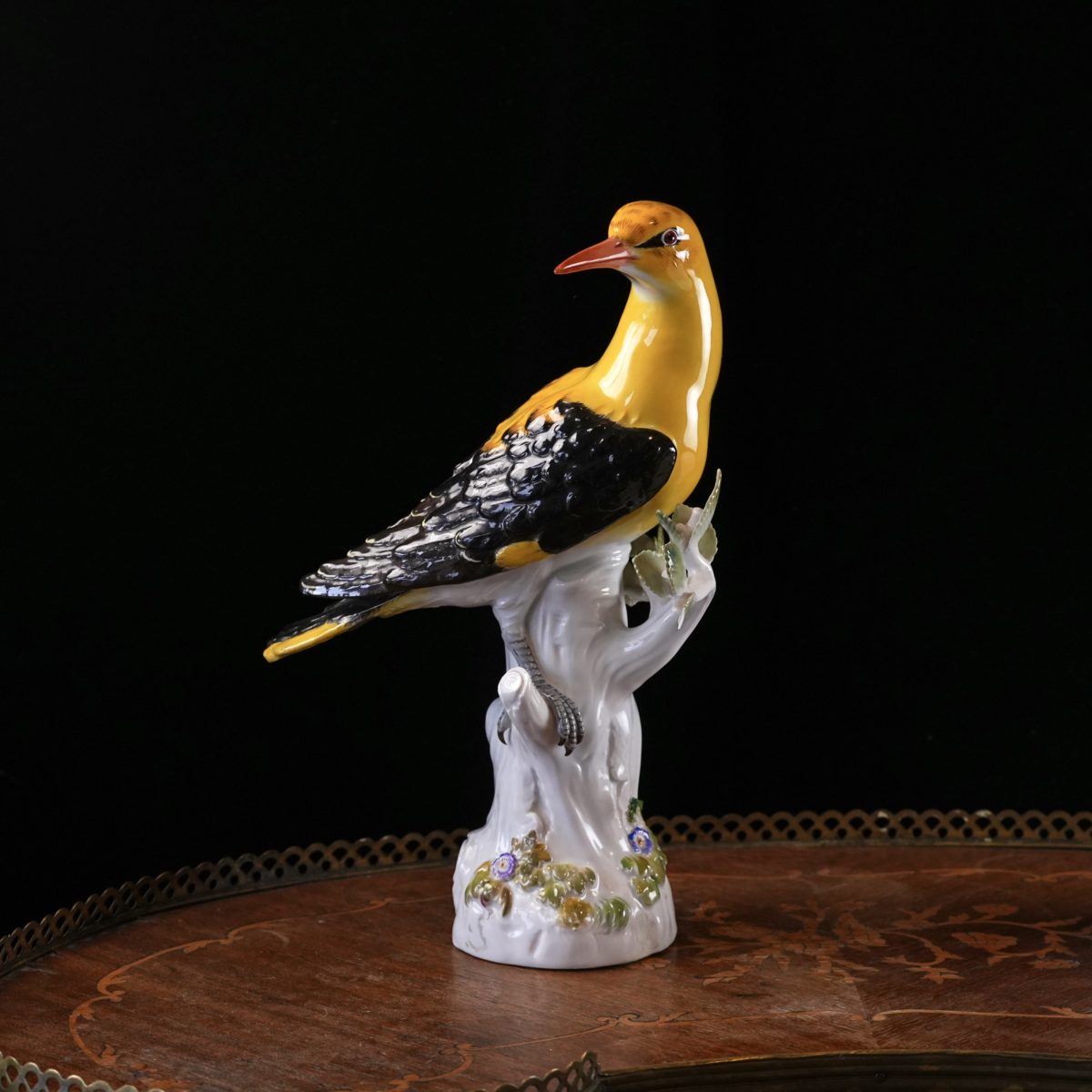
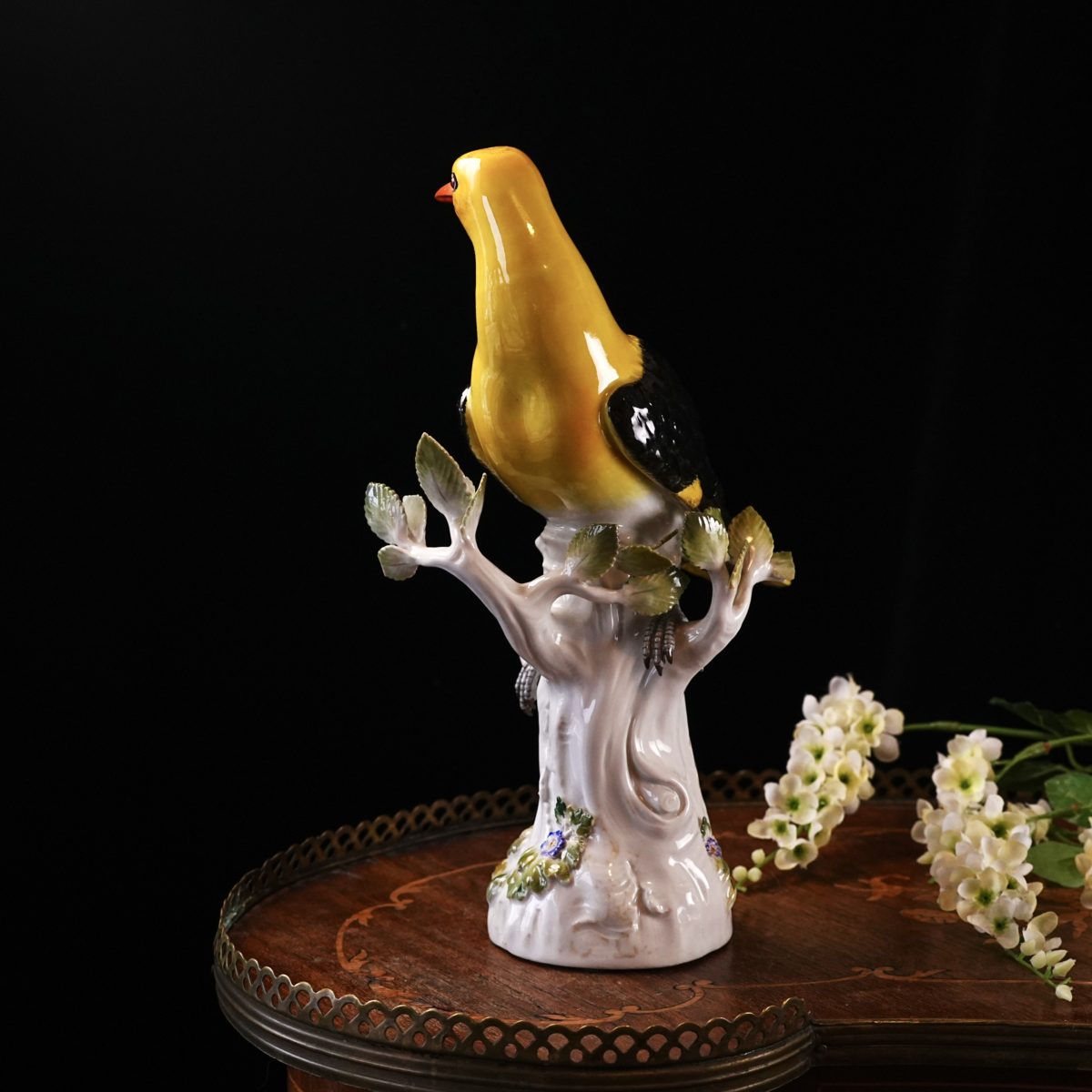
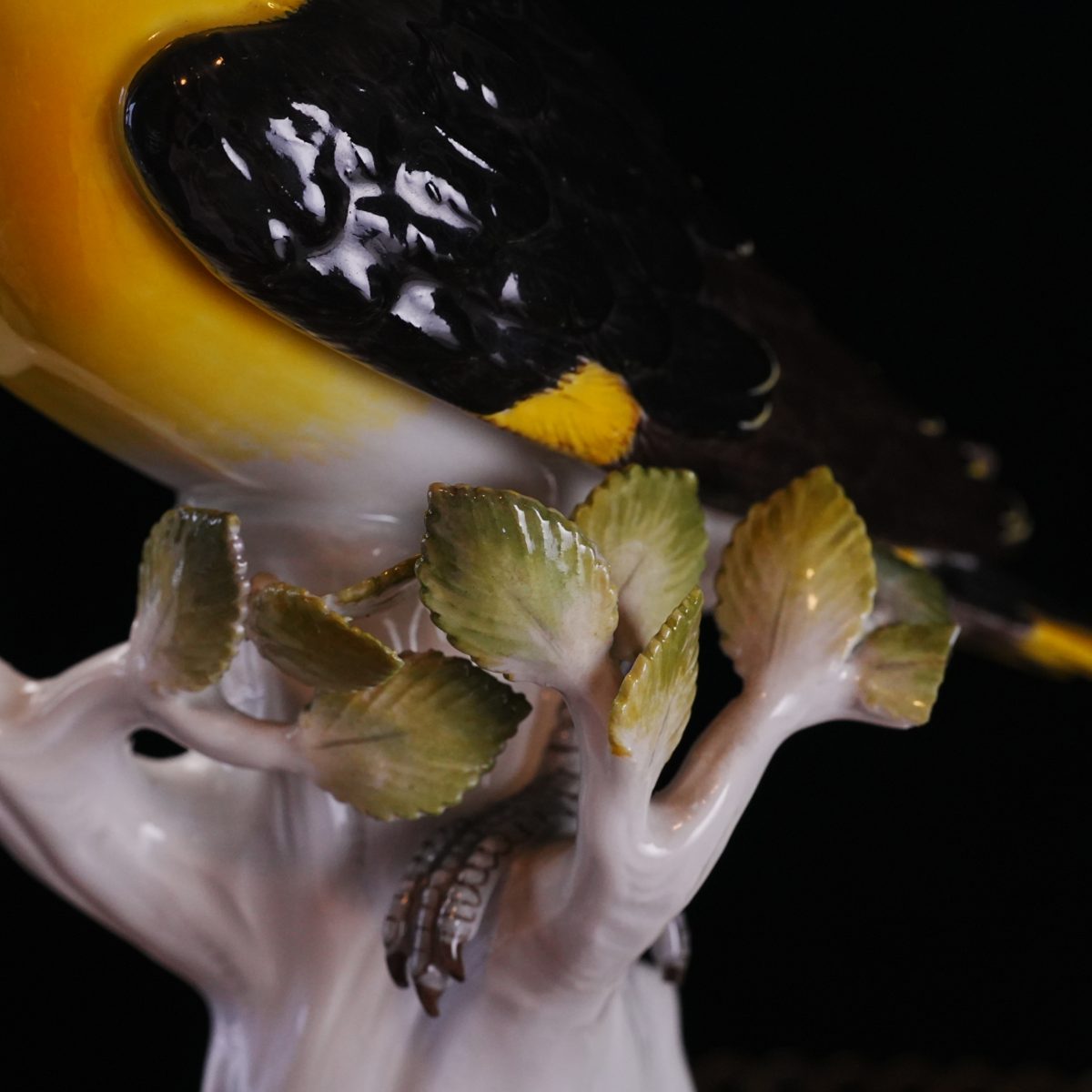
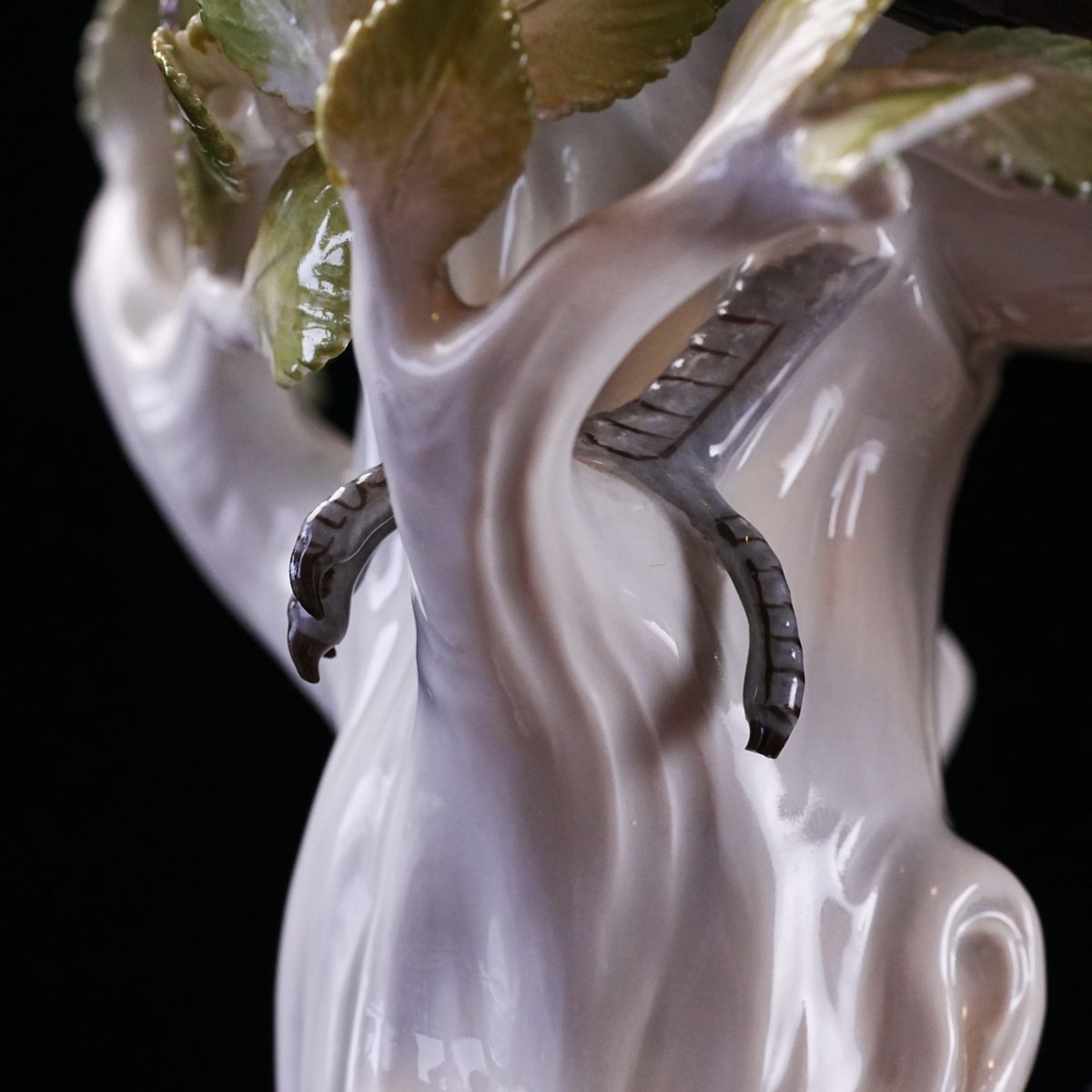
AvailableA Meissen golden oriole — Pirol in the factory's records — caught mid-song on a bare porcelain tree stump, cast between 1891 and the First World War from a model nearly three centuries old. The model was born in Augustus the Strong's porcelain menagerie for the Japanese Palace in Dresden, the project that made Johann Joachim Kändler the century's defining porcelain modeller; his associate Johann Gottlieb Ehder refined the oriole around 1740–41, and it entered the catalogue as model 820 — the number still impressed in this base. The modelling rewards a close look: wings built up feather by feather, each primary separated and its central shaft defined; the shoulder passing from amber into black in layered strokes rather than a painted line; fine plume markings over the head, a sharp red eye above the coral beak, toes separately articulated around the stump. The applied foliage at the base — each leaf and blossom moulded on its own and fixed before firing — is the fussy, fragile work that most readily betrays a careless reproduction; here it is original to the piece.
The underside reads almost to the decade. The crossed swords in underglaze cobalt carry no cancellation strokes, so the piece left the factory as first quality (Erste Wahl); the bare word "Germany" — without "Made in" — is the export marking American tariff law required from 1891 until about the First World War, and does most of the dating; the impressed 820 names the model, and an impressed 290 records the decorator — bookkeeping genuine Meissen kept meticulously and forgers rarely trouble to imitate.
Eighteenth-century castings of Meissen's menagerie birds sit in the great museums, the Metropolitan among them; this one belongs to the generation the pre-war workshops still cast by hand, at full command of their craft. Read together, the marks make it a dated, attributable, first-quality document of the factory that invented European porcelain — and a bird that holds its flash of gold in the leaves for as long as you care to look.
Details
- Type
- Large porcelain bird figurine
- Maker
- Meissen (Staatliche Porzellan-Manufaktur), Germany
- Era
- 1891–1918, by the export mark and crossed swords
- Subject
- Golden oriole (Oriolus oriolus), model 820, after J. J. Kändler, refined by J. G. Ehder c. 1740–41
- Modeling
- Hand-assembled hard-paste porcelain; individually sculpted wing feathers; applied leaves and blossoms at the base; firing vent at centre
- Painting
- Polychrome enamels — golden-yellow body, black wings with amber feather-edging, red-orange beak, red eye, scaled claws
- Size
- ~10.5–11" / 27–28 cm tall; base ~3.5" / 9 cm across
- Material
- Hard-paste porcelain
- Markings
- Underglaze blue crossed swords with no cancellation strokes (first quality); blue "Germany" export stamp; impressed model number 820; impressed painter's number 290
Backstamp & Pattern
- Maker
- Meissen (Staatliche Porzellan-Manufaktur), Germany
- Era
- 1891–1918, by the export mark and crossed swords
- Mark on base
- Underglaze blue crossed swords with no cancellation strokes (first quality); blue "Germany" export stamp; impressed model number 820; impressed painter's number 290
Meissen's crossed swords, painted in underglaze blue since the 1720s; an uncancelled mark means first quality, and an export word such as “Germany” helps date it (c. 1891–1918).
Read about this maker’s marks in the guide → How to date English china →