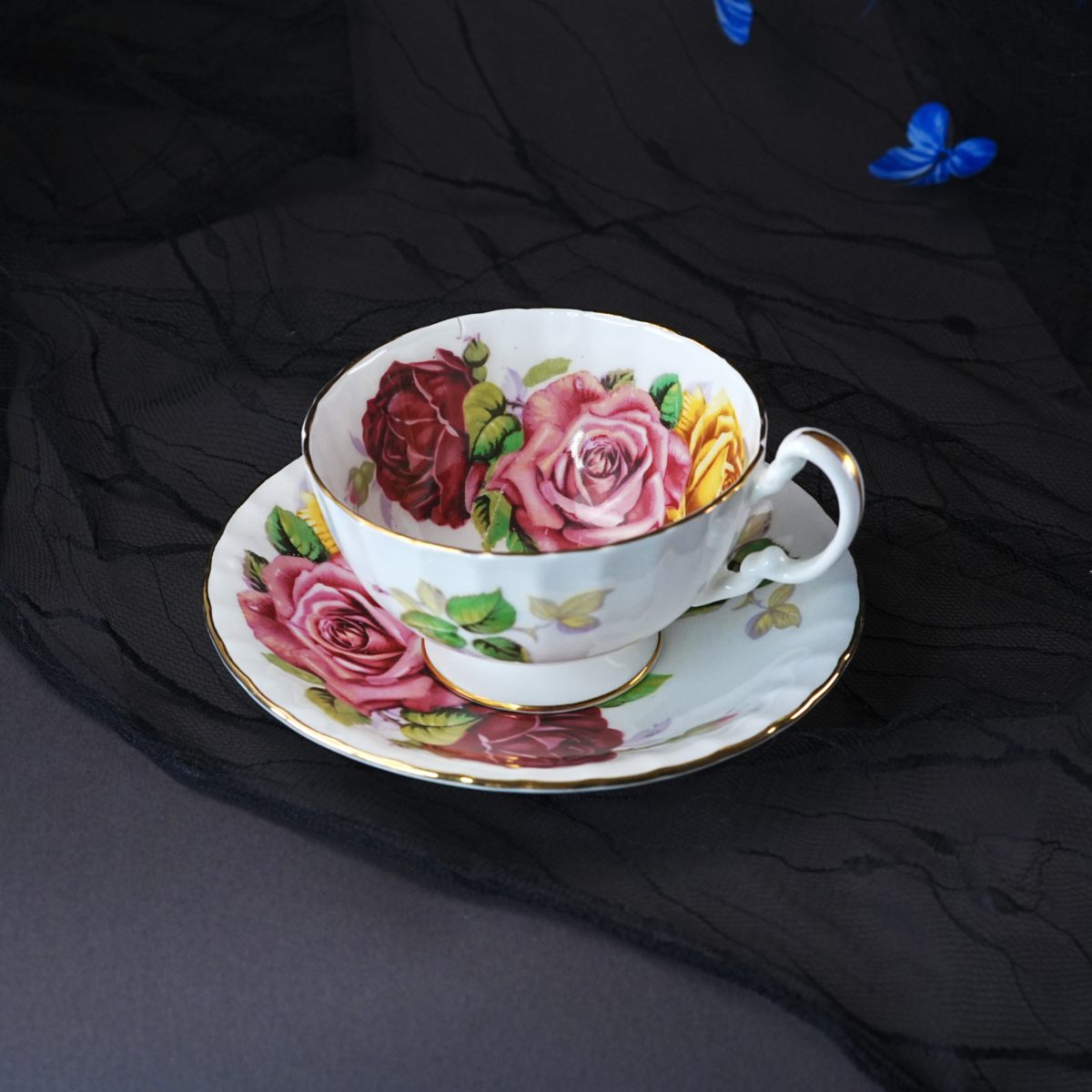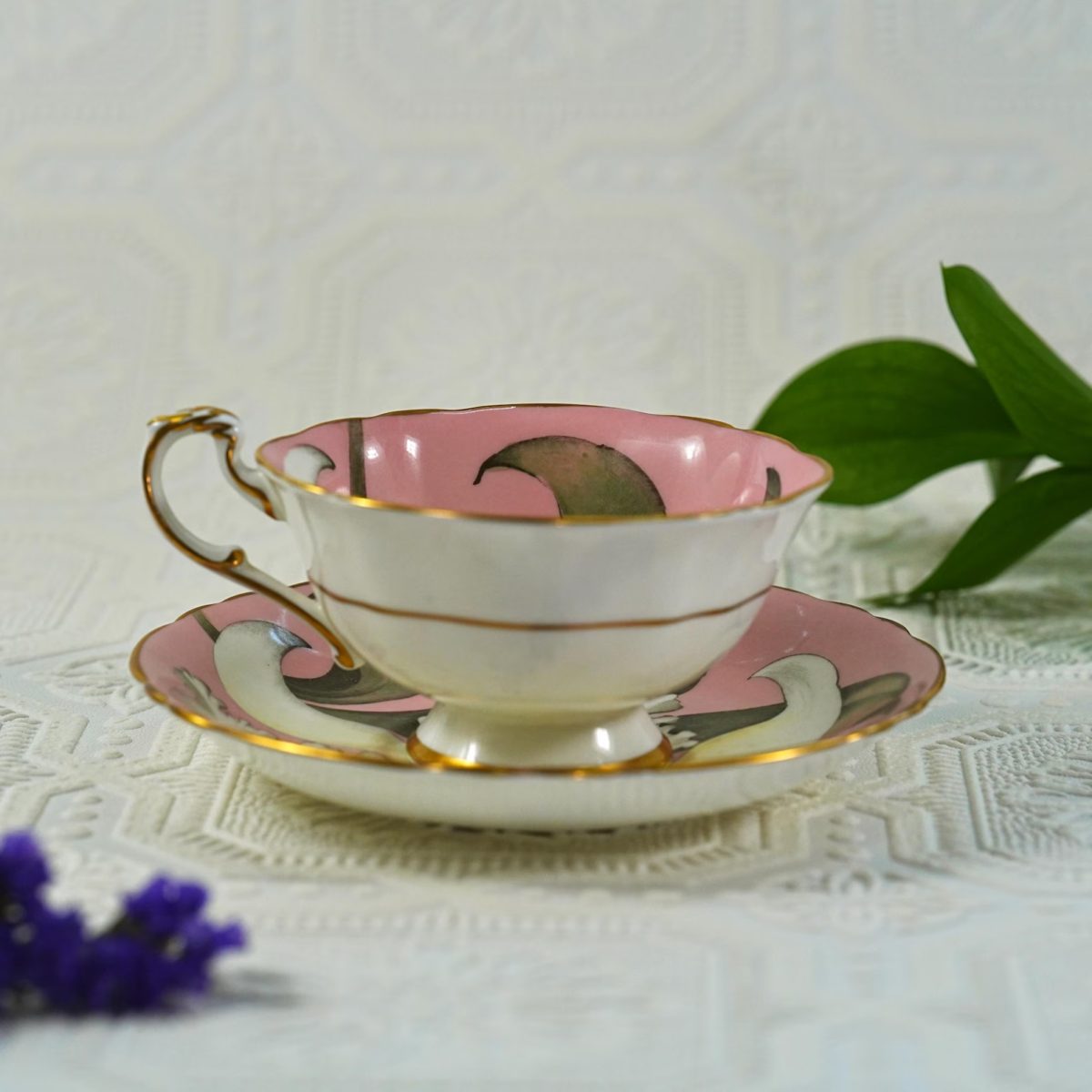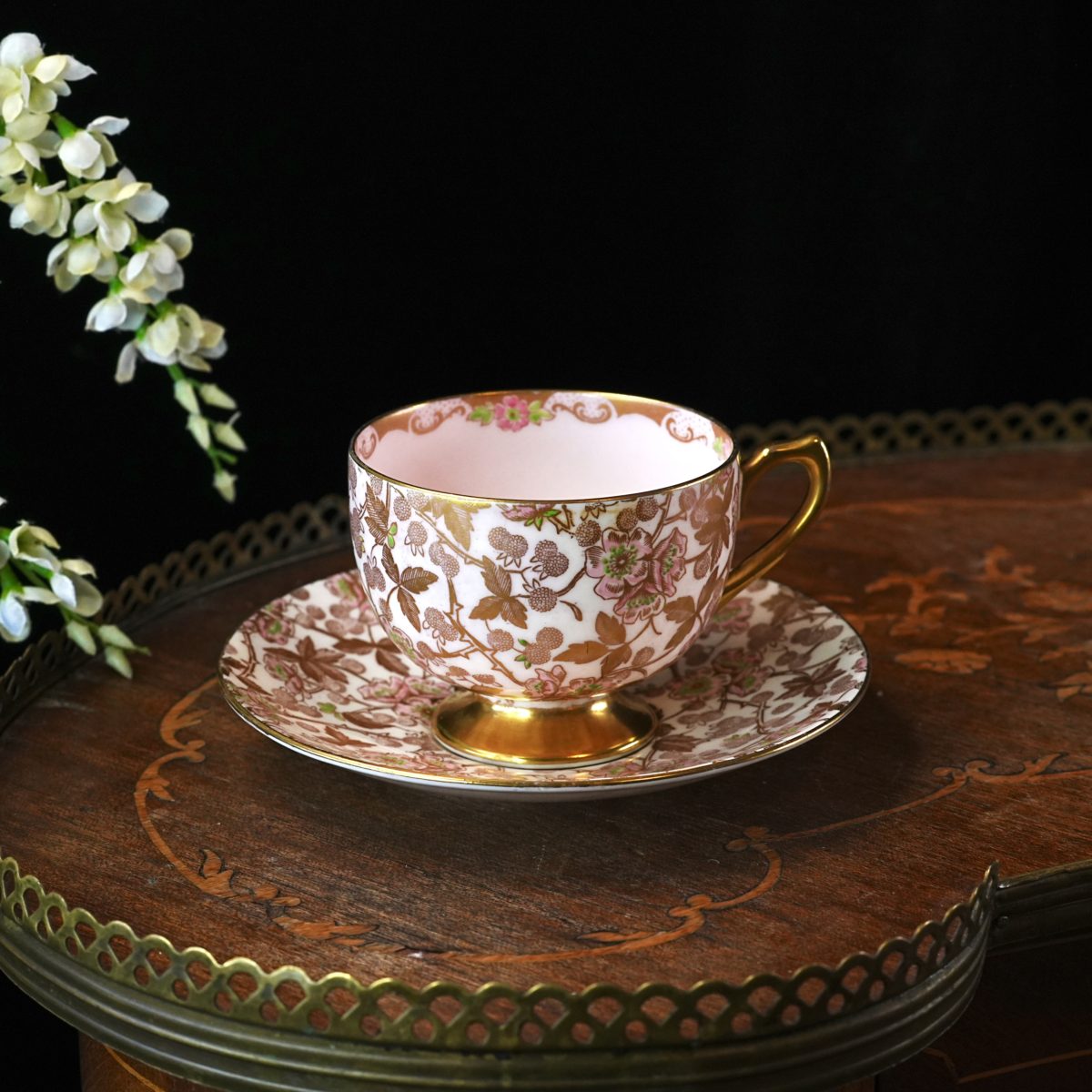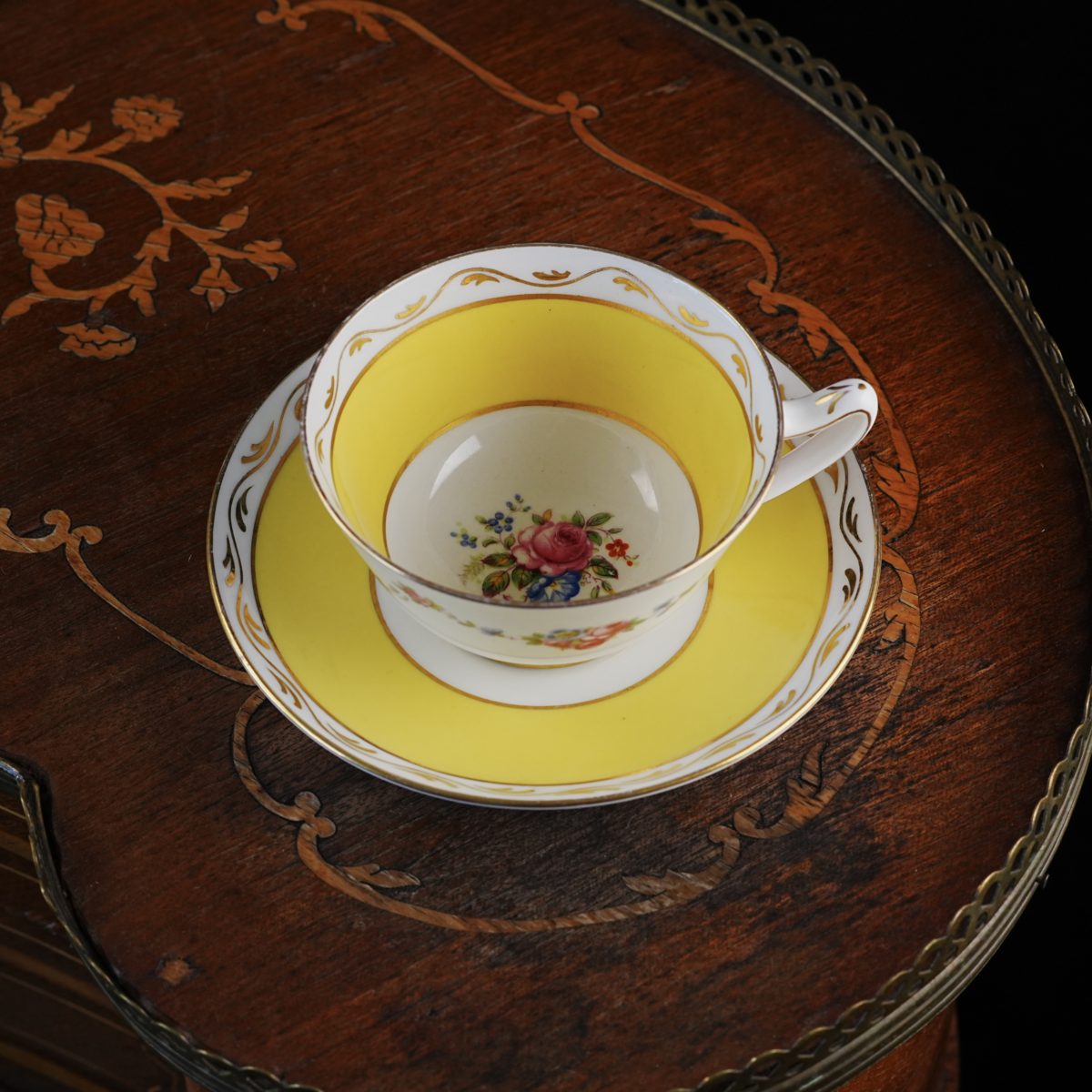
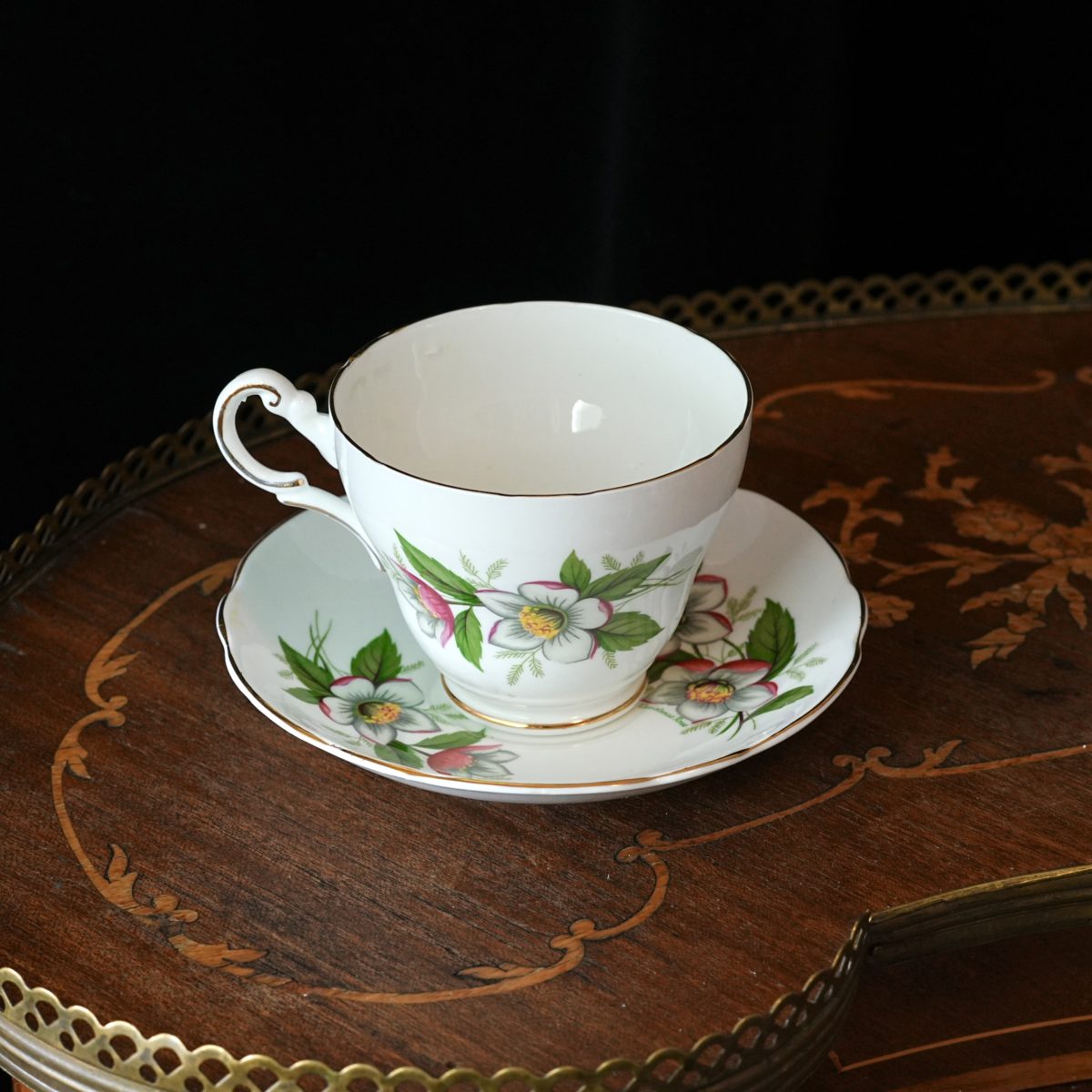
Vintage Regency Teacup & Saucer – White Lily & Pink Bud Floral, Gold Rim, English Bone China, Made in England 1960s
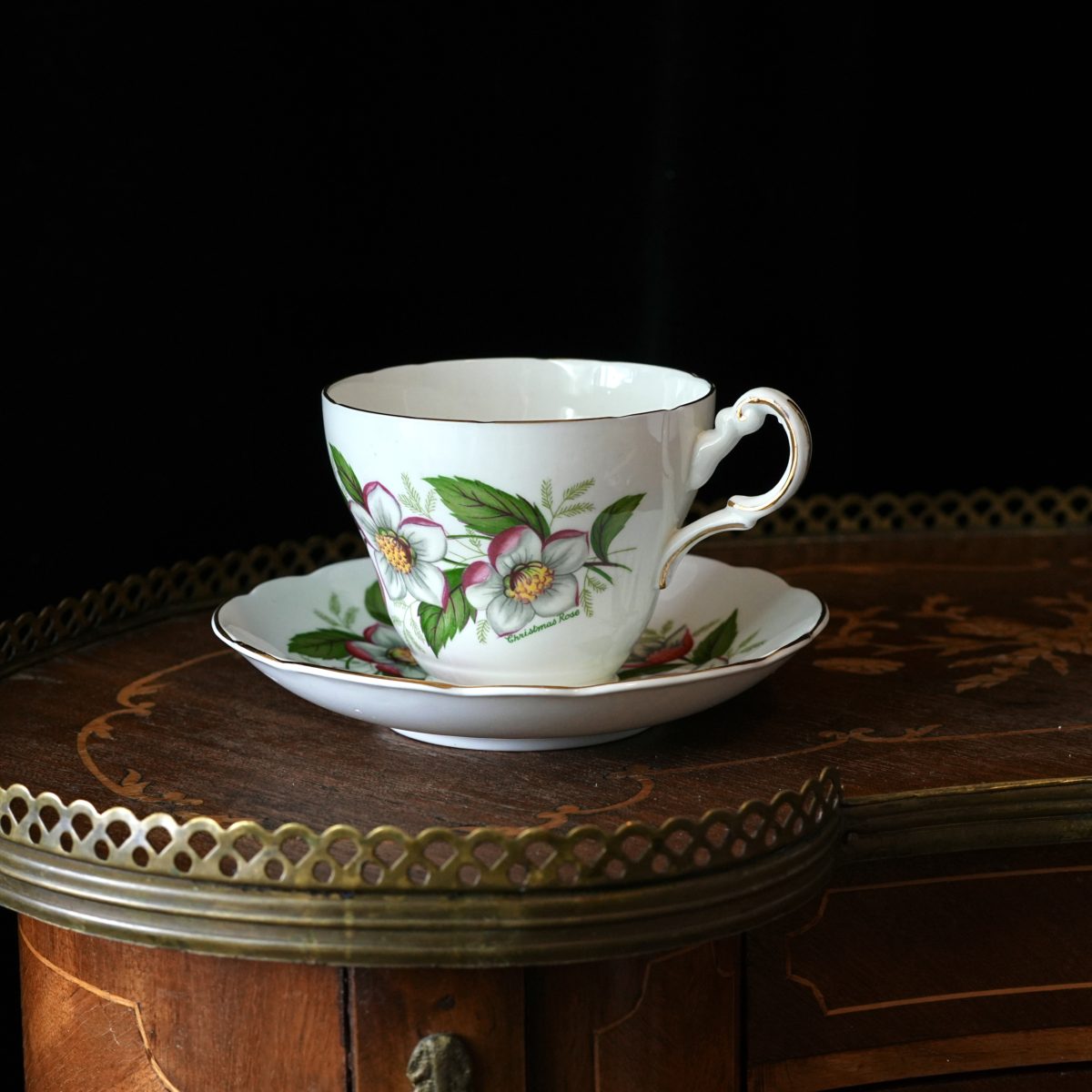
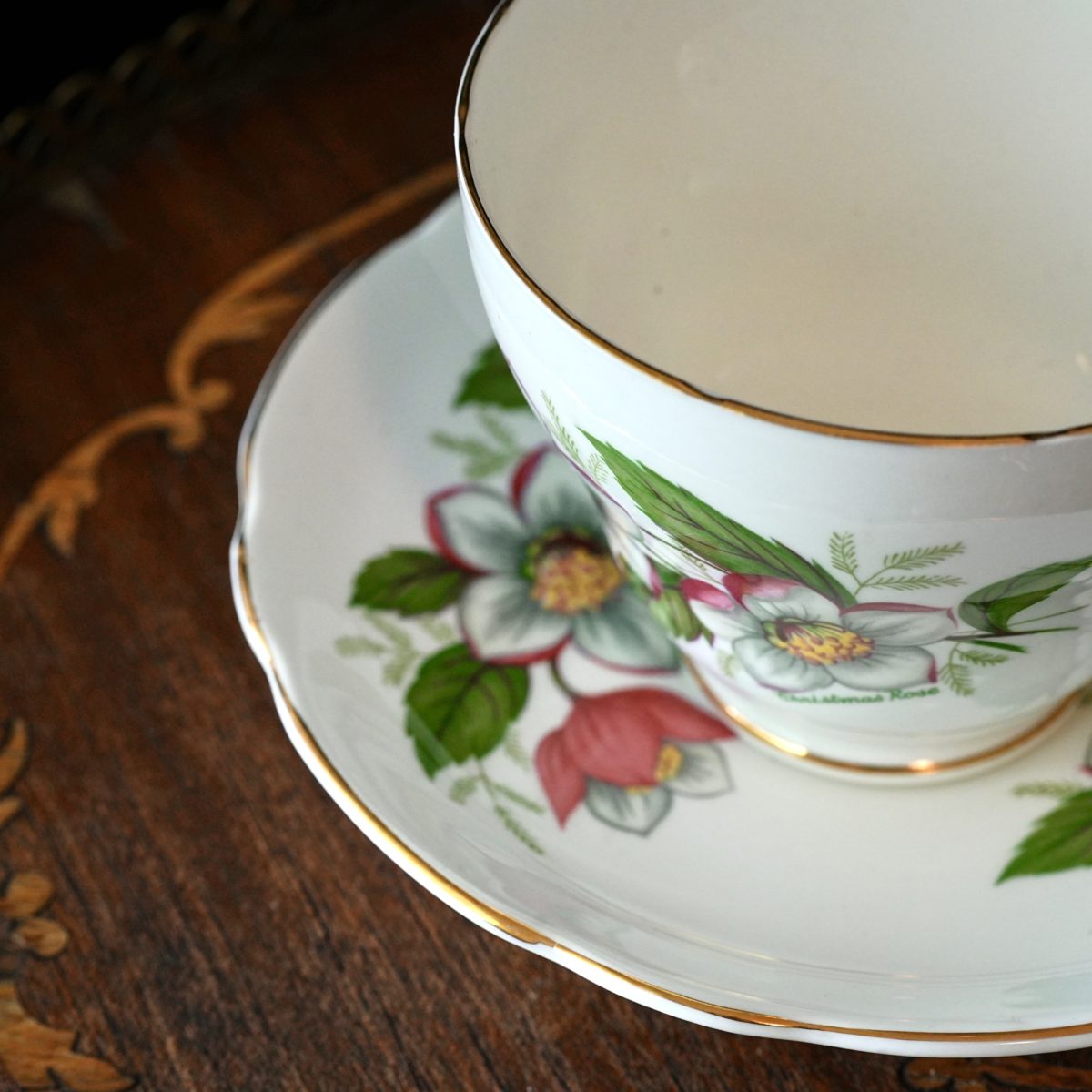
AvailableA fresh little Regency bone-china teacup and saucer — white lily-like flowers with yellow centres and soft pink buds, set among slim green leaves, with a gold line around the rim. A clean, cheerful pattern that mixes easily into a mismatched afternoon-tea shelf.
The flowers are set against the plain white bone china so the colour reads brightly: open white blooms, pink pointed buds, green foliage, and a simple gilt edge finishing cup and saucer. It is an everyday-pretty English teacup rather than a rare cabinet piece — the kind that makes a tea table feel gathered-over-time.
The base carries the blue Regency / English Bone China / Made in England mark with the little Regency-beau silhouette. Regency China of Longton made a great deal of the pretty floral teaware that came out of Staffordshire in the mid-twentieth century; this one dates from around the 1960s–70s.
A cup-and-saucer for the mismatched-teacup collector, the afternoon-tea or tea-party table, the cottagecore shelf, or as an easy gift for someone who takes their tea properly.
Details
- Type
- Teacup & Saucer Set
- Maker
- Regency China Ltd, Longton, Stoke-on-Trent, England
- Era
- Circa 1960s–1970s
- Decoration
- White lily-style flowers with pink buds and green leaves; gilt rim
- Shape
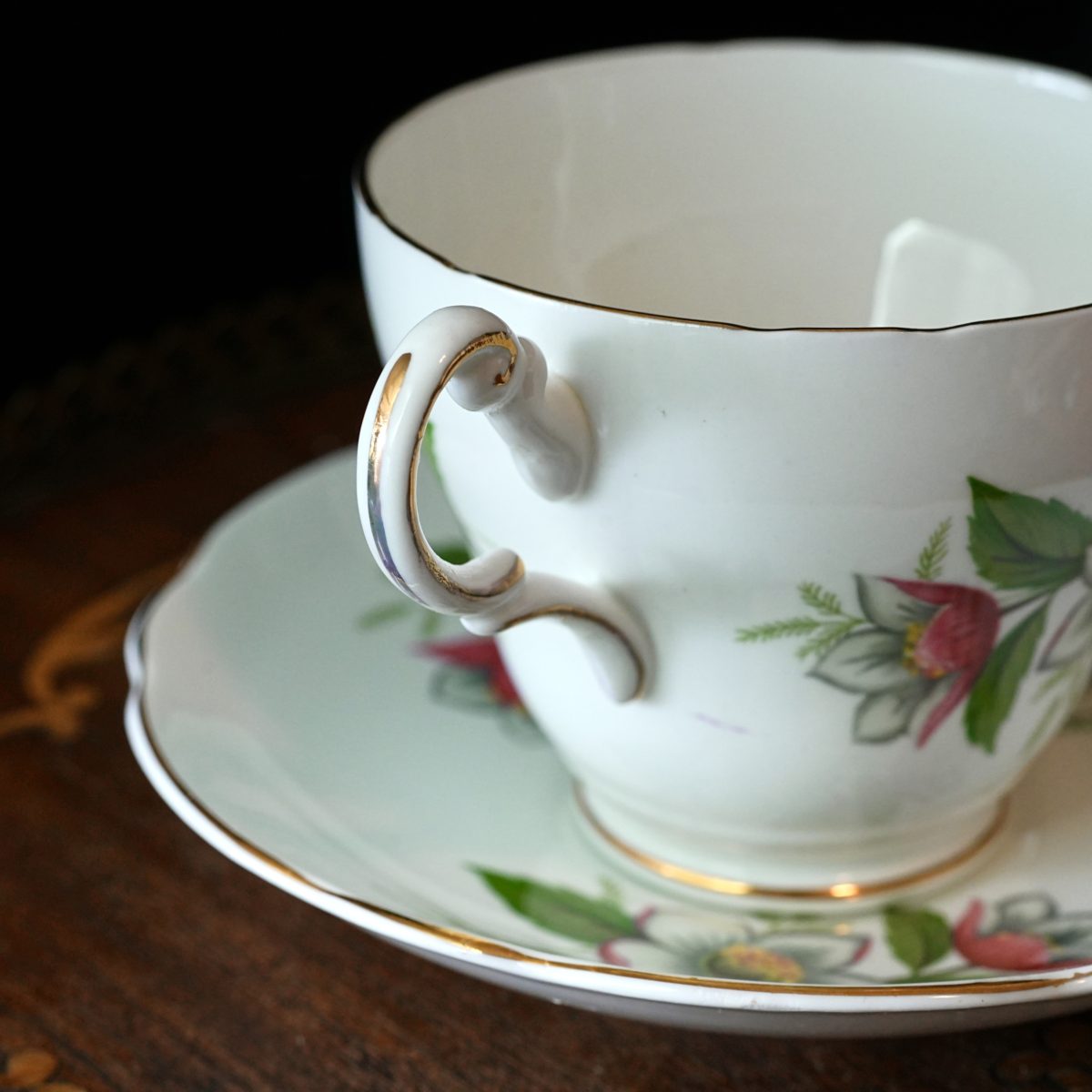
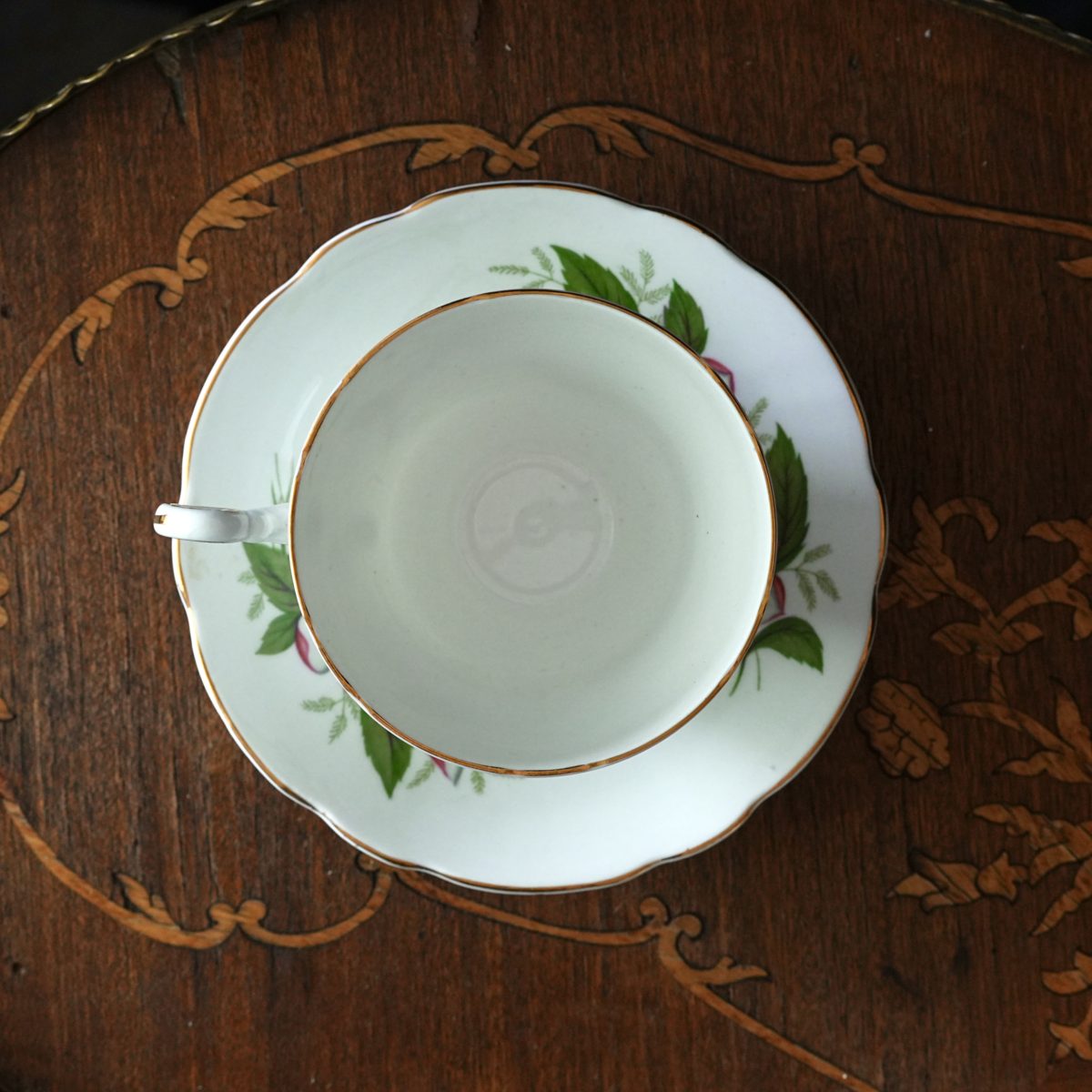
- Footed teacup with scrolled handle; scalloped saucer
- Size
- Cup ~3.5" / 9 cm dia × 2.75" / 7 cm tall; Saucer ~5.5" / 14 cm dia
- Material
- Bone China
- Markings
- Blue Regency / English Bone China / Made in England stamp with Regency-beau logo
Backstamp & Pattern
- Maker
- Regency China Ltd, Longton, Stoke-on-Trent, England
- Era
- Circa 1960s–1970s
- Mark on base
- Blue Regency / English Bone China / Made in England stamp with Regency-beau logo
The base carries the maker's printed mark; the wording — especially “England” versus “Made in England” versus “Bone China” — together with any pattern or registration number are the main clues to its age.
Read the full backstamp & pattern guide → How to date English china →