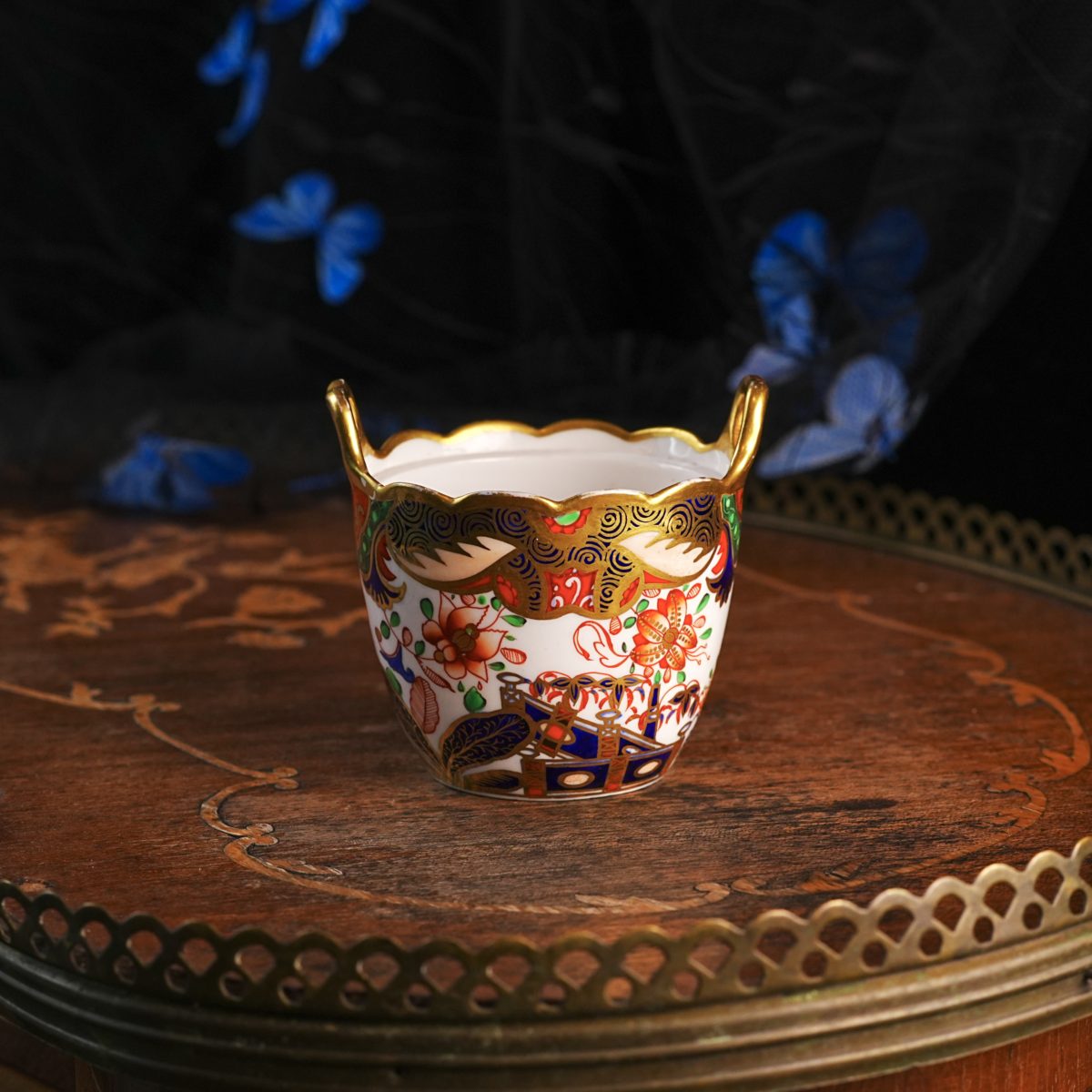
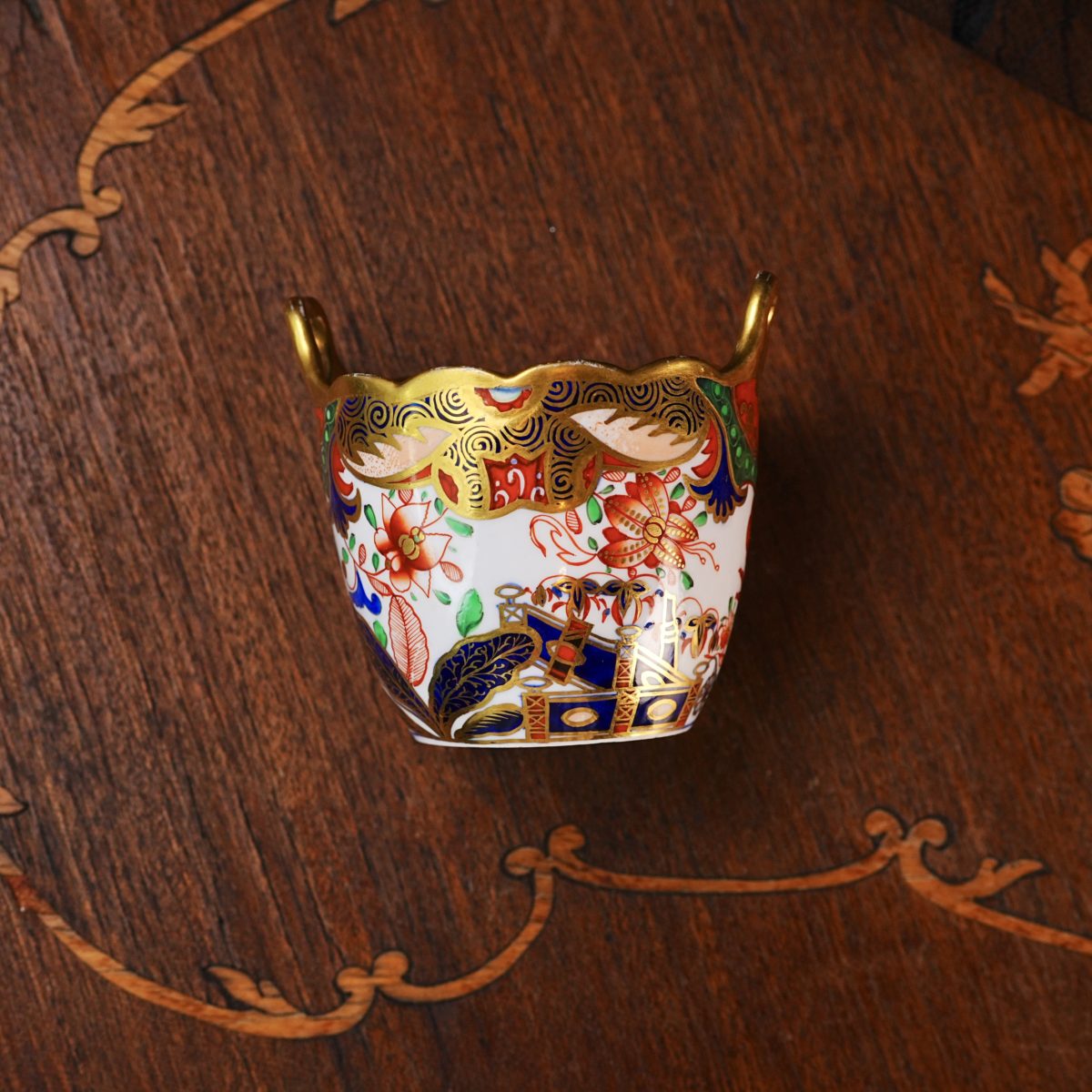
Antique Imari Cache Pot Attributed to Spode – Hand Painted Japan Pattern Vase, Twin Gilt Handles, Scalloped Rim, Cobalt & Gold, c. 1890
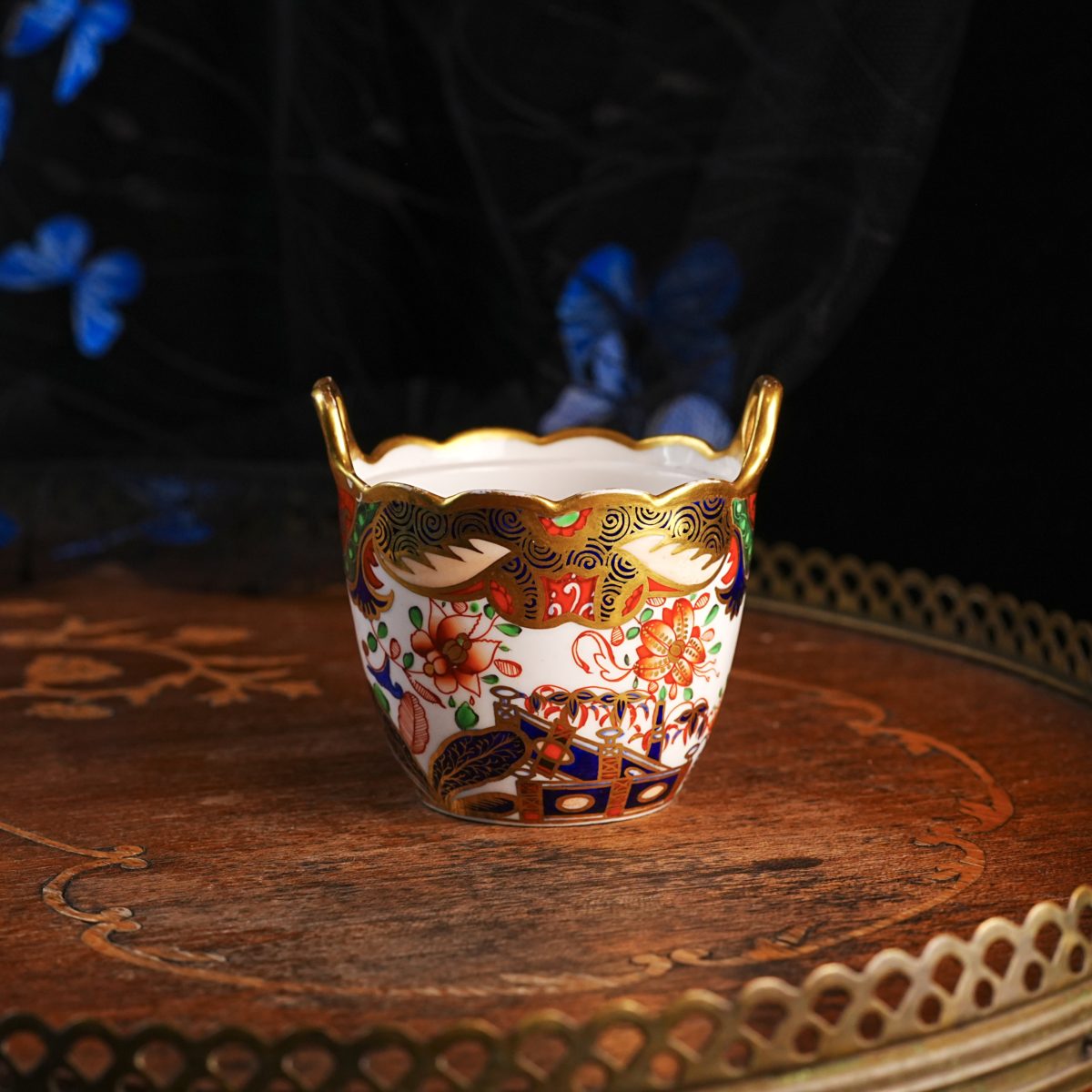
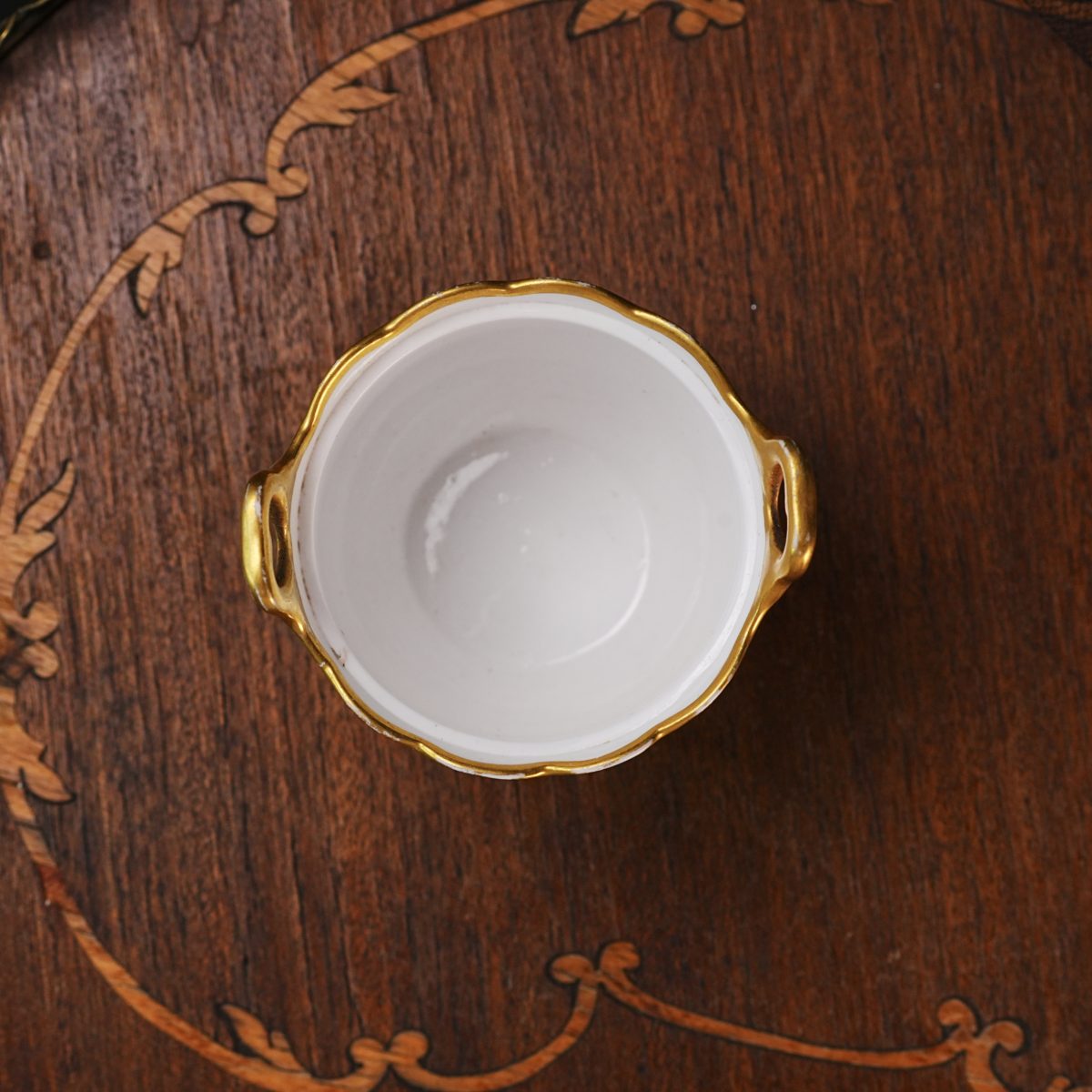
AvailableA small twin-handled cache pot — a holder rather than a drinking vessel, with a plain white interior and a gently canted body that rounds at the corners. Two gilt loops rise above a scalloped rim. Around the outside runs an Imari garden: iron-red blooms, cobalt leaves, green sprigs, and a gold-and-blue fence banding the lower body. It stands 2.25 inches high.
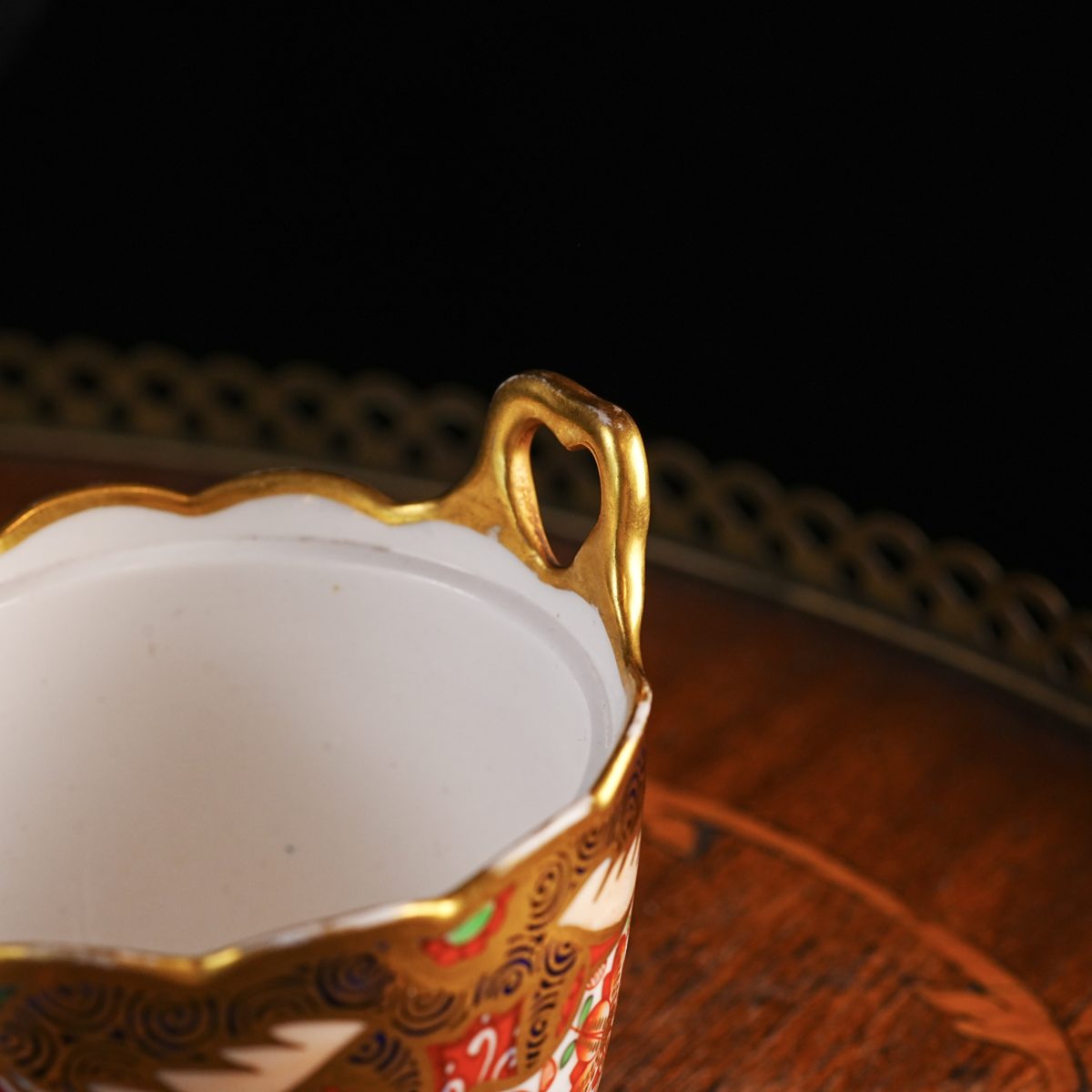
Everything here was done by hand. The border is the tell: a gold ground carrying continuous dark-blue spirals drawn in fine pen-work, with serrated leaf shapes reserved out in white and red cartouches between them — built up in layers and fired more than once. The gold dots on the red petals vary in size and spacing, the way a brush leaves them rather than a transfer. Both handles were pinched by hand and luted on; a faint seam and the squeeze of the potter's fingers are still visible where they meet the rim. Where the gilding has worn at the tips, a warm reddish base coat shows through — the sizing that hand-applied gold was laid over.
Circa 1890. The base is entirely unmarked, so the date rests on the work: Spode's Imari fell into two periods, the Regency years to about 1815 and a revival through the 1880s and 1890s, and the hand-painting and thick burnished gold here sit with the later. Small decorative pieces from that revival were often left unsigned.
Stoke-on-Trent, and attributed to Spode on the strength of the palette, the gilding and the period. Spode's Imari wares were known as the Candlelight Patterns for the way their mercury gilding caught the light after dark. The design itself descends from Japanese Imari porcelain, carried to Europe by Dutch traders and reworked by the English factories into what the trade called simply "Japan pattern."
Details
- Type
- Cache Pot / Spill Vase, twin-handled
- Maker
- Attributed to Spode — the piece is unmarked
- Origin
- Stoke-on-Trent, England
- Era
- Circa 1890 (Spode's Imari revival period)
- Pattern
- Imari / "Japan pattern" — floral sprays with fence motif
- Shape
- Canted body, scalloped rim, two applied gilt loop handles
- Size
- Approx. 2.25 in / 5.7 cm high
- Material
- Porcelain / bone china
- Decoration
- Hand-painted enamels with hand-applied and burnished gilding
- Markings
- None
Backstamp & Pattern
- Maker
- Attributed to Spode — the piece is unmarked
- Pattern
- Imari / "Japan pattern" — floral sprays with fence motif
- Era
- Circa 1890 (Spode's Imari revival period)
- Mark on base
- None
Spode and Copeland-Spode marks; the wording and any pattern name or number help place the piece within the firm's long history.
Read about this maker’s marks in the guide → How to date English china →