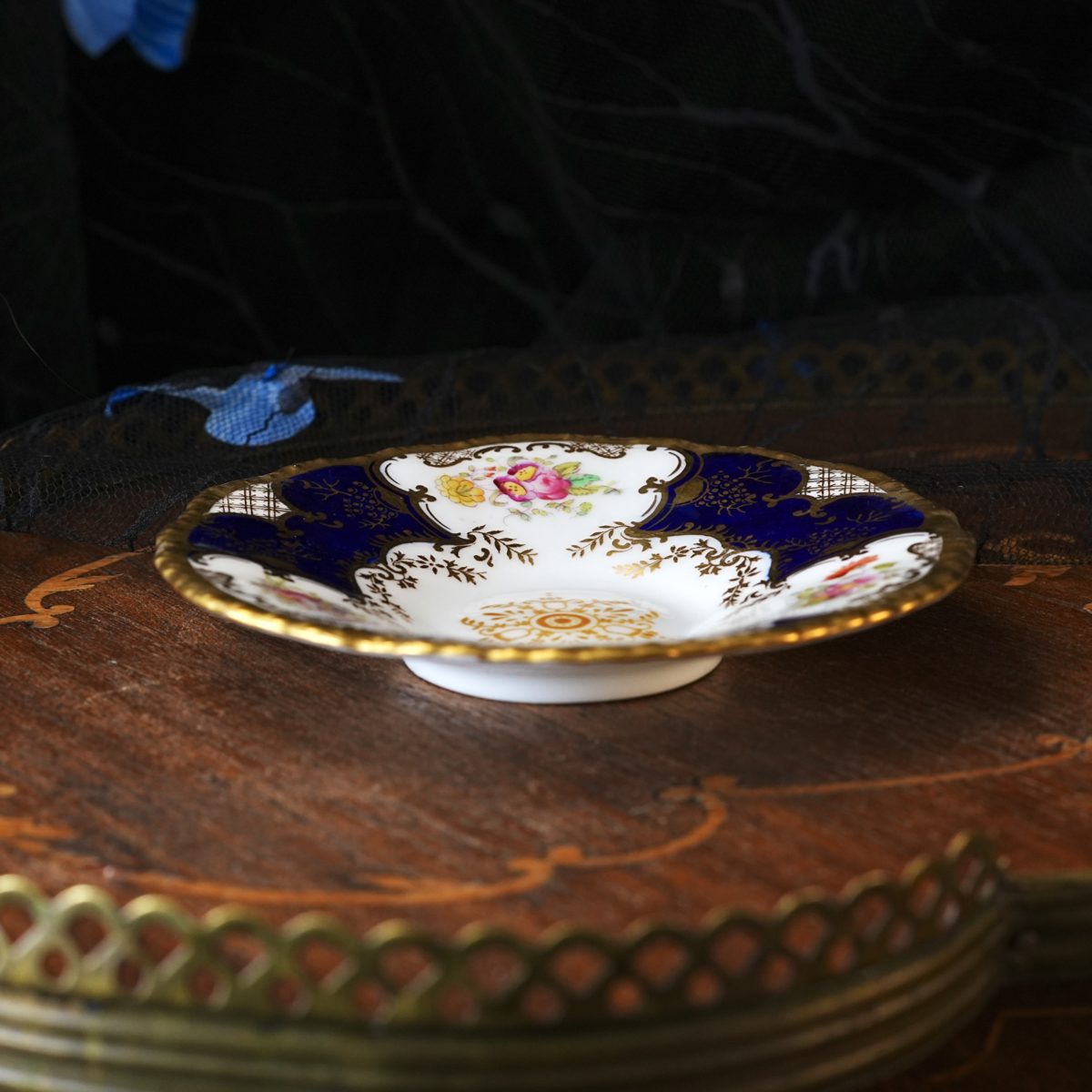
Antique Coalport Cobalt Blue Gilt Saucer, No Cup – Four Hand Painted Floral Reserves, Gadrooned Rim, Bone China c1900, Small Display Dish
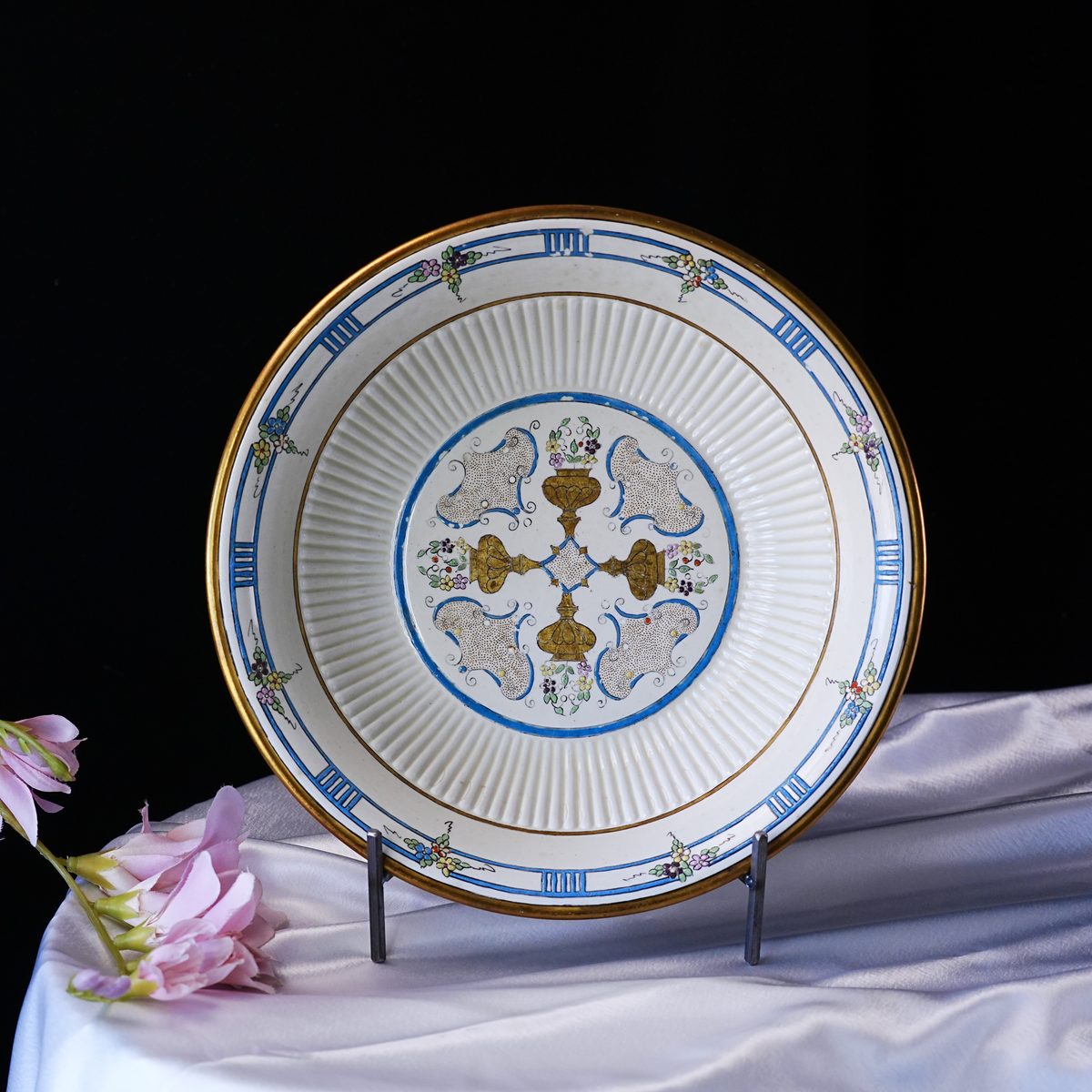
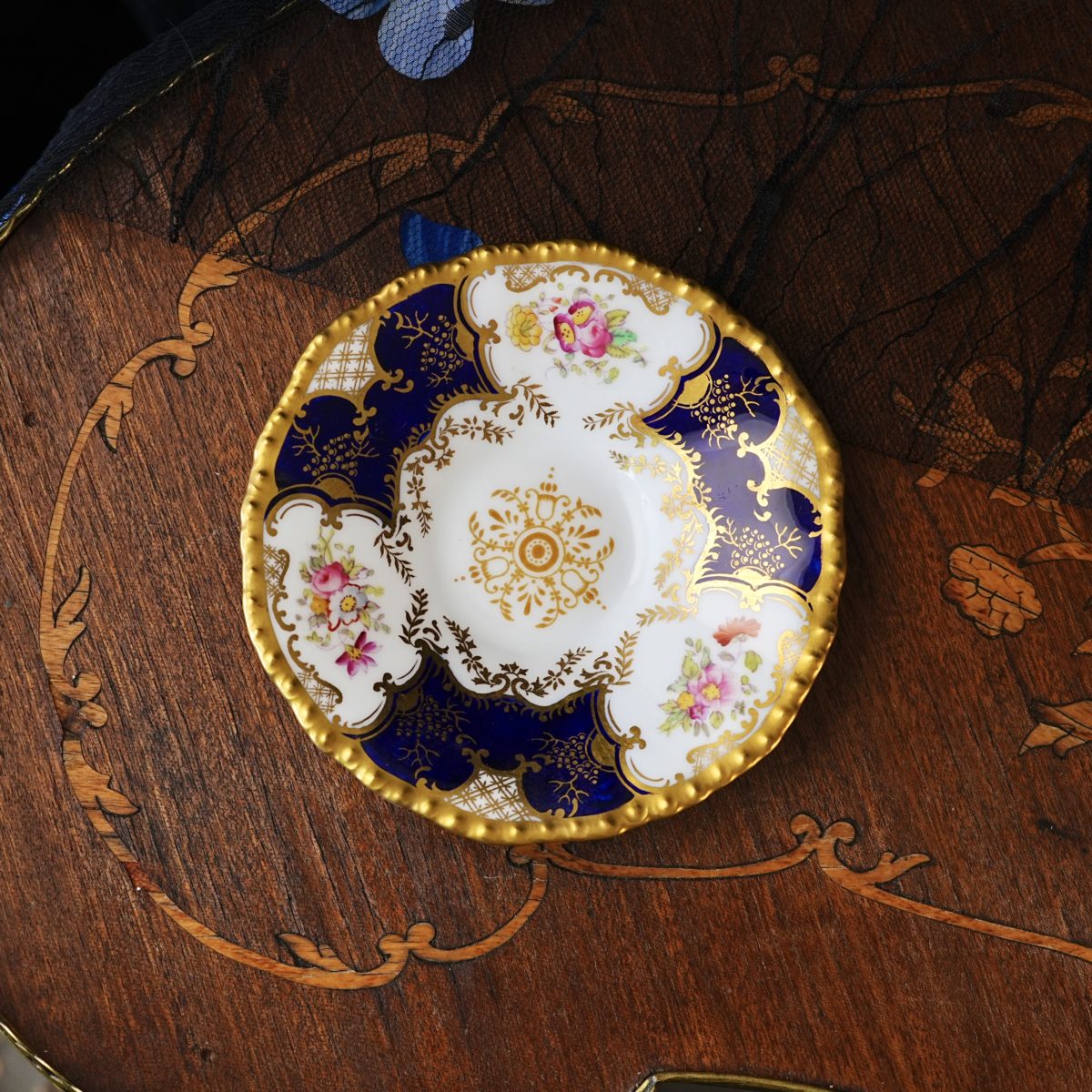
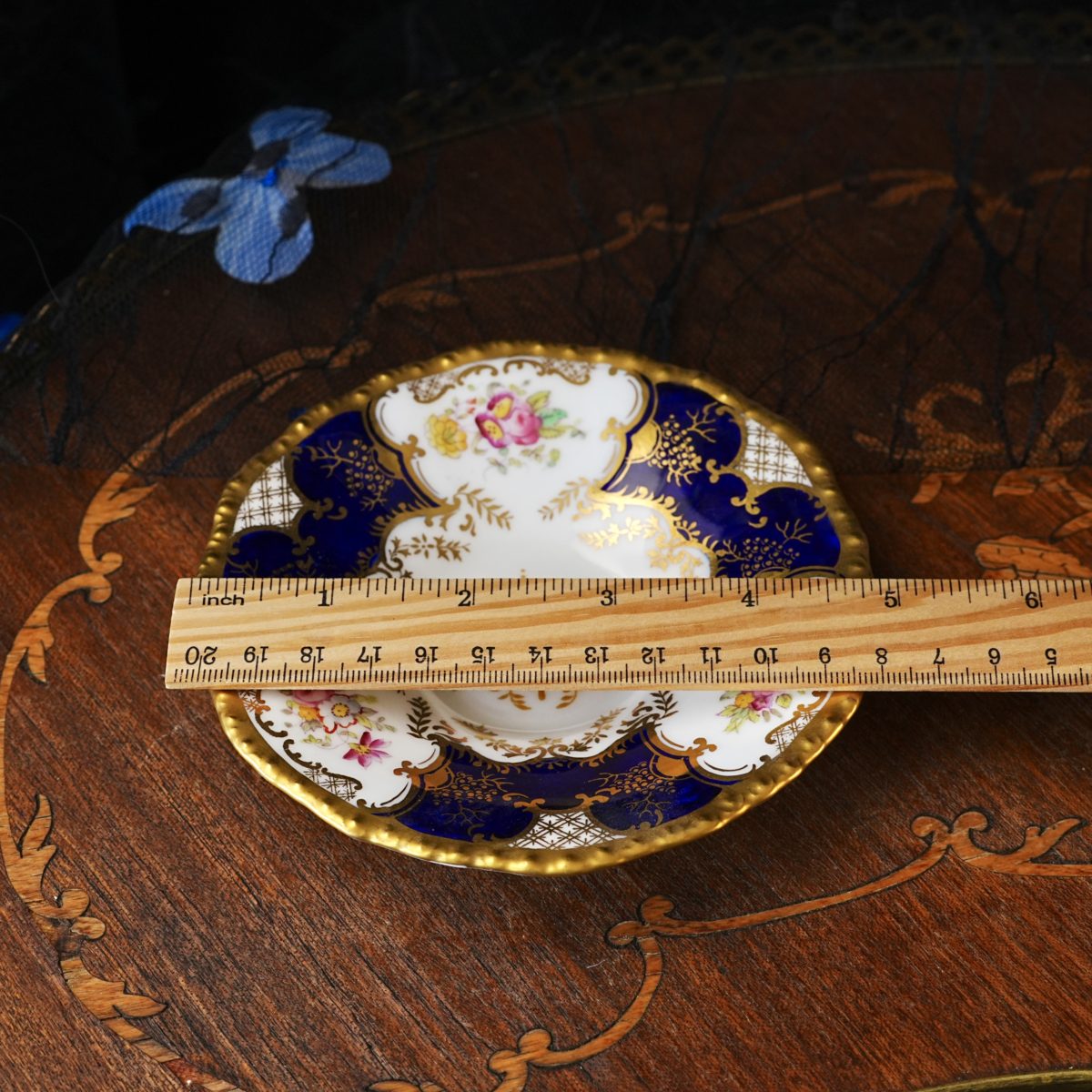
AvailableA Coalport saucer, and a saucer only — the cup that stood on it is long gone. It is about five inches across, with a shallow well at the centre where the cup sat, and rises from there in a gentle bowl to a rim moulded in small beads, a gadroon, gilded throughout. Four cobalt panels alternate with four white reserves, each holding a different bouquet. It serves now as a trinket dish.
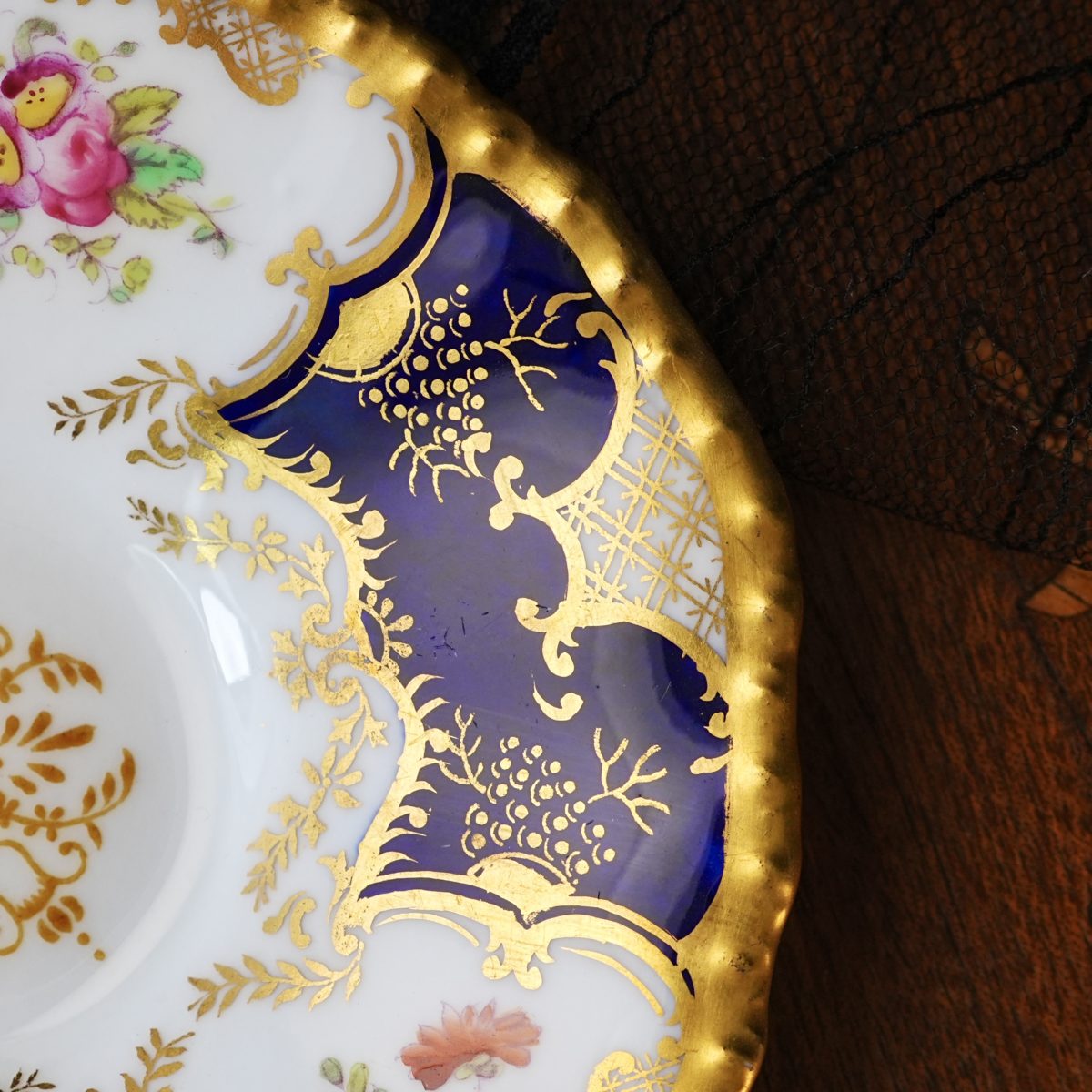
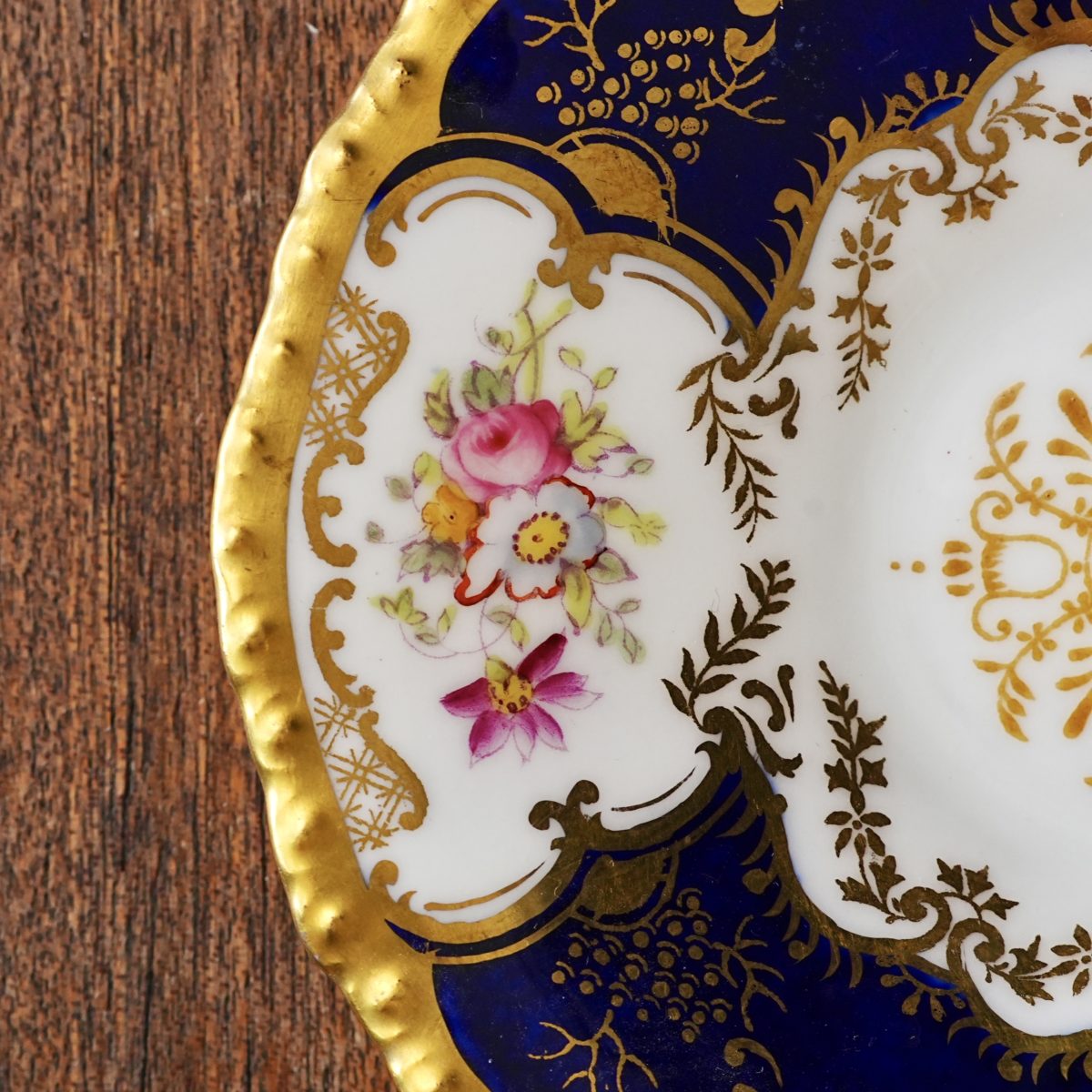
The four bouquets are all different — a pink rose in one panel, a white anemone outlined in red in the next — and every stroke of the gold is freehand: the trellis lozenges sit at uneven intervals, no two starred crossings alike. Gilding painted this densely cost far more in labour than the printed gold then replacing it.
The blue was ground-laid, a trade of its own: oil brushed over the panel, dry cobalt dusted on through cotton wool, the white reserves then wiped clean by hand — which is why the colour shifts between near-black and violet across a panel and yet stops dead at the gilt cartouche. Gold left the kiln a dull yellow and had to be burnished bright with an agate; being the last thing done, it is also the first to wear.
Between about 1891 and 1920. The green mark gives a crown over Coalport · A.D. 1750 with England above it, and that word does the dating: British potteries began adding England in 1891, when American tariff law required imports to name their origin, and changed to Made in England around 1920. A green B stands inside the foot ring, a red shape number 18 outside.
Coalport, whose name rested on exactly this kind of gilding. A saucer is an odd thing to read alone, because it was designed around an absence: the border carries everything, the centre is left quiet, since a cup was meant to stand there. Cups break far more readily than saucers — a handle, a rim, a table edge — so the saucer is what outlives a service.
Details
- Type
- Saucer, sold on its own (no cup)
- Maker
- Coalport, England
- Era
- c. 1891–1920, by the printed mark
- Decoration
- Cobalt blue ground-laid panels with freehand gilt scrollwork, fern sprays and trellis; four hand-painted floral reserves; gold rosette to the well; gadrooned gilt rim
- Material
- Bone china with gilding
- Shape
- Shallow saucer with a sunken cup well, wavy gadrooned rim, plain low foot ring
- Size
- ~5" / 12.5 cm diameter; cup well ~2¼" / 5.7 cm — suits a coffee cup or a small teacup
- Markings
- Green printed crown, England · Coalport · A.D. 1750, with a green letter B inside the foot ring and a red painted shape number 18 outside it
Backstamp & Pattern
- Maker
- Coalport, England
- Era
- c. 1891–1920, by the printed mark
- Mark on base
- Green printed crown, England · Coalport · A.D. 1750, with a green letter B inside the foot ring and a red painted shape number 18 outside it
Coalport's “A.D. 1750” crown mark is decorative, not a date — the firm was founded c. 1795. The “Bone China” and “Made in England” wording points to a 20th-century piece.
Read about this maker’s marks in the guide → How to date English china →