Anne of Green Gables Was Published in Boston
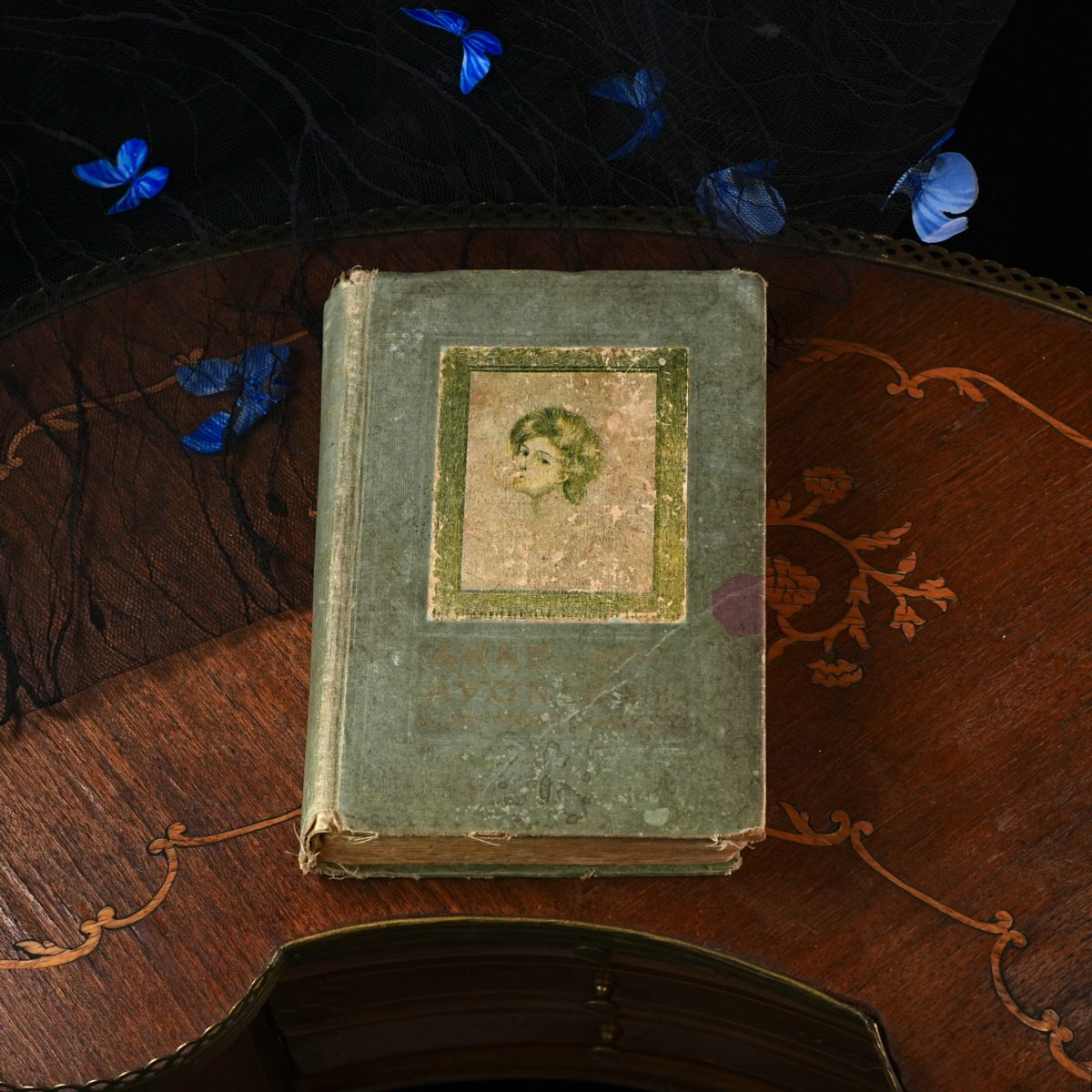
The oldest Montgomery volume in the shop is a 1909 Anne of Avonlea, sage-green cloth with Anne's portrait pasted to the cover. Open it to the title page and the last line reads, in confident capitals: BOSTON · L. C. PAGE & COMPANY. The most Canadian book ever written — red earth, Prince Edward Island, the whole of it — first reached the world stamped with the name of an American city. How that happened, and how it was undone, is one of the better stories in publishing.
The orphan-girl business
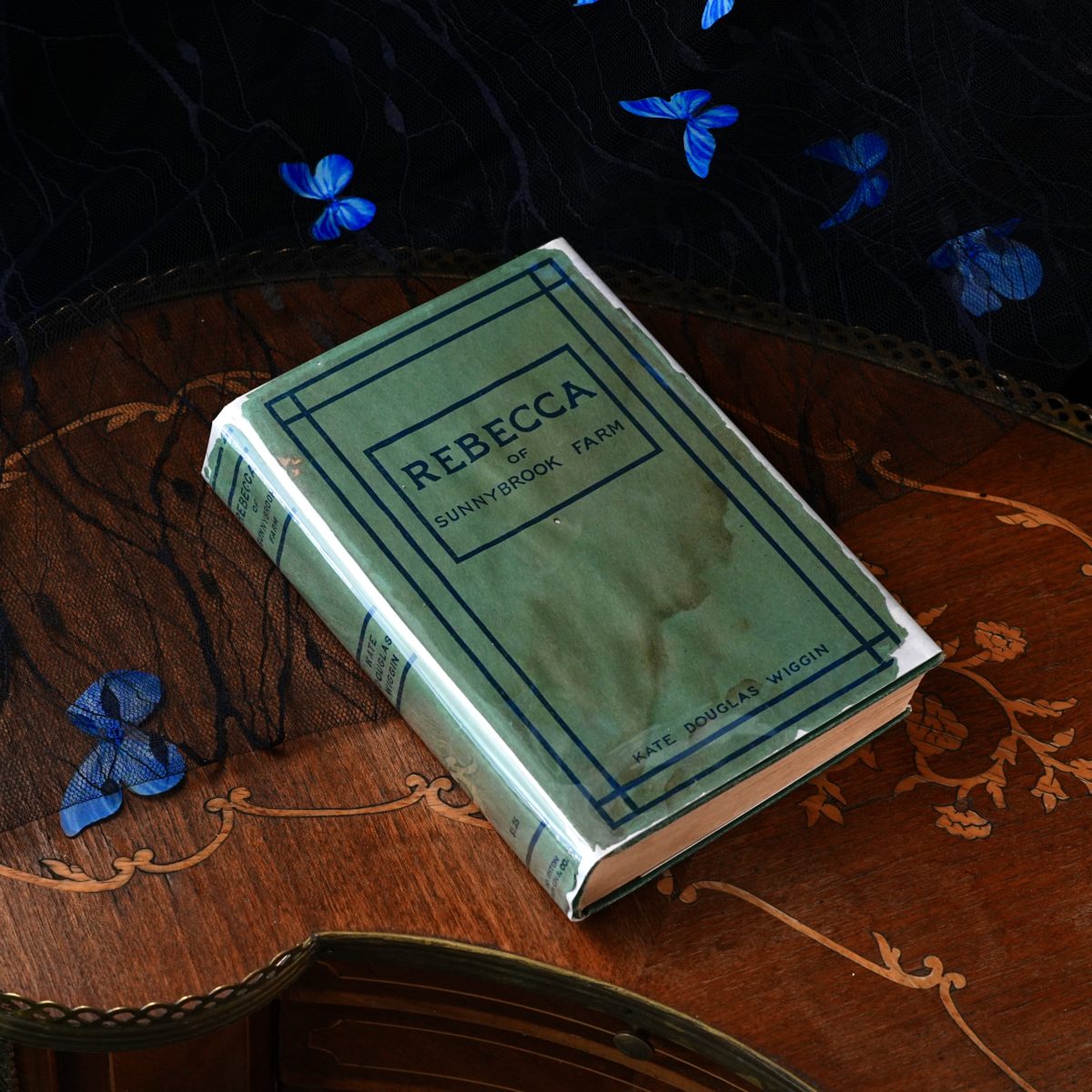
To understand why Anne went to Boston, it helps to hold another book we have on the shelf beside her: Rebecca of Sunnybrook Farm, 1903, Houghton Mifflin. Rebecca — talkative, imaginative, sent away to be raised by two stern aunts — was an enormous bestseller, and she taught American publishers that there was money in a particular kind of heroine: the spirited girl nobody quite asked for, arriving to light up a grim household. Every house in Boston and New York wanted the next Rebecca. When a Prince Edward Island schoolteacher's manuscript about a red-headed orphan finally landed at L. C. Page & Company — after a string of rejections that Montgomery later loved to recount — Page knew exactly what he was looking at.
Anne of Green Gables appeared in June 1908 and sold so quickly that a second printing was announced within weeks; Mark Twain was among the book's early admirers. Page, naturally, wanted a sequel at once. Montgomery — who privately found sequels a chore — delivered Anne of Avonlea the following year, and our copy carries the evidence of the frenzy on its own copyright page: first impression, September 1909; second impression, September 1909; third impression, September 1909 — three printings within a single month, the whole story of a bestseller told in the book's own quiet ledger.
There is a quieter page in that book worth turning to. Montgomery dedicated the novel — the one in which Anne herself becomes a schoolteacher — to Hattie Gordon Smith, the teacher who had encouraged a scribbling girl in Cavendish years before. The dedication and the plot are the same gesture, made once in life and once in fiction.
The fine print
The trouble, as it so often is between writers and their publishers, lay in the arithmetic. Montgomery had signed her first contract as an unknown, on an unknown's terms, and her biographers have documented how little of each copy's price found its way back to the island — with her next books bound to the same house on the same terms. For years the world's best-loved Canadian author was, on paper, a modestly paid Boston asset. When the binding contract finally ran out in 1915, she did something about it: she chose a young Toronto publisher, John McClelland, for Canada, with Frederick A. Stokes taking the American side. From Anne's House of Dreams in 1917 onward, her title pages said TORONTO first.
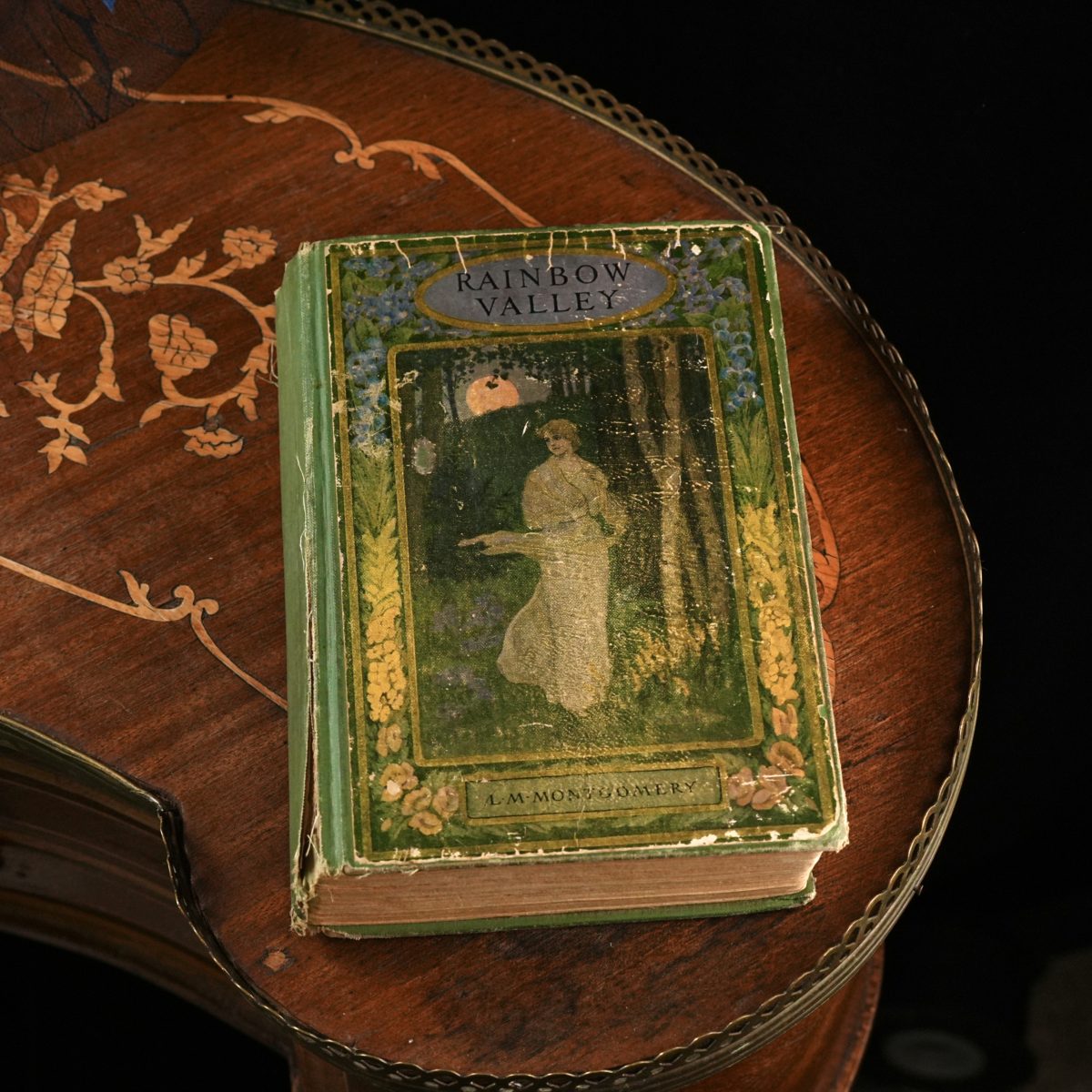
Our Rainbow Valley of 1919 belongs to that homecoming, and it carries the weight of its moment on the dedication page. The novel is the tenderest of the Anne books — the children of Ingleside in the last unbroken summer before 1914 — and Montgomery dedicated it to the memory of three young Canadian men by name — Goldwin Lapp, Robert Brookes and Morley Shier — who did not come back from the war, and whose families she knew. The happy valley inside the covers and the three names on the flyleaf stand, by her own deliberate arrangement, only a page apart.
The decade in court
Leaving Boston did not end the Boston story. In settling accounts, Montgomery sold Page the remaining rights to her first seven books for a substantial sum — roughly eighteen thousand dollars, as the Montgomery scholars record it — on the condition, among other things, that a planned volume of her early leftover stories keep Anne off its pages and off its cover. Page published the book, Further Chronicles of Avonlea, in 1920, and broke the conditions. He had also, she discovered, sold the film rights to Anne of Green Gables without telling her. What followed was more than a decade of suits and countersuits — five in all — that ended in October 1928 with the courts on Montgomery's side and the bootleg book withdrawn, though after years of legal fees her actual winnings were a fraction of the award.
She won on nearly every page of the ledger except the one that mattered least to her by then — the money.
It is tempting to read the whole affair as a simple villain story, and I try to resist that, a little. Page was a gambler who spotted Anne when established houses had passed her over, and he then spent twenty years treating that one stroke of judgement as a licence. Both of these truths are printed on the same title page, and neither quite cancels the other. Holding the 1909 volume, I find the Boston imprint has stopped looking to me like an injustice, and has begun to look like the opening scene of the story instead.
Reading a Montgomery shelf
For a collector, this history sorts the surviving books into telling families:
- The Page originals — Boston imprints, 1908 to the mid-1910s, with their pasted-on cover portraits. This line ended when Montgomery walked, so it can never grow; our 1909 Anne of Avonlea is from its brief high summer.
- The Canadian firsts — Toronto, McClelland & Stewart, from 1917. On several titles, including Rainbow Valley, the Canadian printing is the first edition in her own country, and small details like an intact tissue guard over the frontispiece help confirm an early copy.
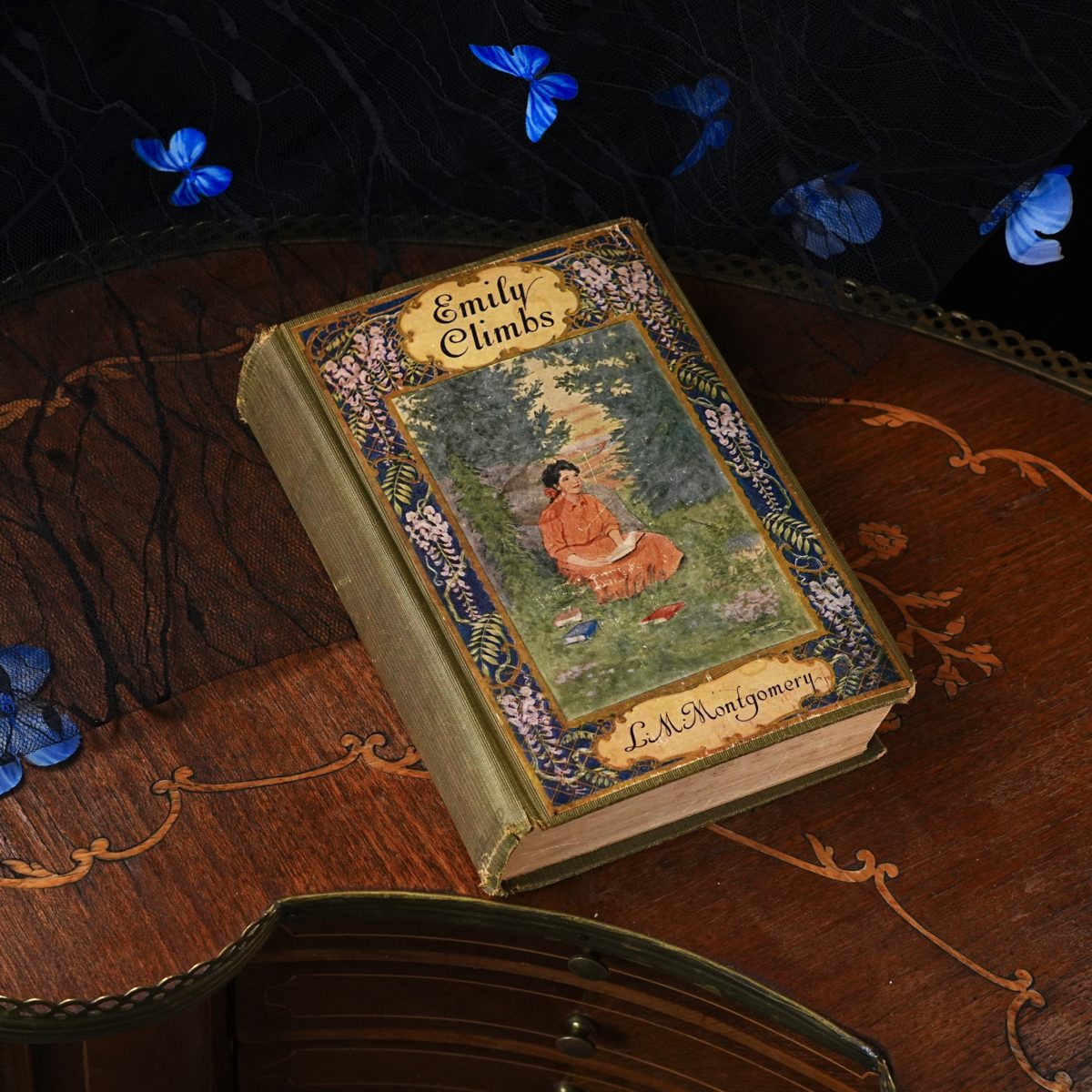
- The artists — the frontispieces of the Stokes-era books are often by Maria Louise Kirk, whose plates appear in two books on our shelf, Rainbow Valley and the 1925 Emily Climbs; collecting by illustrator is a quiet pleasure of this field.
- The witnesses — period inscriptions and jackets. A dust jacket from the 1900s survives against long odds, and a dated gift inscription, like the Christmas 1903 line in our Rebecca, fixes a book in time more warmly than any bibliography.
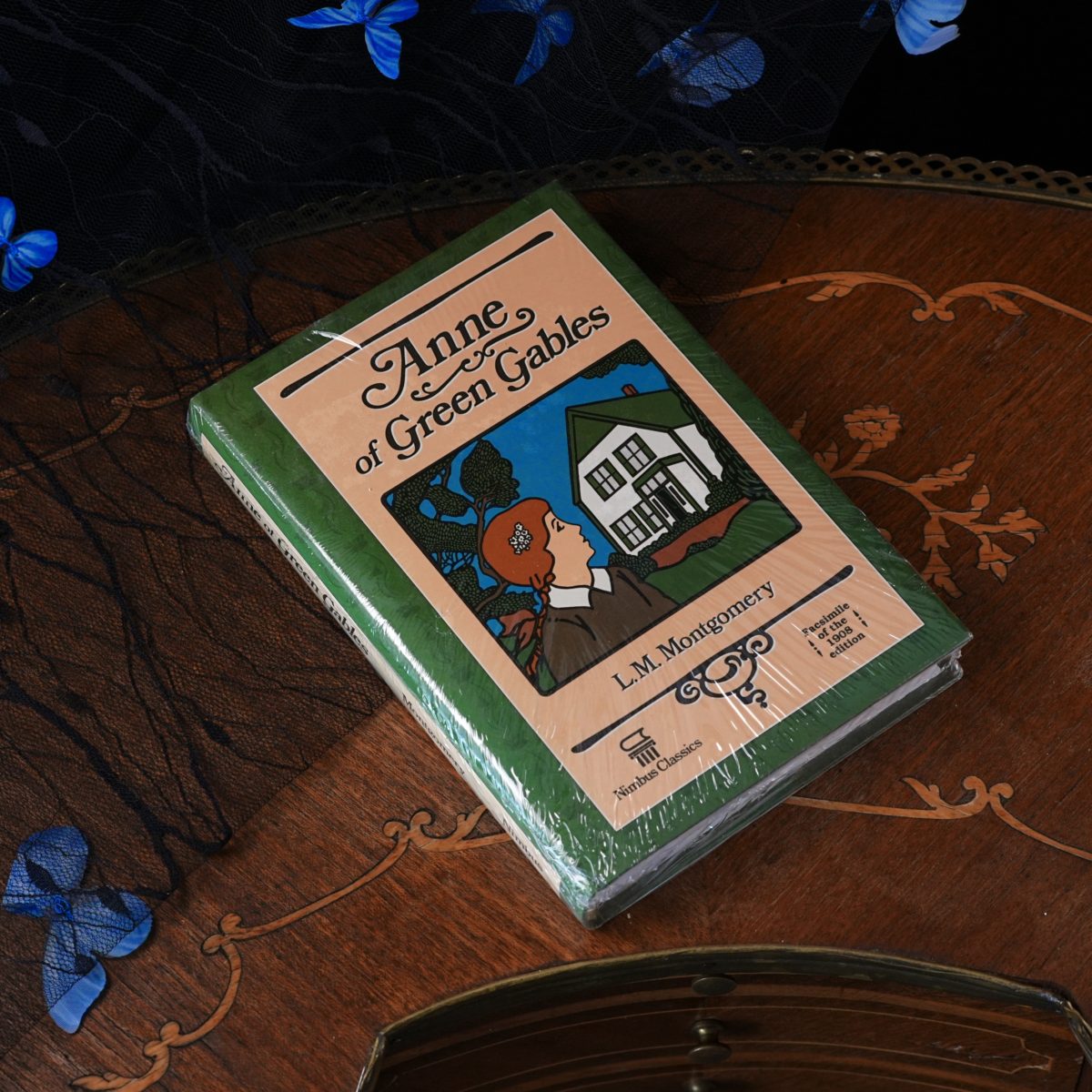
- The readers' copies — for those who simply want the words as 1908 saw them, a good facsimile of the first edition, like the Nimbus reprint we keep, gives the original pages without the century of handling.
The books in this story — the 1909 Anne of Avonlea, the 1903 Rebecca in its jacket, the 1919 Rainbow Valley, Emily Climbs and the Green Gables facsimile — are all in the shop now.
Browse the collection Shop on Etsy ↗Sources: the 1907 acceptance and June 1908 publication of Anne of Green Gables, the early reprints, Twain's admiration, the expiry of the Page contract in 1915, the move to John McClelland and Frederick A. Stokes, the five suits settled in Montgomery's favour by October 1928, her modest net proceeds, and Page's unauthorized sale of the film rights, from the Dictionary of Canadian Biography; the sale of remaining rights to the first seven books for approximately US$18,000, the conditions attached to Further Chronicles of Avonlea (1920), their breach and the book's eventual withdrawal, from L.M. Montgomery Online. Impressions, imprints, dedications, tissue guard and inscriptions recorded from the books themselves.