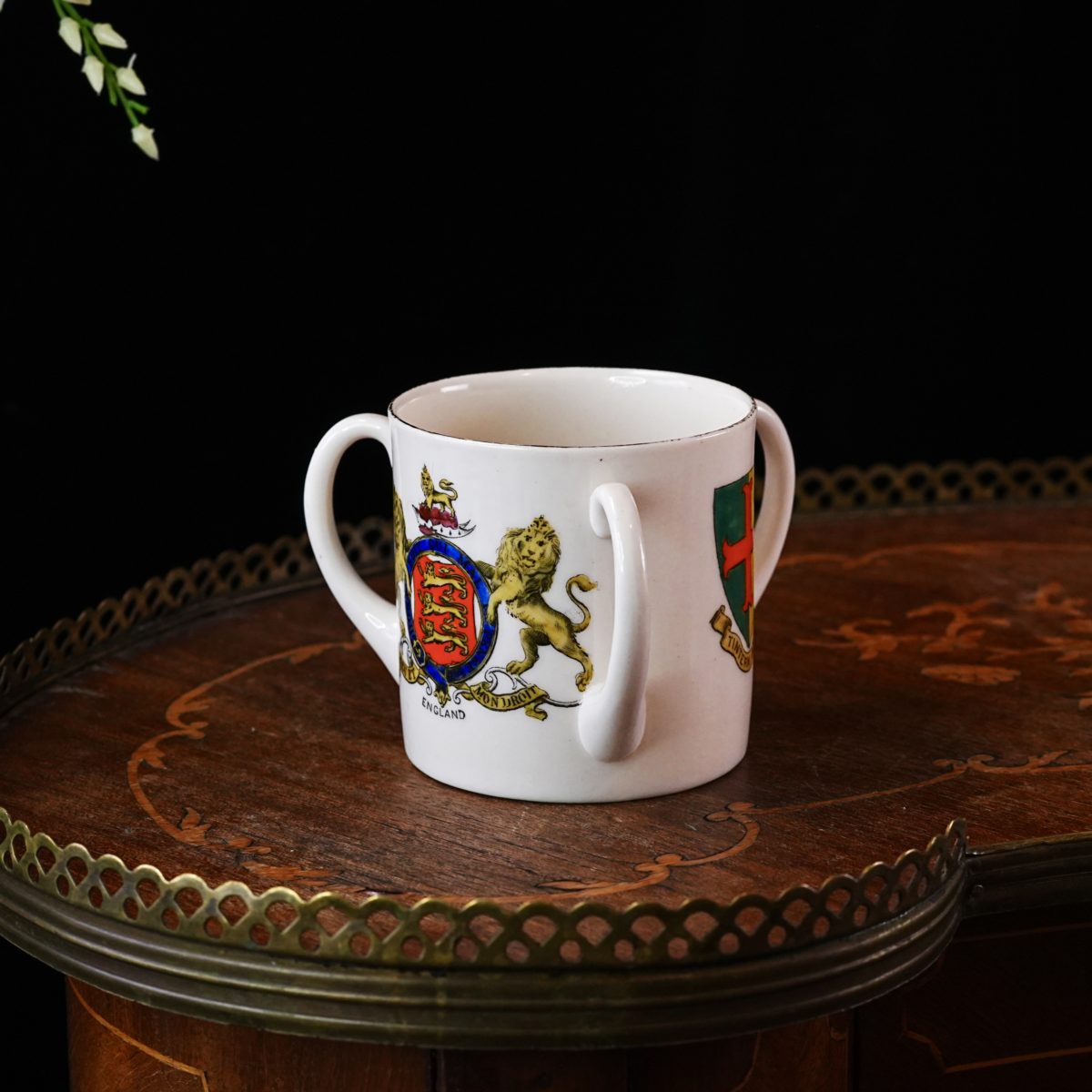
A Coat of Arms in Your Pocket
Three small pieces of Goss china and the seaside empire behind them — how half of Edwardian Britain came to shelve somebody else’s heraldry.
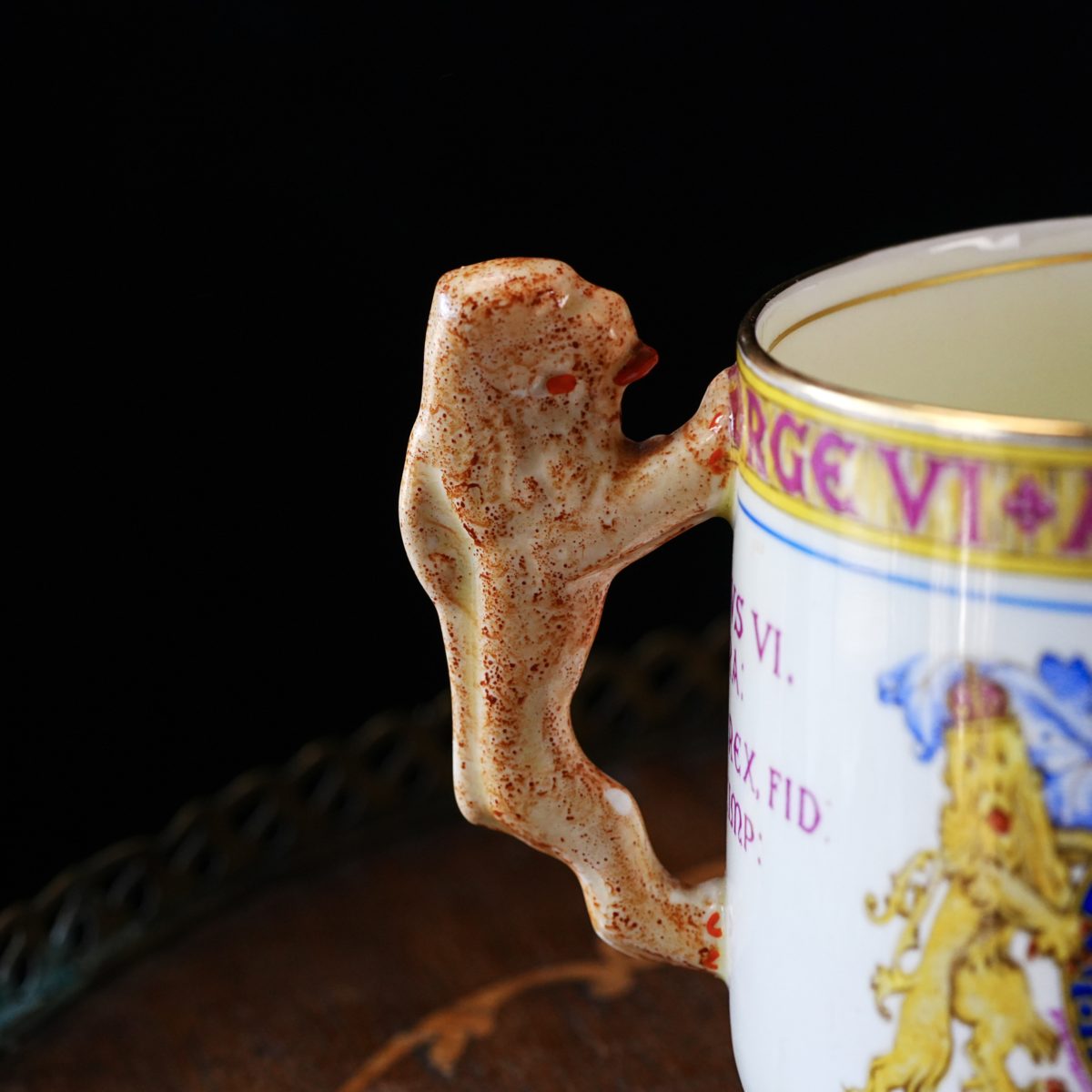
Why This Cup Has Two Handles
Lions for handles, a thousand-year-old passing ritual, and the shape English potters save for their biggest occasions.
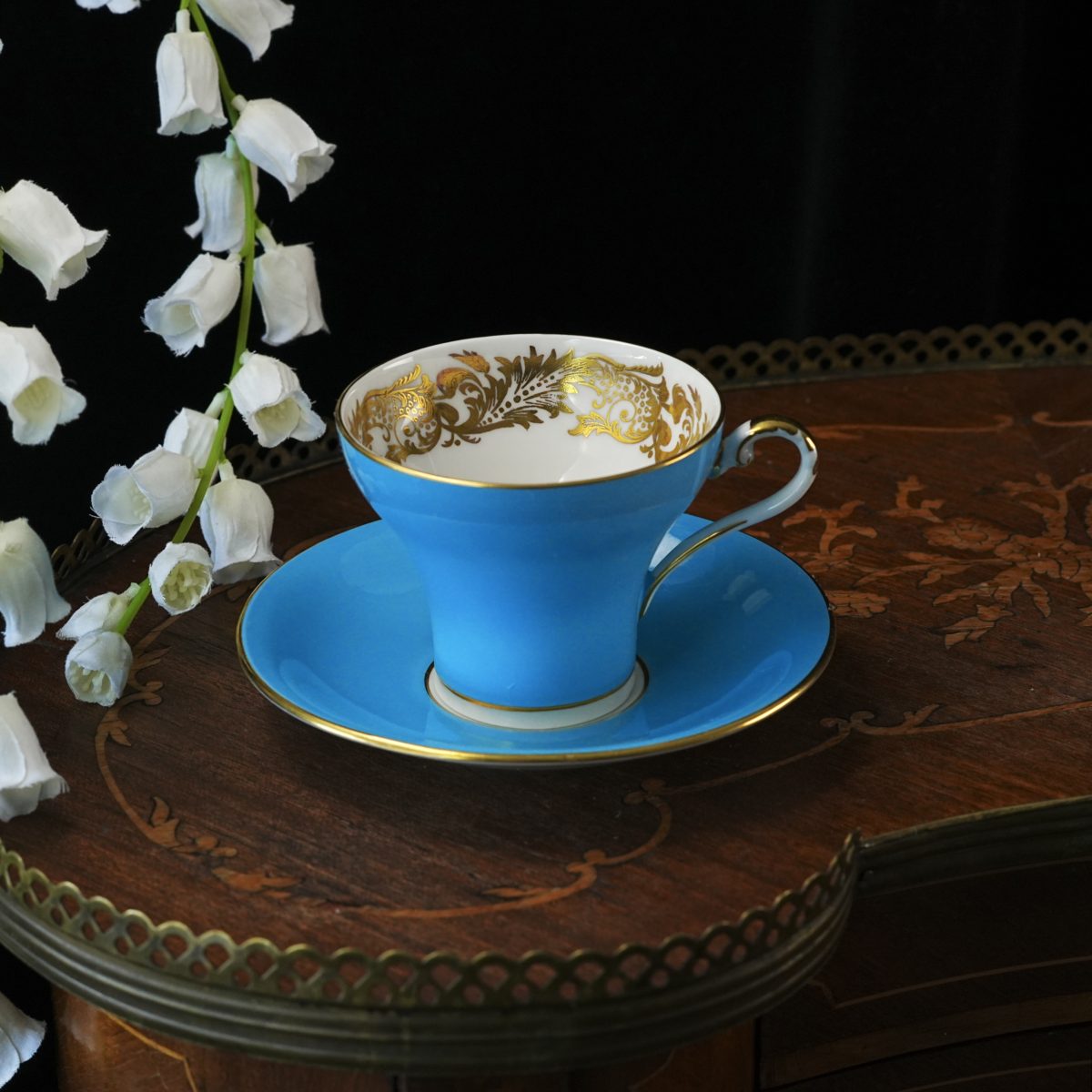
Why This Teacup Is Called a Corset
The name isn’t on the base. A turquoise Aynsley cup opens the trade’s quiet language of shapes — corsets, coffee cans, Dainties and Vogues.
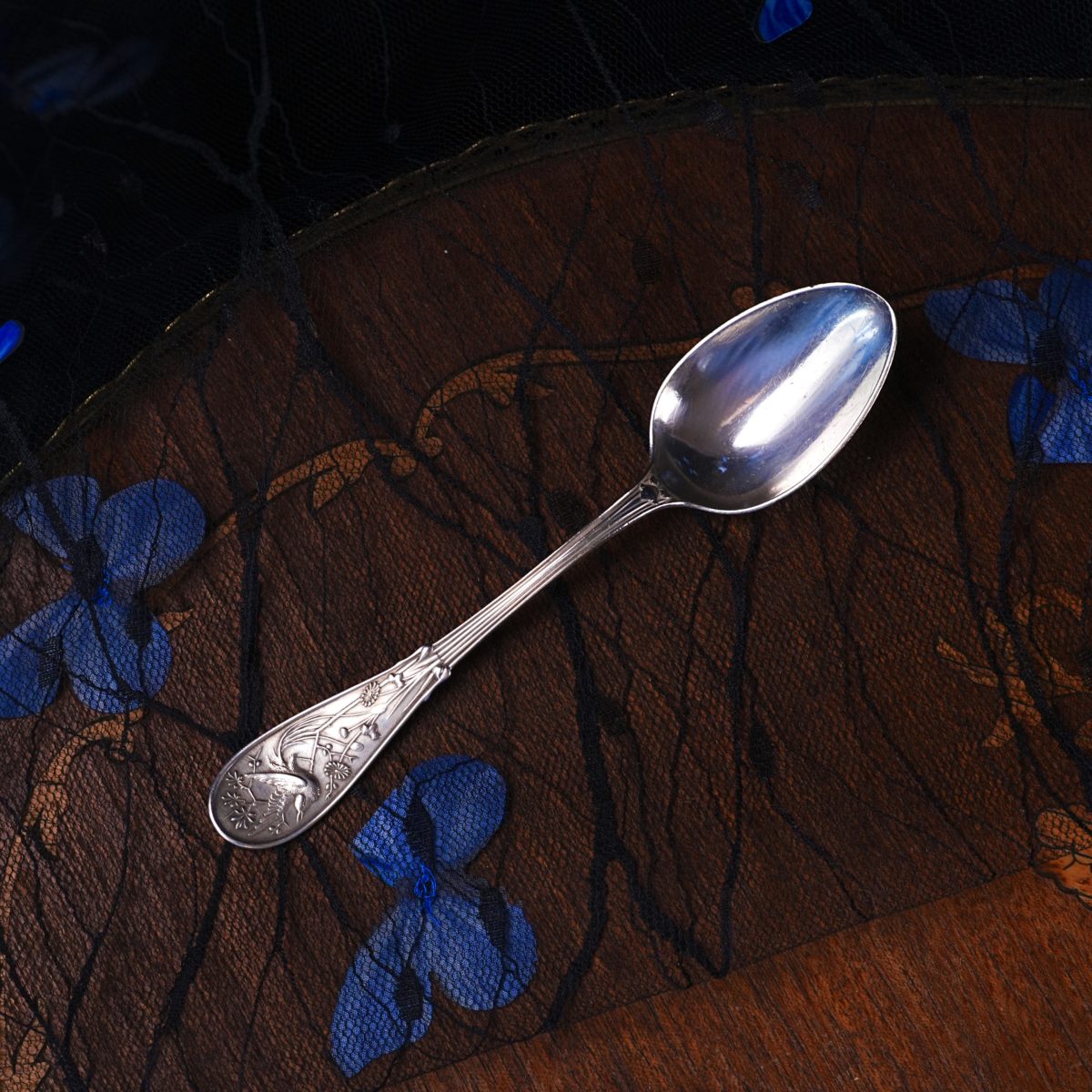
Pat. 1871: The Spoon That Brought Japan to American Silver
How Edward C. Moore saw Japan at a Paris world's fair and gave America its first Japonisme pattern.
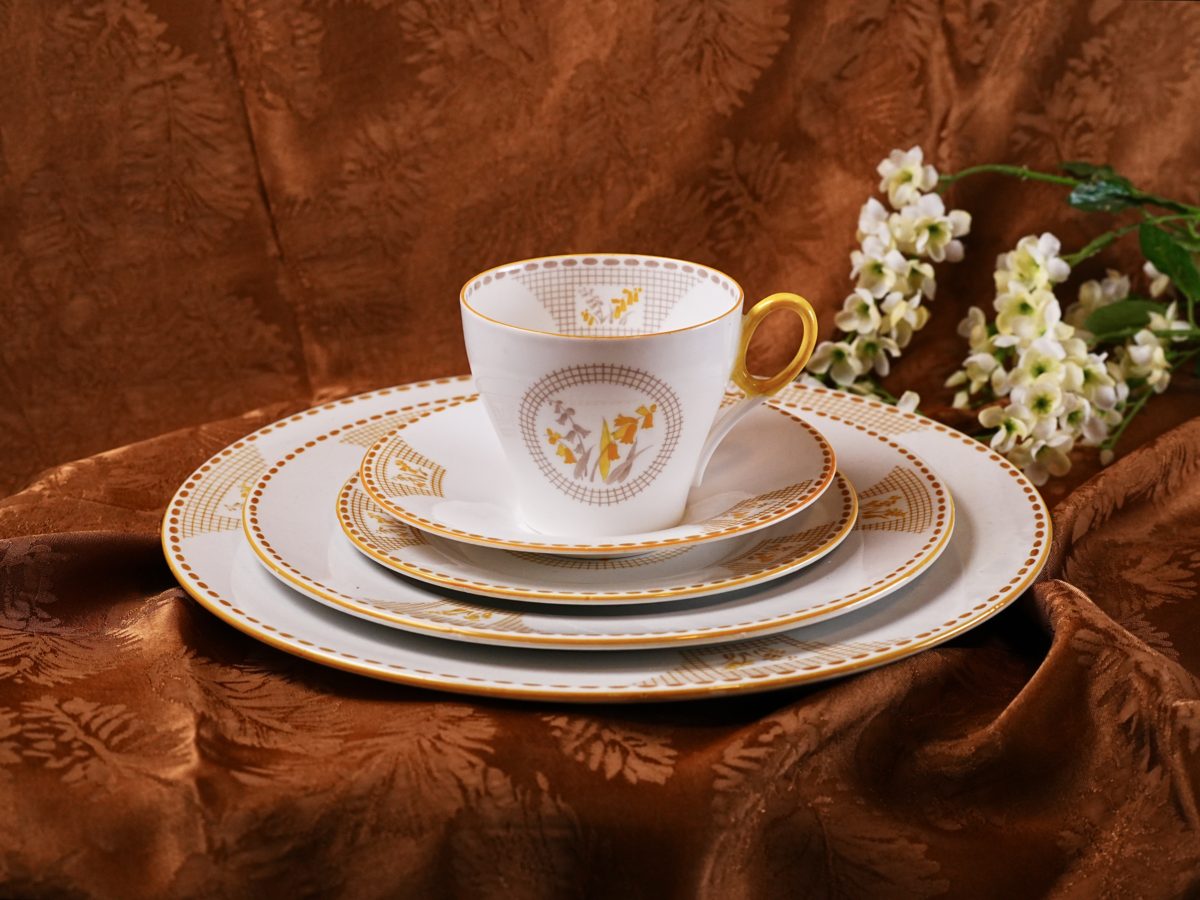
The Word Nobody Could Own: How Foley Became Shelley
Two Staffordshire potteries once shared a single name — what the records tell us about how they parted with it.
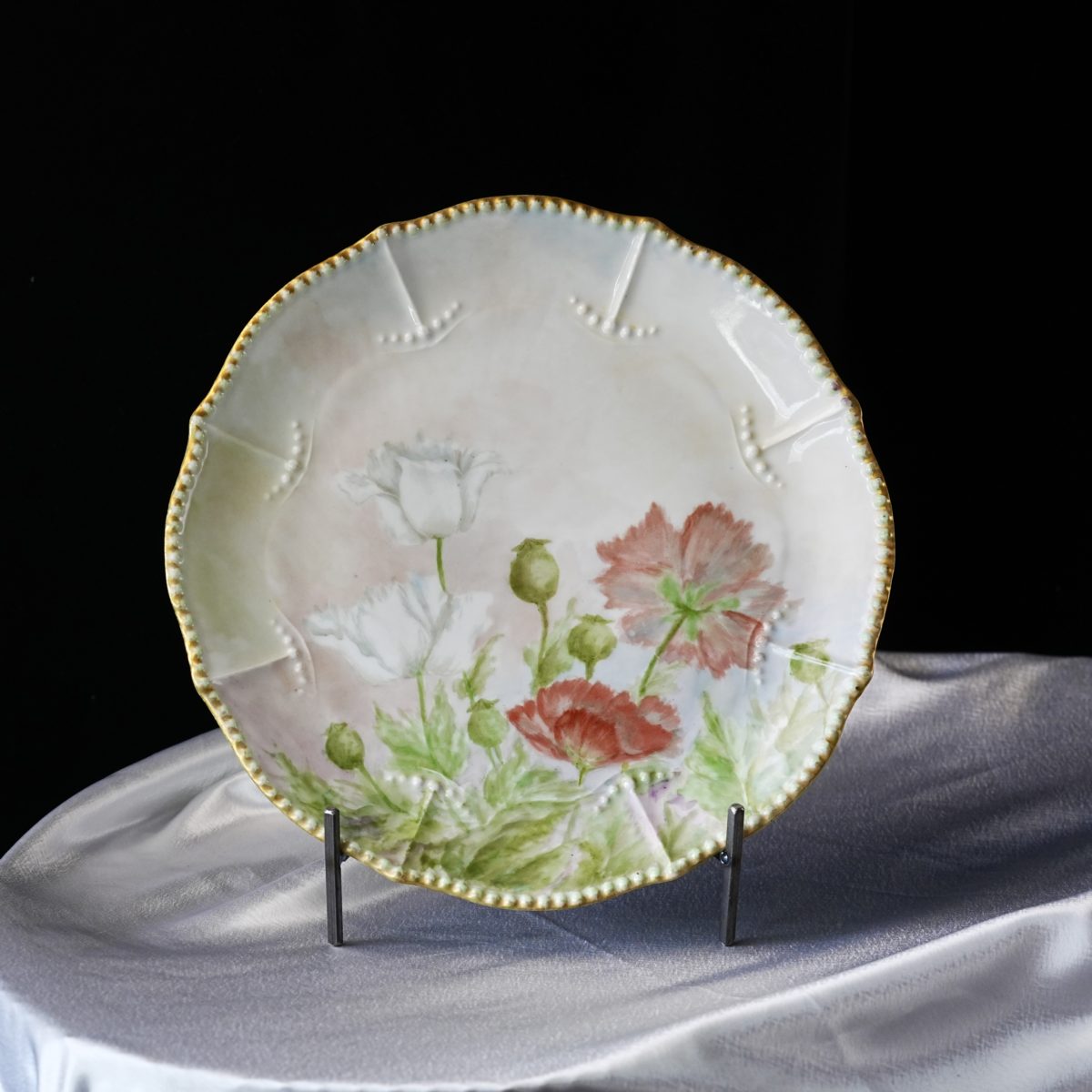
A Brush of Their Own: Women & the China They Painted
Barred from the art academies, a generation of women found their brush in porcelain — and rarely got to sign it.
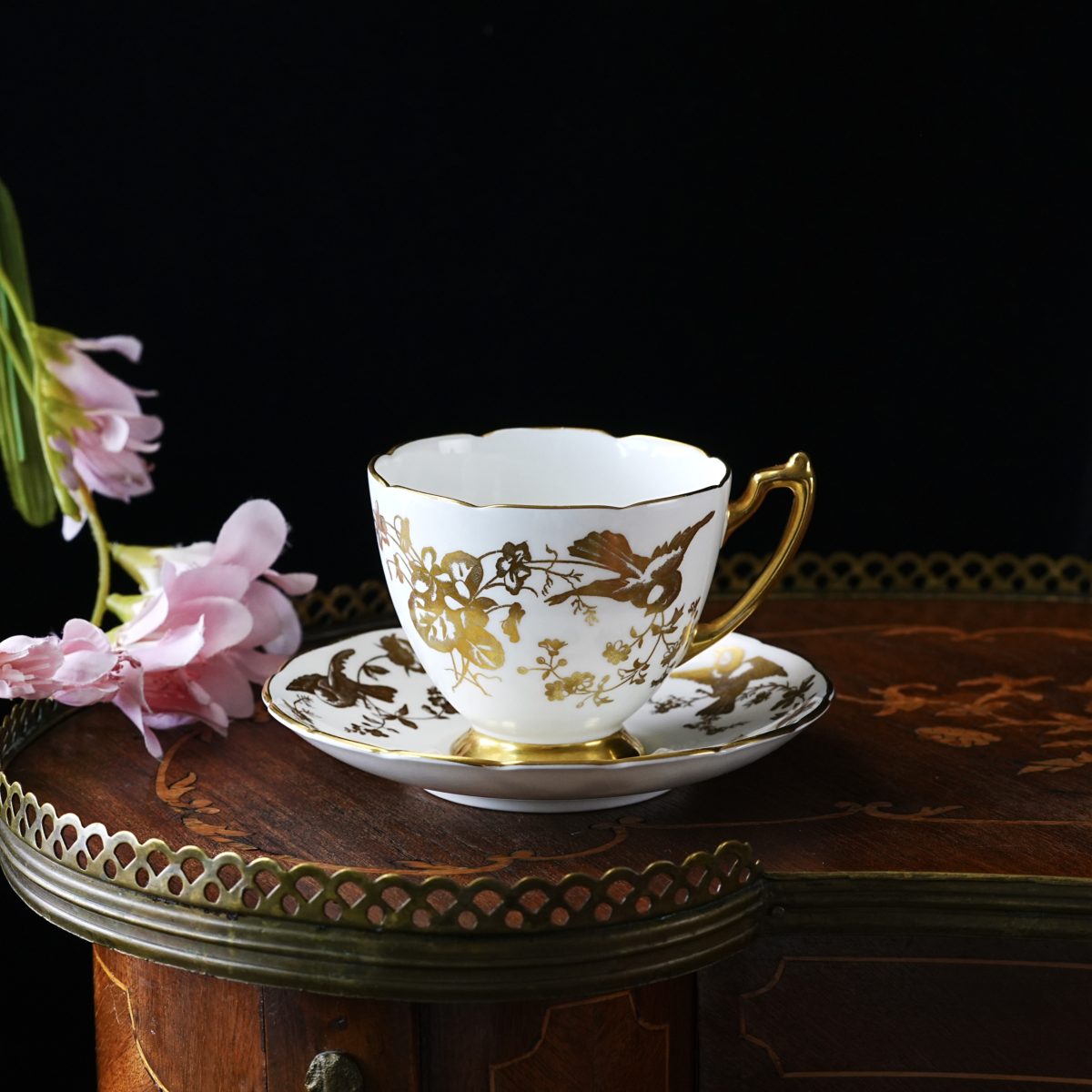
Fancy Birds: A Painted Aviary in Gold and Enamel
The exotic, half-imagined birds of Coalport, Worcester and Sèvres — the painters who made them, and how to read one.
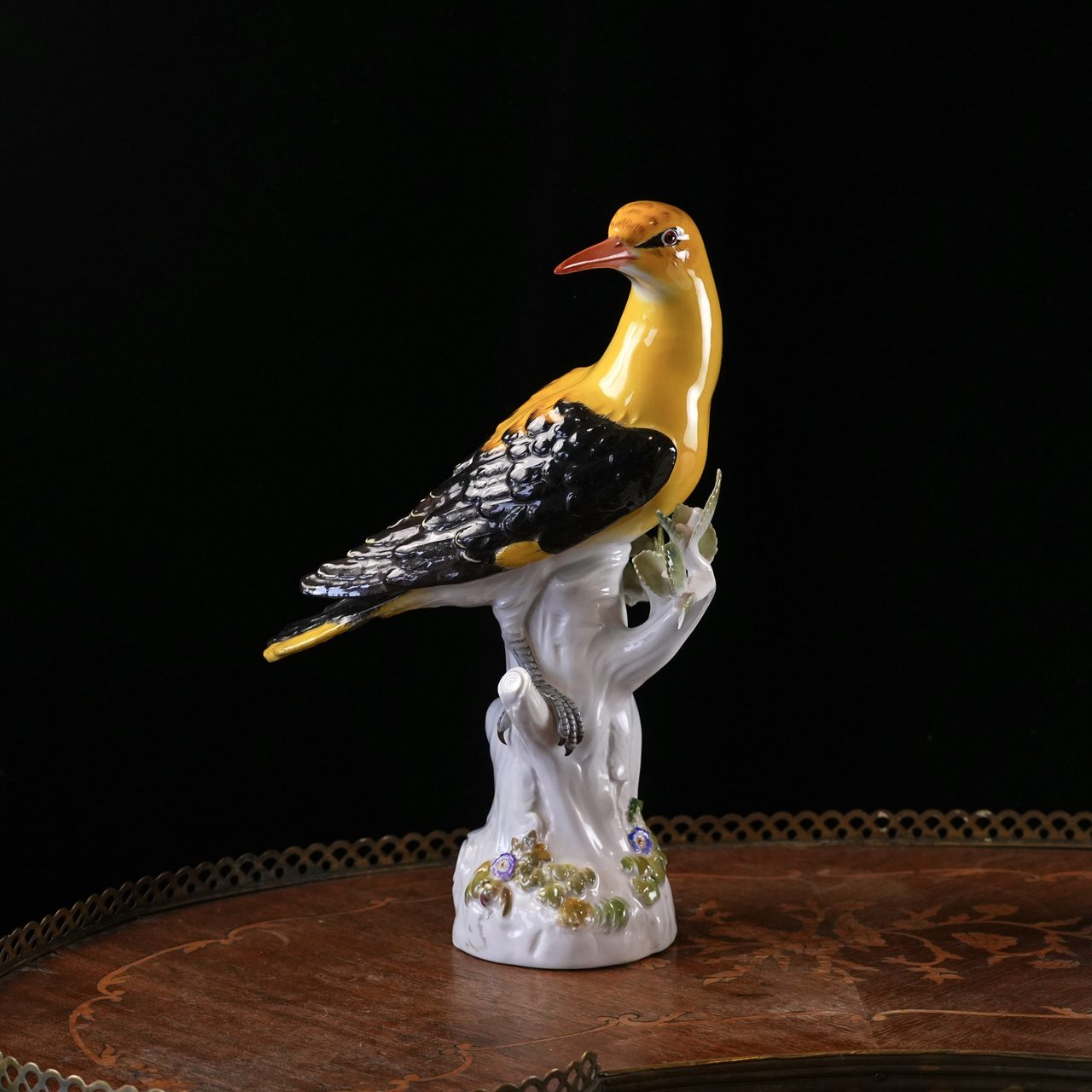
The Bird in the Canopy: Meissen's Golden Oriole
A shy yellow songbird, a king's porcelain menagerie, and a model cast for nearly three hundred years.
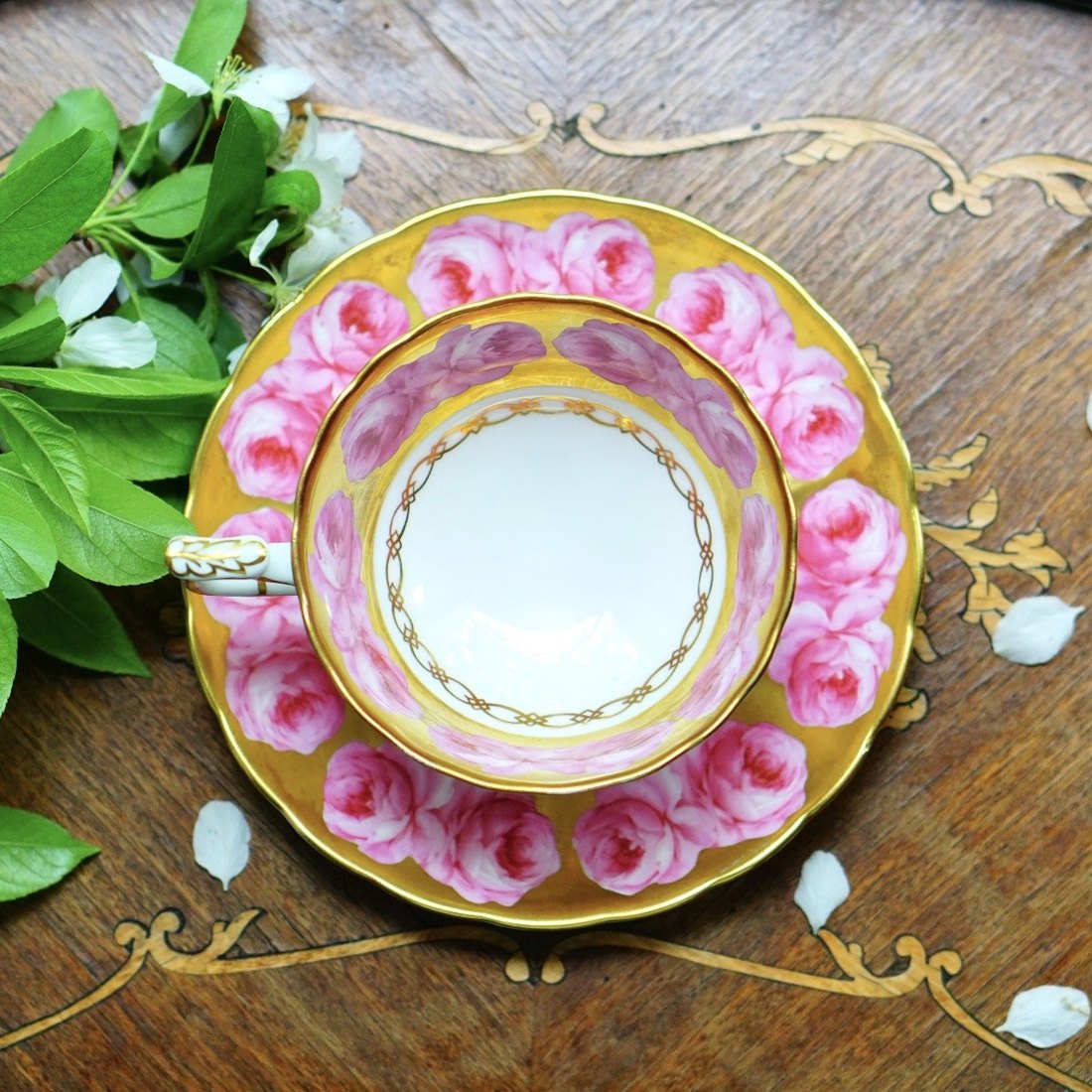
The Gilded Roses of Royal Chelsea
A collector's guide to the anchor-marked bone china — and how to read its age in your hand.
How to read an Aynsley backstamp
Dating England's “painter's china” from the marks on its base.
Caring for vintage bone china
Washing, displaying and storing gilded tea ware so it lasts another lifetime.