Why This Cup Has Two Handles
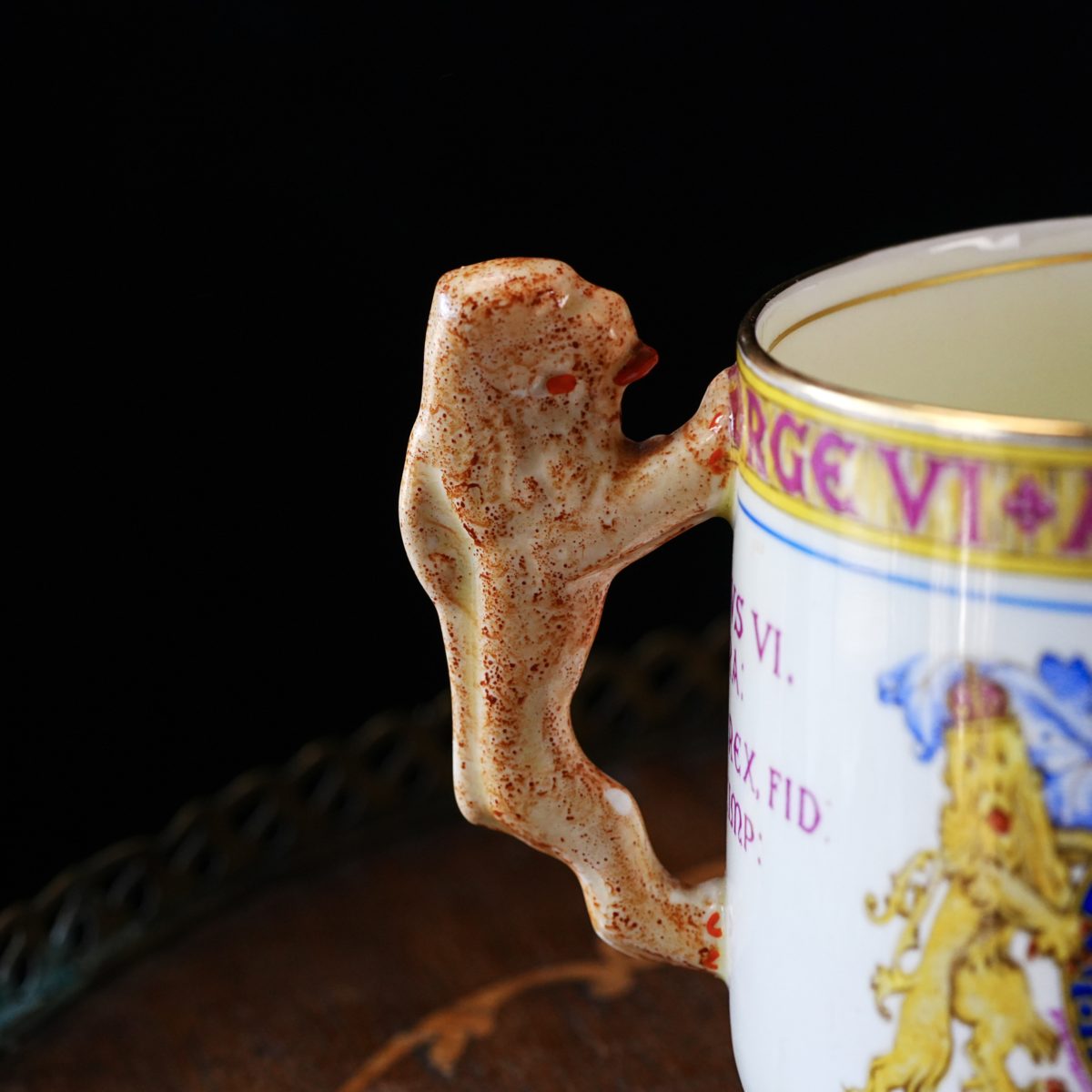
The handles on the cup below are lions — two of them, unglazed, standing guard on either side of a cup made for the coronation of George VI in 1937. Cups of this kind are called loving cups, and the first thing to understand about them is the handles. They are not there for holding. They are there for passing.
A cup that is passed
The loving cup is one of the oldest ceremonial vessels in England, and unlike most old things it is still in active service. At the livery company dinners of the City of London, the cup — lidded, two-handled, filled with spiced wine — still makes its way down the table from right to left. The choreography is precise: you stand, you bow to your neighbour, the lid is lifted with the right hand, the drinker drinks and wipes the rim with the napkin kept tied to a handle, the lid goes back, bows again, and the cup moves on. And all the while, the person beside the drinker stands and faces away — guarding the drinker's back.
Why guard anyone's back at a dinner party? Here the trade tells a story. In the year 978 the young King Edward — remembered as Edward the Martyr — was handed a cup of welcome at Corfe Castle and, both hands occupied with drinking, was stabbed from behind; the ceremony's guarded back, so the story goes, is a thousand-year-old echo of that murder. I would love the tale to be true. The Anglo-Saxon Chronicle, less obligingly, records the King murdered on horseback. The ceremony keeps its shape all the same, and I find I like it better for knowing both versions.
A ritual can outlive its own reason, and keep only the shape of the care it was built around.
Cousins everywhere
Two-handled sharing cups are one of those ideas that every culture seems to arrive at once there is something worth toasting. Scotland has the quaich, its name from the Gaelic for cup, pressed into weddings to this day; Russia passed the bratina at feasts; France has given brides the coupe de mariage since at least the thirteenth century. The English loving cup belongs to this family — the marriage and banquet vessel, made in silver for those who could and in wood or pottery for those who could not. Its grandest silver descendants took on a life of their own: put a lid on a loving cup, raise it on a plinth, and you have drawn the family tree of nearly every sports trophy on earth. There is even a small fleet of English football clubs still exchanging coronation loving cups under a tradition begun in 1937 — the very year of the lion-handled cup above.
Why the potters saved it for kings
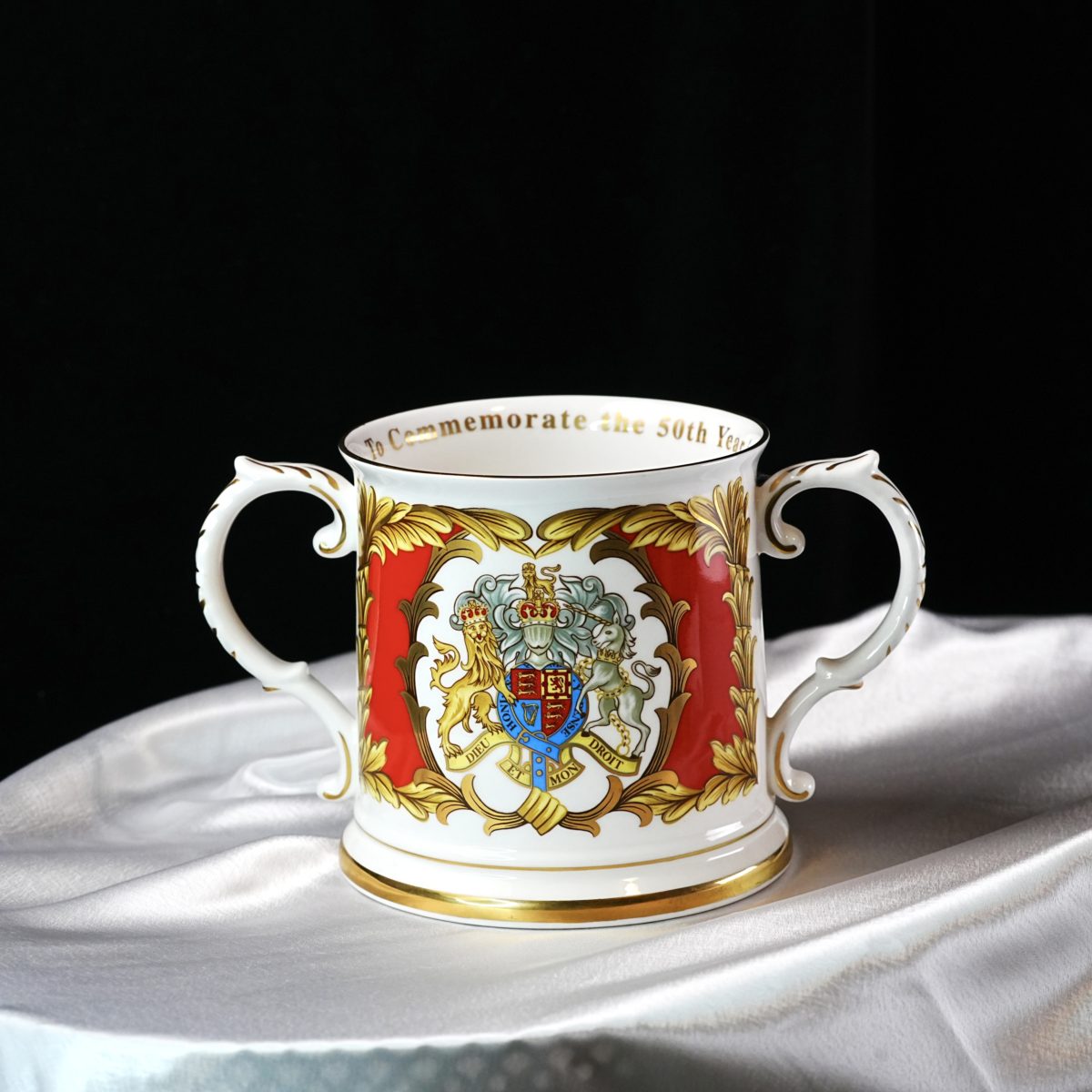
Somewhere along the way, English china factories arrived at an unwritten rule of rank. An ordinary year gets a mug; a royal wedding, jubilee or coronation gets teaware; and for the greatest occasions the factories reach for the loving cup, the way a cathedral reaches for its best bells. I cannot point to a memo that says so — it is simply what the shelves show. Our own shelf shows it plainly: six loving cups spanning a full century, and every one of them marks either a crown or a milestone of one.
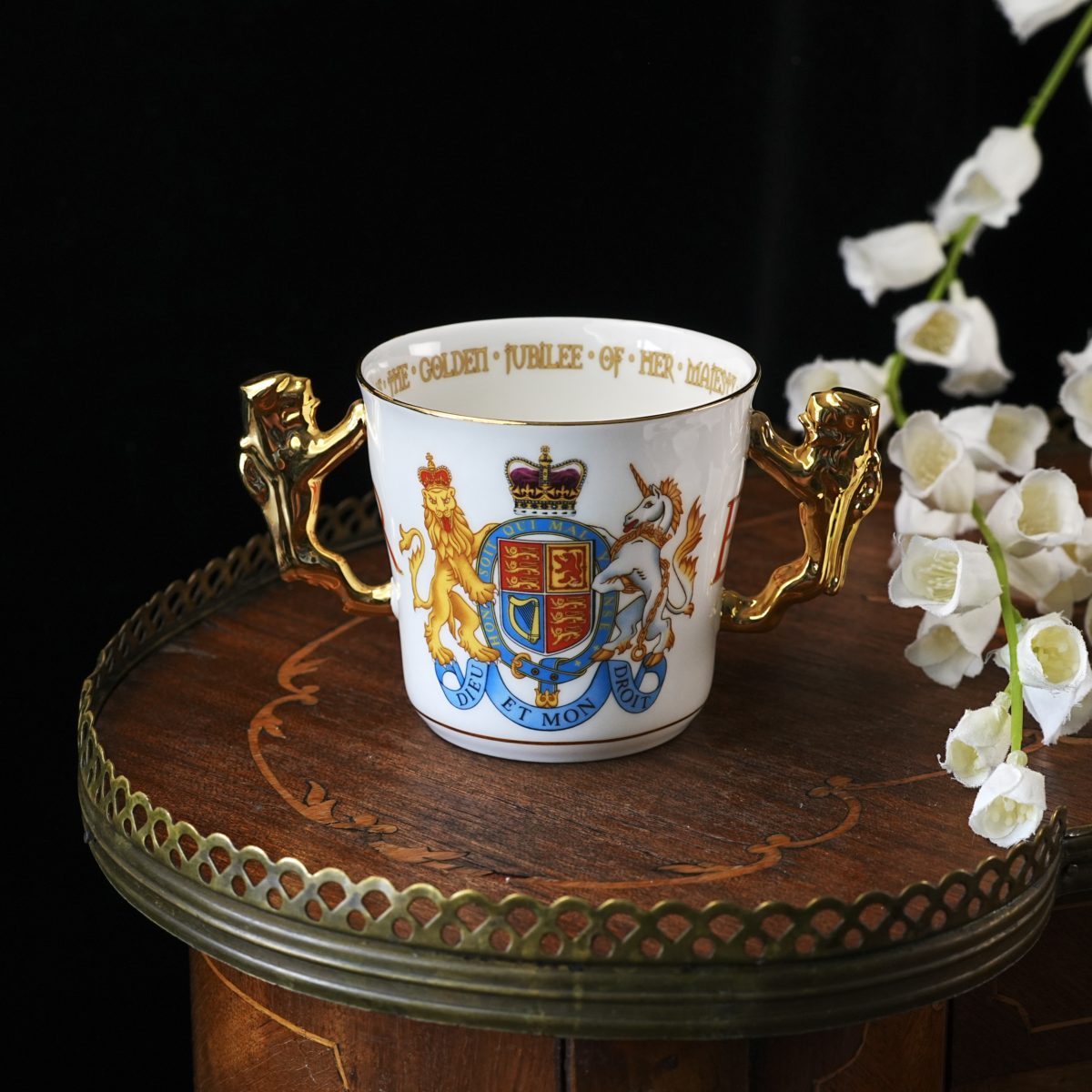
The Paragon lions alone tell the story three times over. The 1937 coronation cup carries them raw and sculptural, in unglazed amber against the white. For the Queen's silver wedding in 1972 they return dressed in silver lustre, standing guard beside a cipher promising 25 Years of Happiness in Married Life. And for the Golden Jubilee of 2002 they come back gilded head to tail — the same heraldic beasts, re-costumed for each occasion across sixty-five years of one factory's habit.
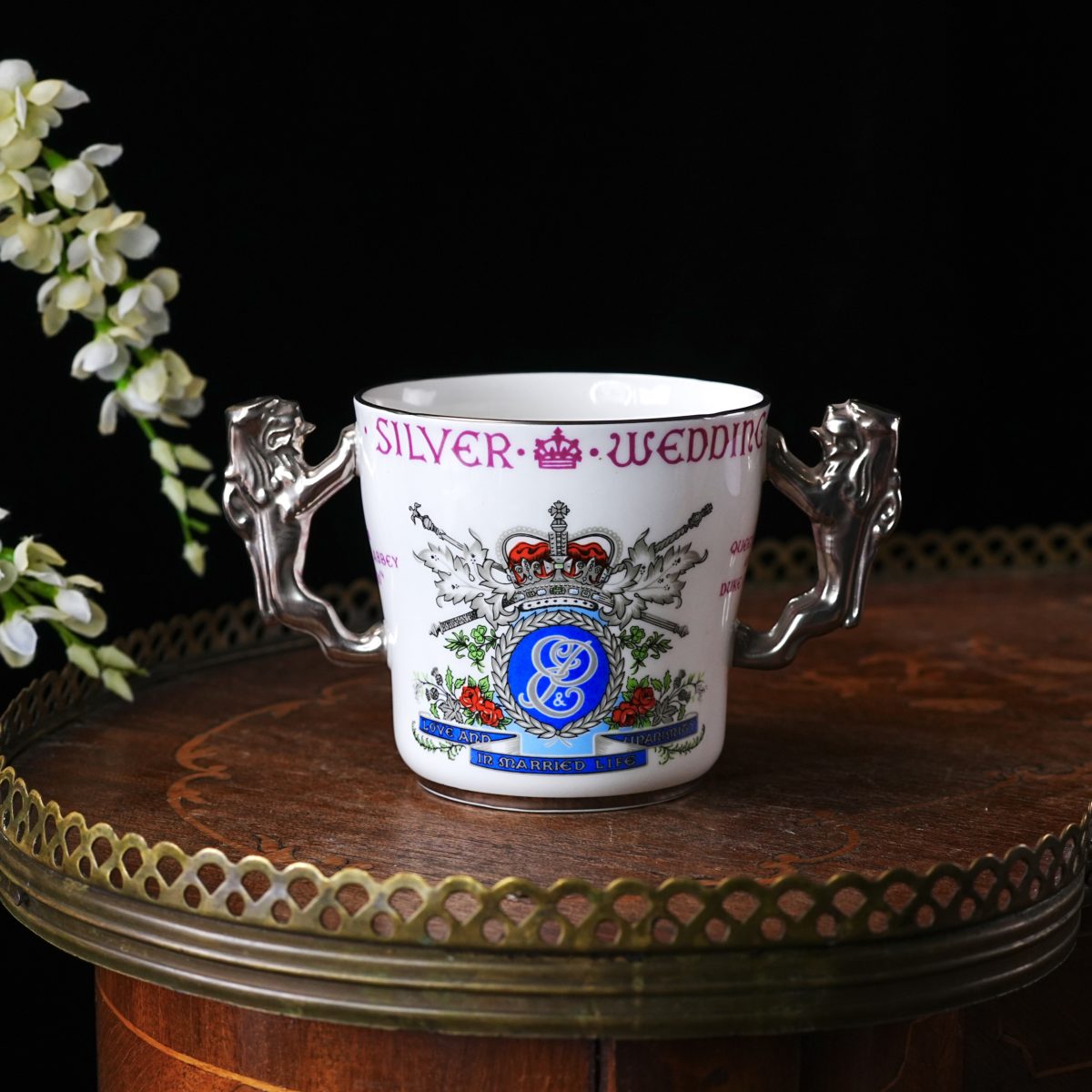
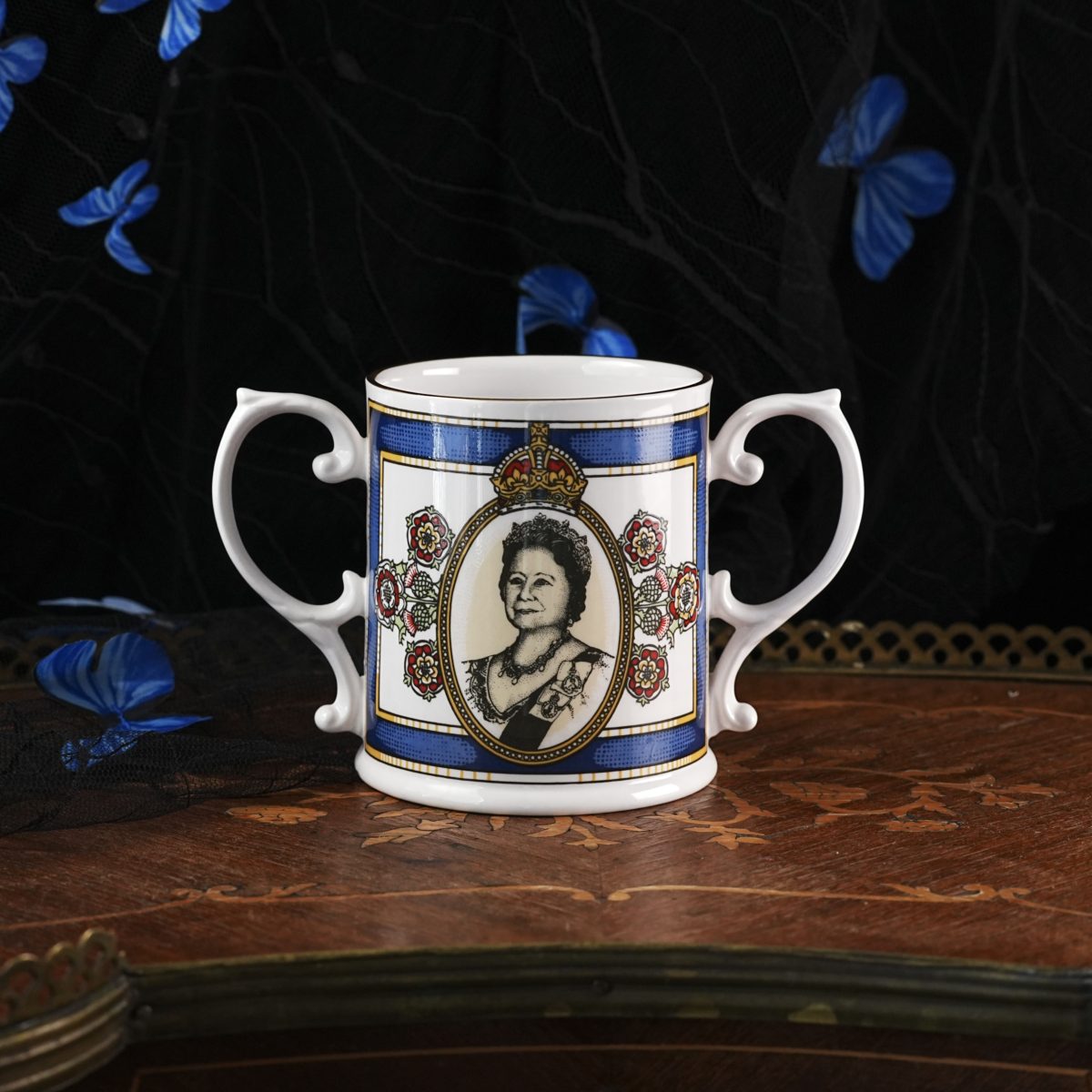
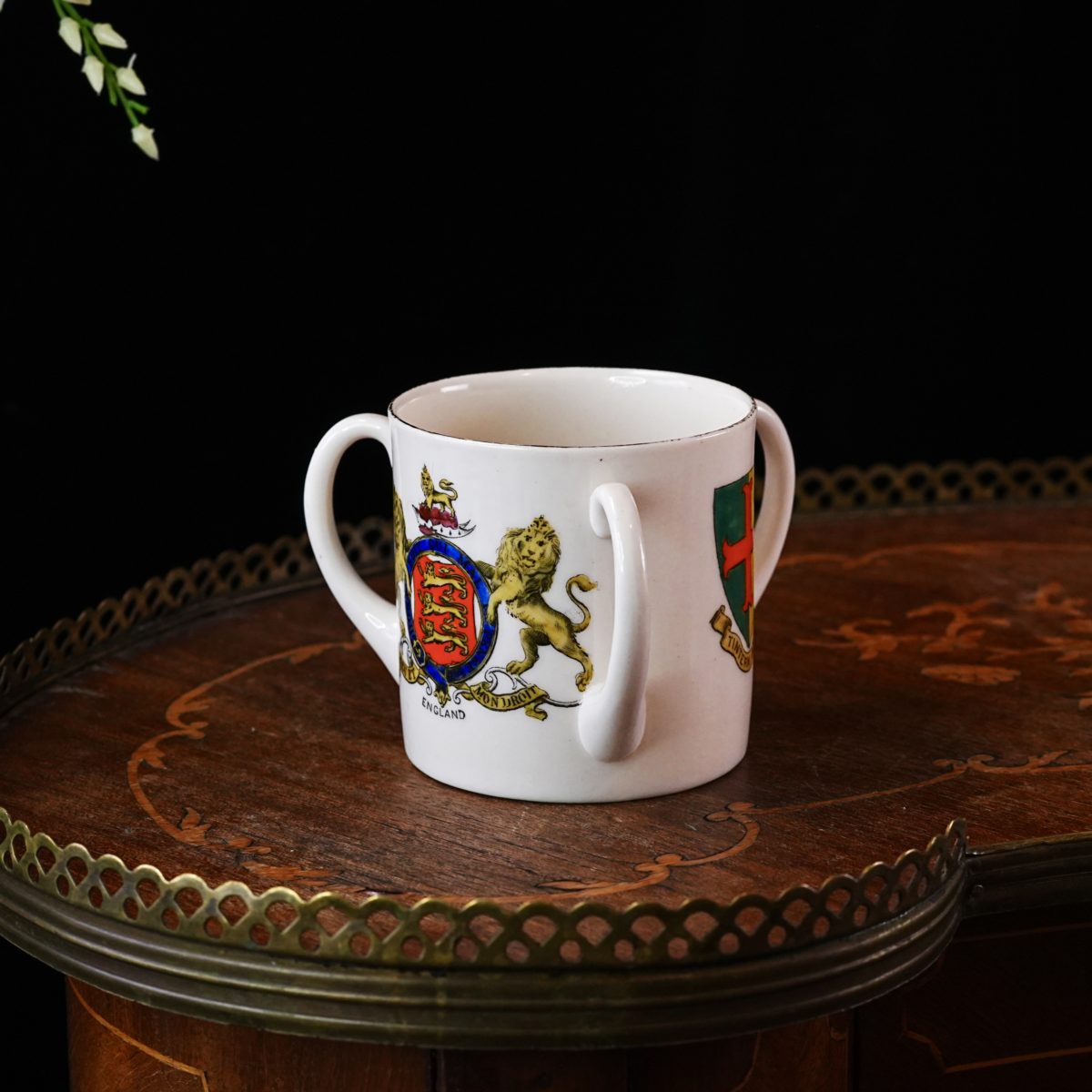
The rest of the shelf fills in the century. A Caverswall cup of 1990 for the Queen Mother's ninetieth birthday, from the young Longton firm that made limited loving cups its calling card; a Royale Stratford cup for the 2002 Golden Jubilee with the toast lettered in gold around the inside of the rim — the traditional spot, placed so the drinker reads it exactly as the cup is raised. And the eldest of the family is the small three-handled Goss tyg from around 1900, which manages to be a loving cup and a seaside souvenir at once; the curious empire that made it is a story of its own.
Reading one in the hand
A few things worth noticing when a loving cup turns up in front of you:
- Count the handles. Two is the standard form; three makes it a tyg, an older tavern shape that shares the same passing logic. A cup with one handle, whatever the seller says, is a mug.
- Look inside the rim. Commemorative loving cups often carry their inscription around the inner rim rather than the outer wall — a small inheritance from the days when the words were meant to meet the drinker's eye mid-toast.
- Do not expect a lid. The silver originals were lidded; their china descendants almost never are. The ceremony these cups quote lives on in the form, not the function.
- Mind the occasion. Factories issued loving cups for the biggest events only, so the form itself hints at significance — and explains why a loving cup generally outprices the mugs and beakers of the same year.
- Treat it as sculpture. Nobody passes spiced wine around a dinner table in bone china. These are display pieces, descendants of trophies — happiest on a shelf, facing the room, lions outward.
All six loving cups in this piece — the Paragon lions in their three costumes, the Caverswall, the Royale Stratford and the little Goss tyg — are in the shop now.
Browse Royal Commemoratives Shop on Etsy ↗Sources: the loving cup's definition, materials, wedding use, the quaich, bratina and coupe de mariage, the trophy lineage, the football clubs' 1937 tradition, and the Anglo-Saxon Chronicle's account of Edward the Martyr's death from BADA, Terms of the Trade: Loving Cups; the City livery ceremony's choreography and the Edward the Martyr legend as told in the City from the Guild of Young Freemen. Details of the cups themselves — the Paragon lions of 1937, 1972 and 2002, the Caverswall and Royale Stratford cups and the Goss tyg — recorded from the objects in the shop.