A Brush of Their Own: Women, the Closed Academy, and the China They Painted
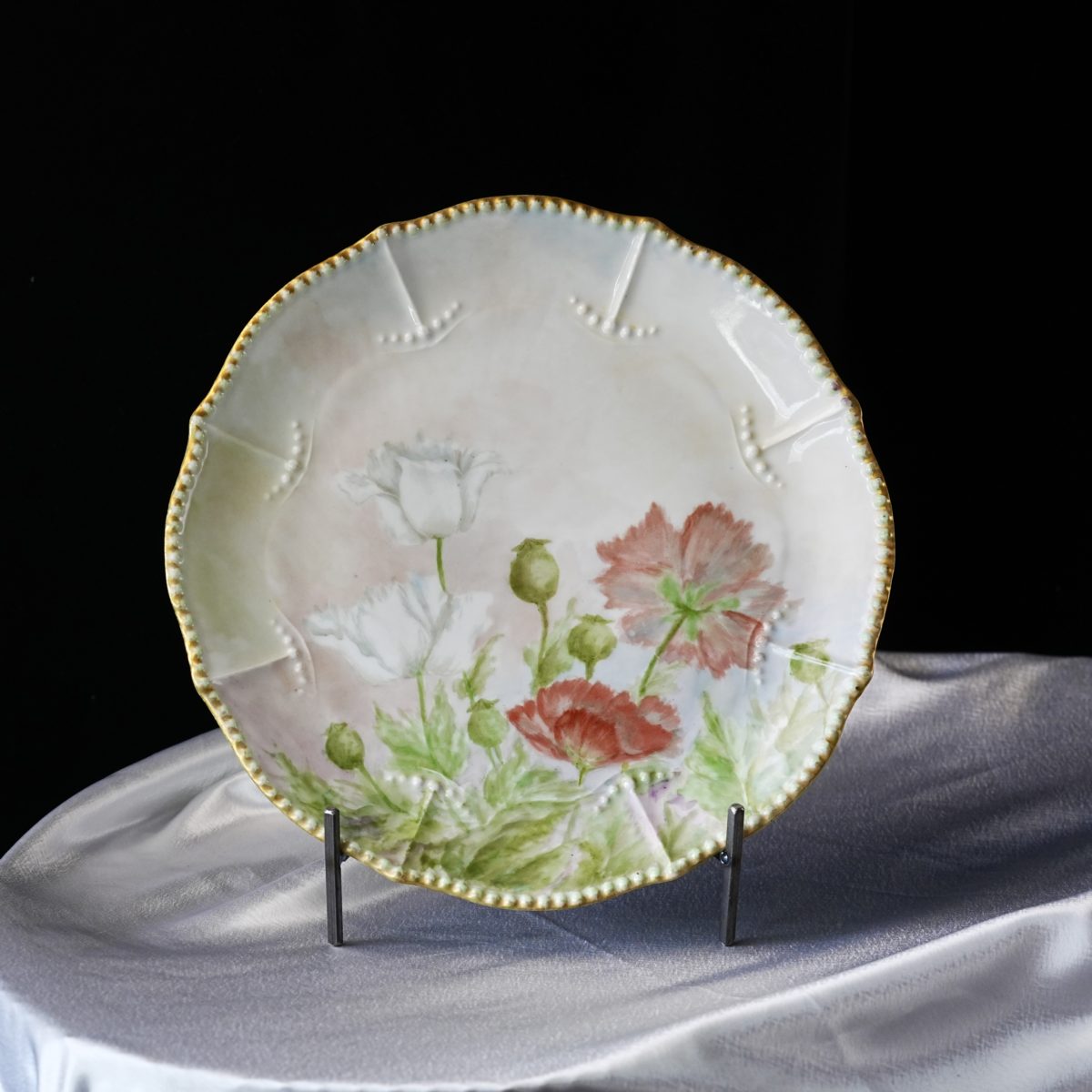
Someone painted this plate for Christmas of 1899, and signed it only with a date. White and scarlet poppies lean across the ivory ground in soft, confident washes; the rim is beaded in gold. We do not know her name — but it was almost certainly a her, because in 1899 a woman with a gift for painting and an ivory blank in front of her was doing exactly what her century had decided a woman with a gift for painting ought to do.
The bolted door
To understand why she was painting a plate and not a canvas, you have to stand for a moment outside the institutions that decided what “art” was. In Britain that meant the Royal Academy, and for the first ninety years of its life the Academy simply had no room for women in its schools. The wall did not break until 1860, and it broke by accident: a young woman named Laura Herford submitted her drawings signed only “L. H.,” was admitted on the assumption she was a man, and could not tidily be turned away once she arrived.
Getting in was only half the barrier. Women students were kept out of the life class — drawing from the nude model — on grounds of decency, and were left to copy from plaster casts and clothed figures. That sounds like a technicality. It was in fact the whole game. The life room was the training ground for the human figure, and the human figure was the foundation of “history painting,” the grand, prestigious summit of the profession. Bar a woman from the life class and you quietly bar her from the top of the art world; she was funnelled, instead, toward the genres thought suitable to her — flowers, still life, the decorative. Women did not win a life class of their own at the Academy until 1893. In Paris, the famous École des Beaux-Arts held out even longer, admitting its first women only in 1897, and then only after years of pressure from an organised union of French women artists.
The side door
So the front door was bolted. But there was a side door, and it was standing open, because the same society that would not let a woman study anatomy positively encouraged her to paint in a genteel, ornamental way. Drawing and watercolour were an approved feminine “accomplishment,” like music or fine needlework — something a respectable young lady did to decorate a home and demonstrate her refinement. China painting took that accomplishment and gave it a surface, a purpose, and — crucially — the possibility of being sold.
From the 1870s until the First World War, painting on porcelain became an enormous movement among middle-class women in Britain, Europe and North America. Undecorated “blanks” — most famously the fine white porcelain of Limoges — were imported by the crate, sold to china-painting schools, department stores and home painters, decorated at the parlour table and fired. It was vast. By the turn of the century, one estimate puts more than twenty-five thousand china painters at work in the United States alone, the overwhelming majority of them women. Organisations such as the Society of Decorative Art in New York gave them somewhere to exhibit and, quietly, to earn. This was the rare corner of the art world where a woman's work was not only permitted but welcomed.
Told they could not be artists, thousands of women became instead the anonymous hands behind a century of beautiful china.
The paintress, and the ceiling
It would be a pretty story to leave there, and a dishonest one. The applied arts gave women paid, respectable work, but on markedly unequal terms. In the great Staffordshire and Worcester factories the female decorators — the “paintresses” — were largely confined to the finishing end of the trade: laying grounds, gilding, and hand-colouring the printed outlines that others had engraved. The reasoning was circular and convenient — women were said to have a special aptitude for “repetitive detailed work,” which is to say for the parts of the job that paid least and carried no name. Well into the twentieth century they were paid less than the male “artists” who signed the show pieces, and the trade unions actively worked to keep them there; in some potteries women were not even permitted the hand-rest that steadied a painter's brush.
Amateur or professional, the same word shadowed them: the home painters were dismissed as “amateur” however fine their work, and the factory women were “decorators,” not artists. It was, at once, a genuine livelihood and a low ceiling — a door held open exactly wide enough to let a woman through, and no wider.
The ones who signed
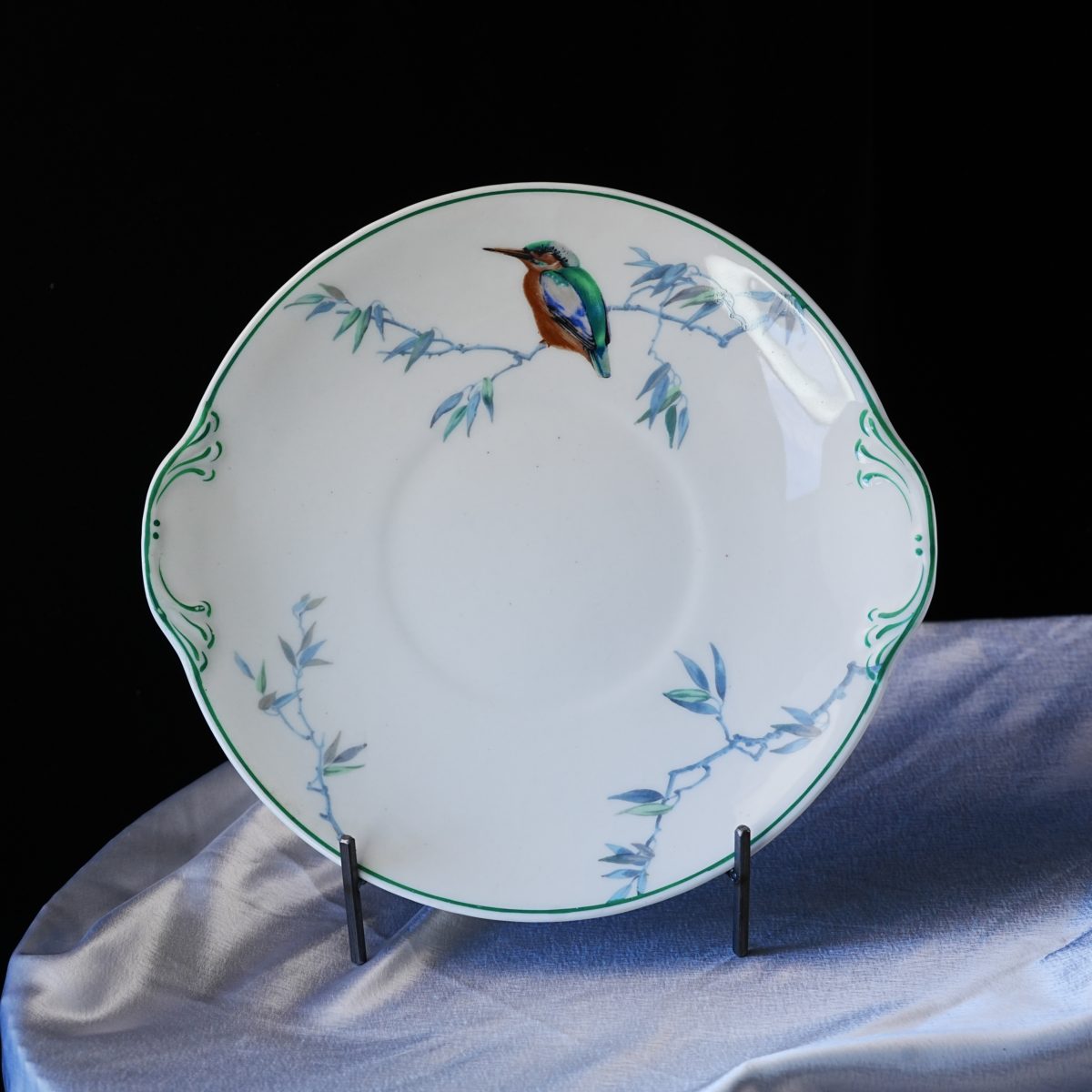
And yet some of them got their whole arm through the door. At Doulton's Lambeth art-pottery studio, two sisters — Hannah and Florence Barlow, daughters of a bank manager thrown onto their own resources when their father died — became the first women artists the firm employed, Hannah from 1871 and Florence from 1873. They were not confined to filling-in: each was given a signature style. Hannah incised her beloved horses, deer and farm animals straight into the wet clay in sgraffito; Florence, nicknamed “Birdie,” painted birds and foliage in delicate slip. They signed their work, won medals at the great international exhibitions, and were written up in the ladies' magazines of the 1880s as artists in their own right.
The side door, in the end, opened onto more than anyone intended. The women who began by colouring-in and gilding learned the whole trade from the bench up — and a few walked out the far side as its leaders. Clarice Cliff started at thirteen as a gilder, adding gold lines to other people's designs, and by 1930 was Art Director of two Staffordshire factories, designing the shapes as well as the patterns. Susie Cooper rose the same way, from decorating bench to art director to founder of her own pottery. They are remembered now as designers, with their names on the base — the thing the paintresses before them were almost never allowed.
Why this belongs in a shop of old china
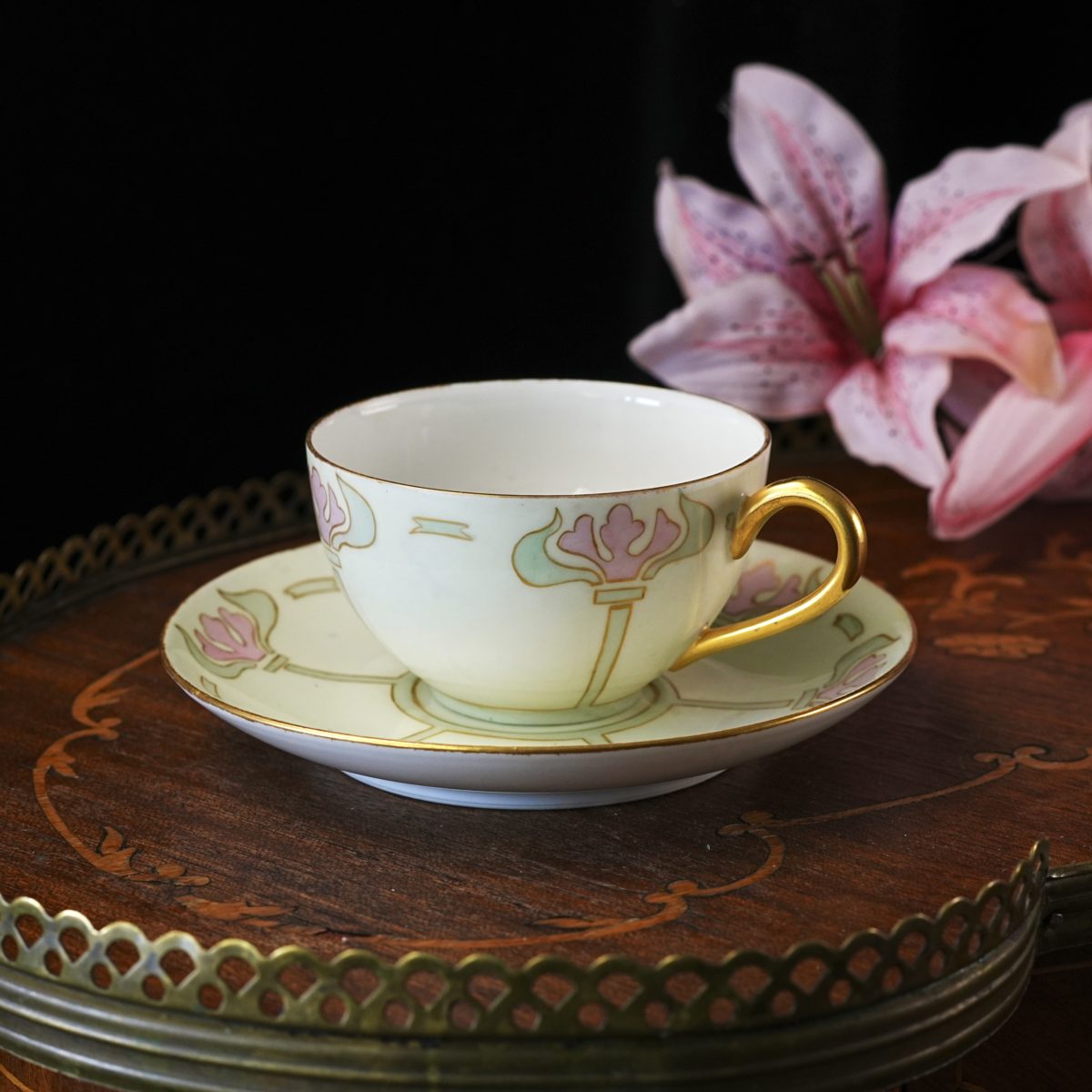
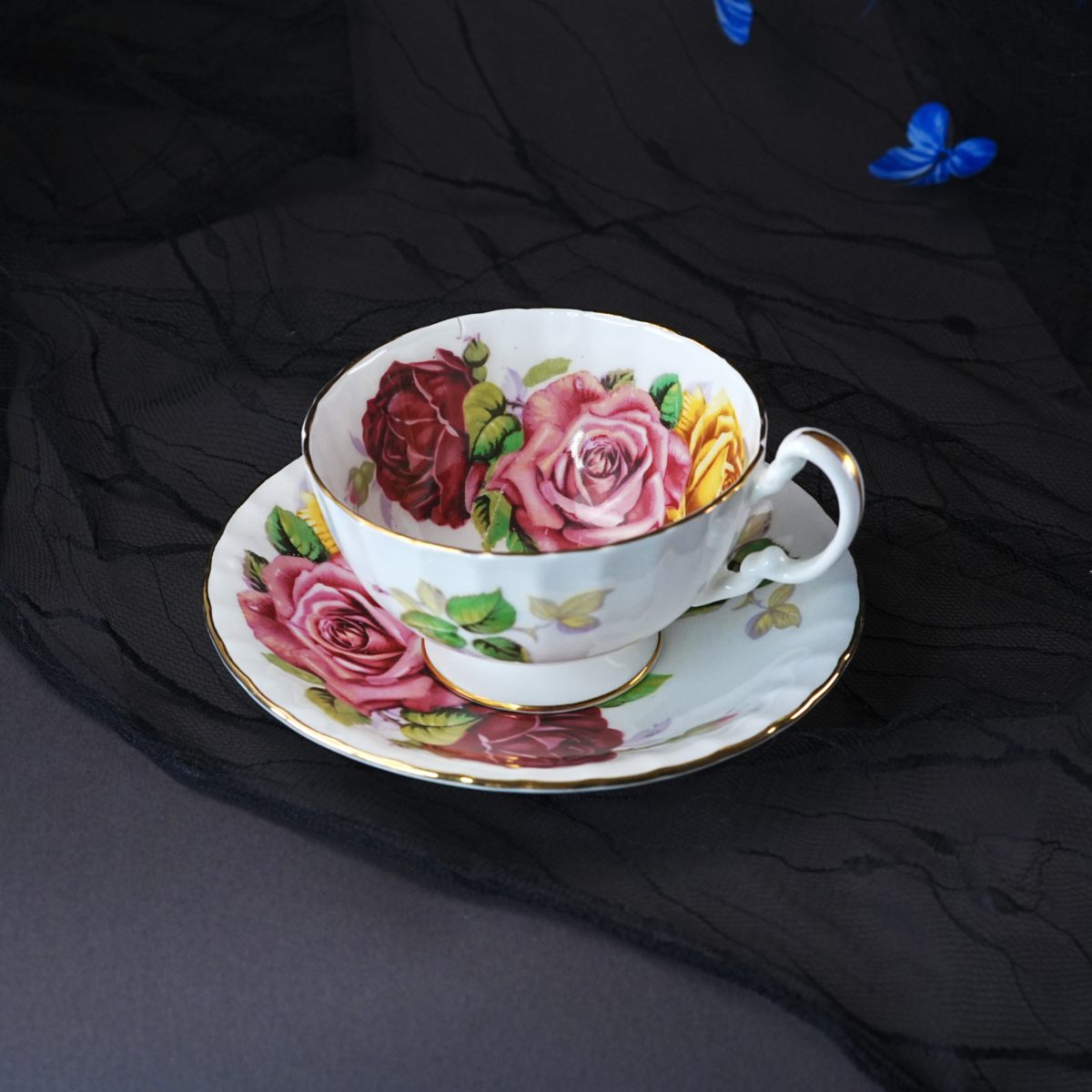
Here is the reason any of this matters to a shelf of vintage teacups. Turn over almost any hand-painted or hand-tinted piece in this collection — the Aynsley roses tinted petal by petal, the Doulton bird laid in with a fine brush, the Coalport blossoms, the Limoges plate someone finished for a Christmas long ago — and you are almost certainly holding the work of a woman whose name was never recorded. The factory paintress at her bench and the amateur at her parlour easel left the same thing behind: enormous skill, freely given to a small surface, and hardly ever a signature.
That is worth remembering the next time a hand-painted cup is waved off as “just a teacup.” It was, for a very long time, one of the only places a woman was allowed to be an artist at all. The work outlived the injustice. It is still here, still bright, still asking to be looked at properly.
The hand-painted pieces below — and many more in the shop — are the surviving work of those mostly-anonymous hands. Come and look at them closely.
Browse the collection Shop on Etsy ↗Sources: women and the Royal Academy Schools, Laura Herford's 1860 admission, the exclusion from life drawing and the 1893 women's life class from the Royal Academy of Arts and Art UK; the École des Beaux-Arts admitting women in 1897 from Wikipedia; china painting as a respectable accomplishment, the Limoges-blank amateur movement and the “25,000” figure from the Metropolitan Museum of Art and the Journal of Antiques & Collectibles; the factory paintress, unequal pay and the withheld hand-rests from Arts & Crafts Tours; Hannah and Florence Barlow at Doulton Lambeth from Wikipedia and Potteries Auctions; Clarice Cliff and Susie Cooper from Wikipedia and Wikipedia. Pieces and dates recorded from the objects in the shop.