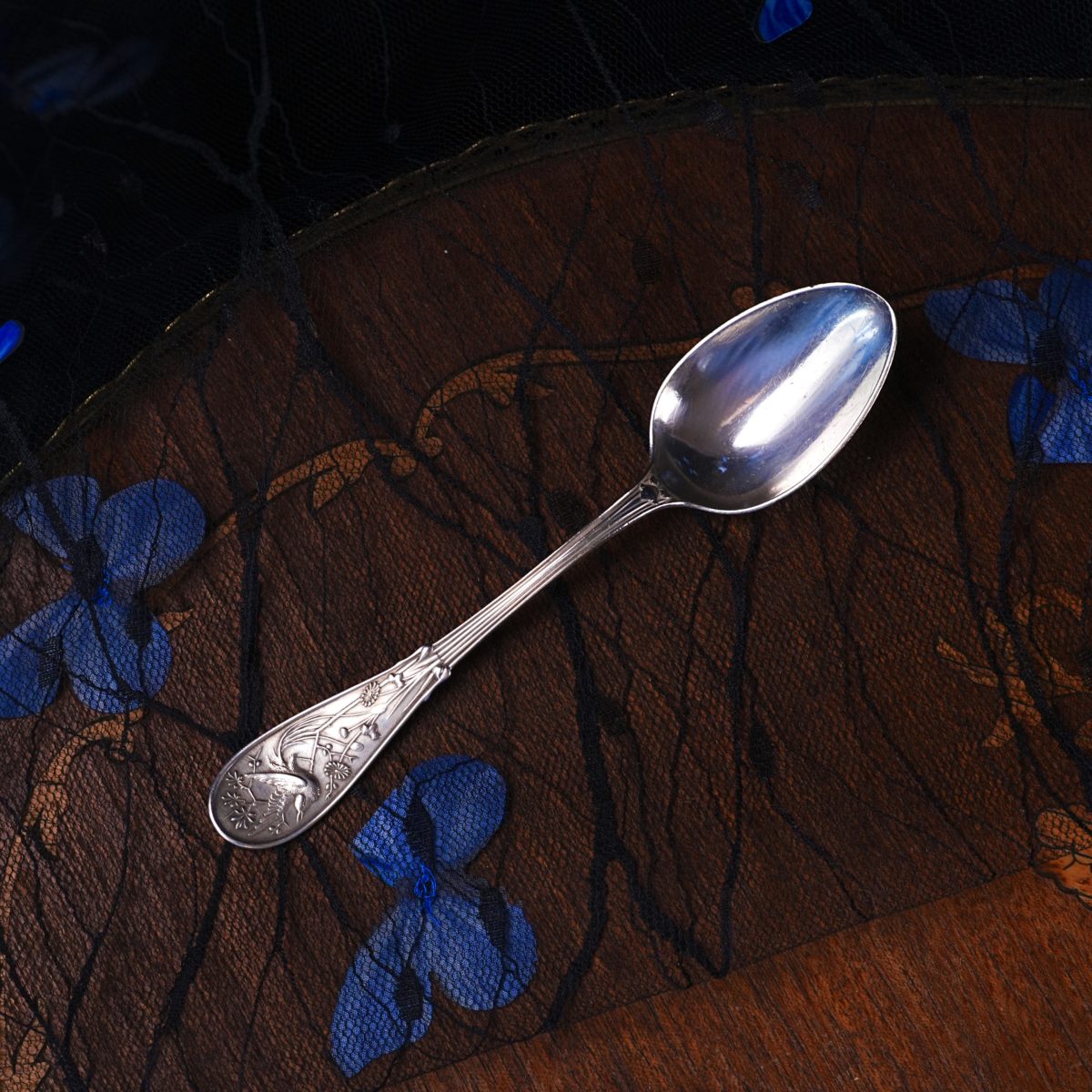
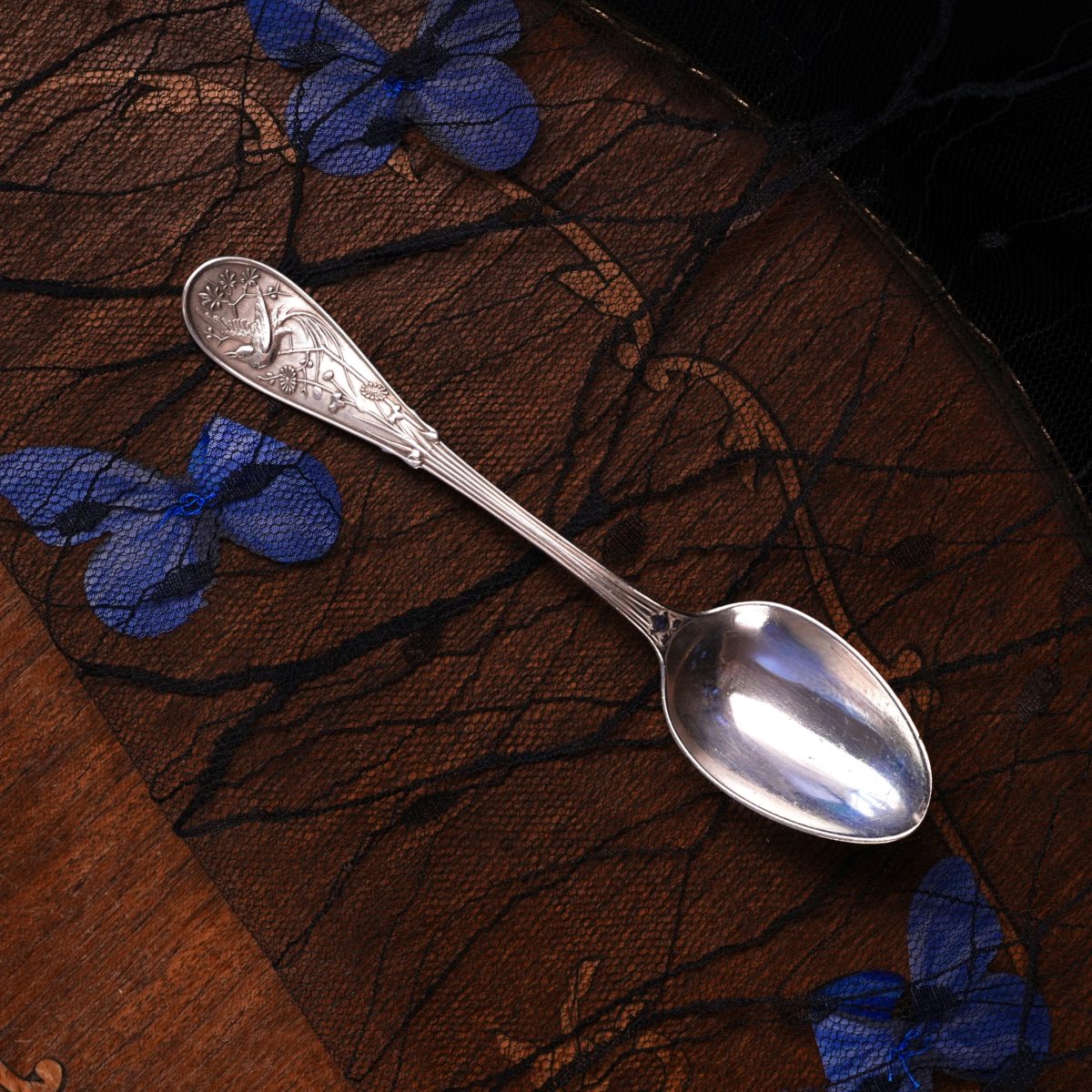
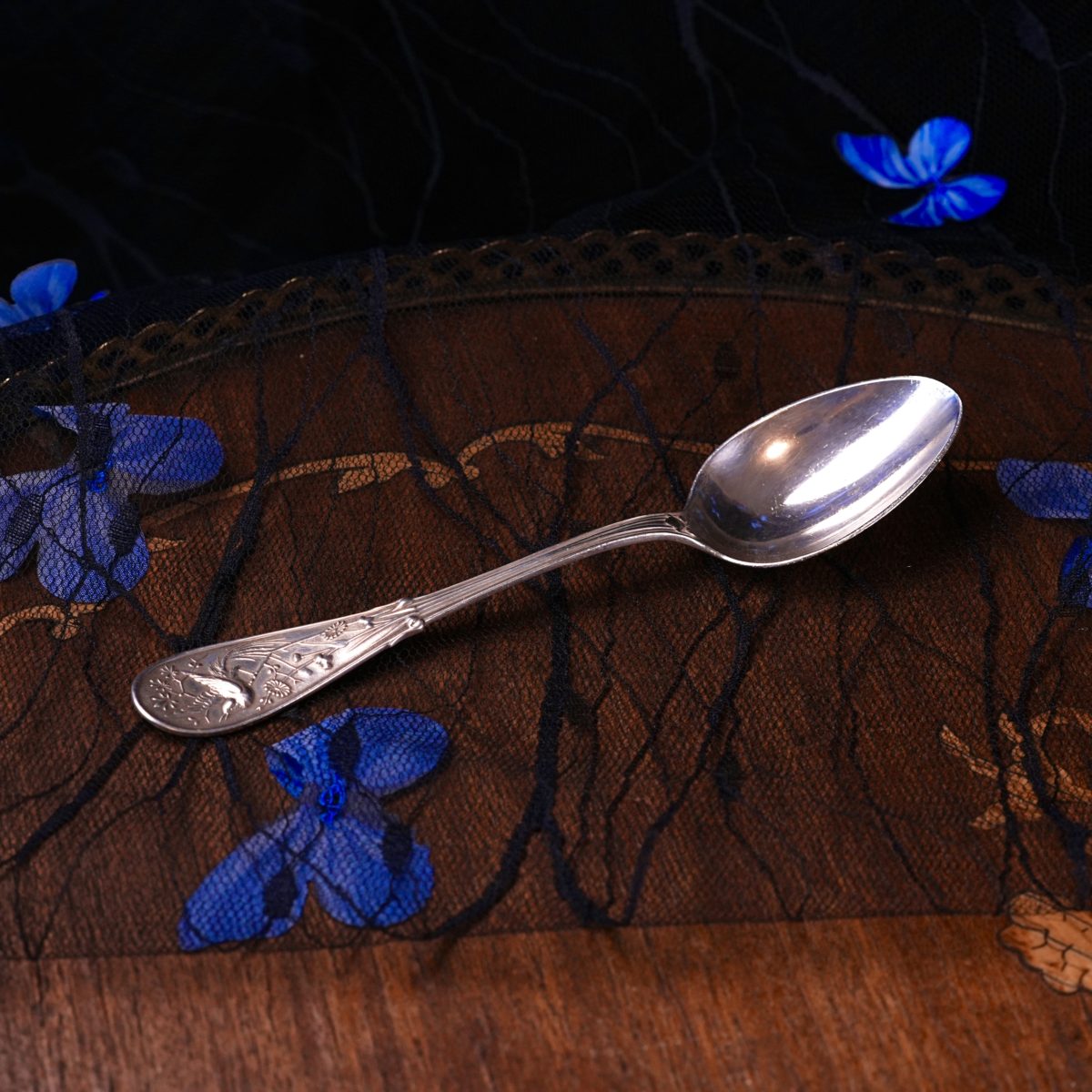
Antique Tiffany Sterling Silver Spoon – Japanese Audubon Pattern, Edward C. Moore Japonisme, Crane and Blossoms, New York, Pat. 1871
AvailableThree lines are stamped on the back of this handle: TIFFANY & CO. / STERLING / PAT. 1871. The last one is the whole story.
In 1867 the Meiji government sent Japan's lacquer, porcelain, prints and armour to the Paris Exposition — the first time Europe saw them en masse. Edward C. Moore, who would become Tiffany's chief silver designer the following year and hold the post until his death in 1891, walked through that exhibition and never quite came back. He began buying Japanese objects by the crate, studying how they were made and, more importantly, how they were composed: asymmetrical, sparse, drawn from life rather than pattern books.
In 1871 he patented the result. The Japanese pattern was the first Japonisme flatware ever made in America — birds and branches scattered across a handle at a time when American silver meant Greek keys and rococo scrolls. It was, as one account puts it, "entirely different from anything in American silver at that time." Moore won gold at Paris in 1867, a medal at the Centennial in 1876, and the grand prize at Paris in 1878. When he died he left over two thousand objects to the Metropolitan Museum — the founding core of its decorative arts collection. The Met devoted a full exhibition to him in 2024.
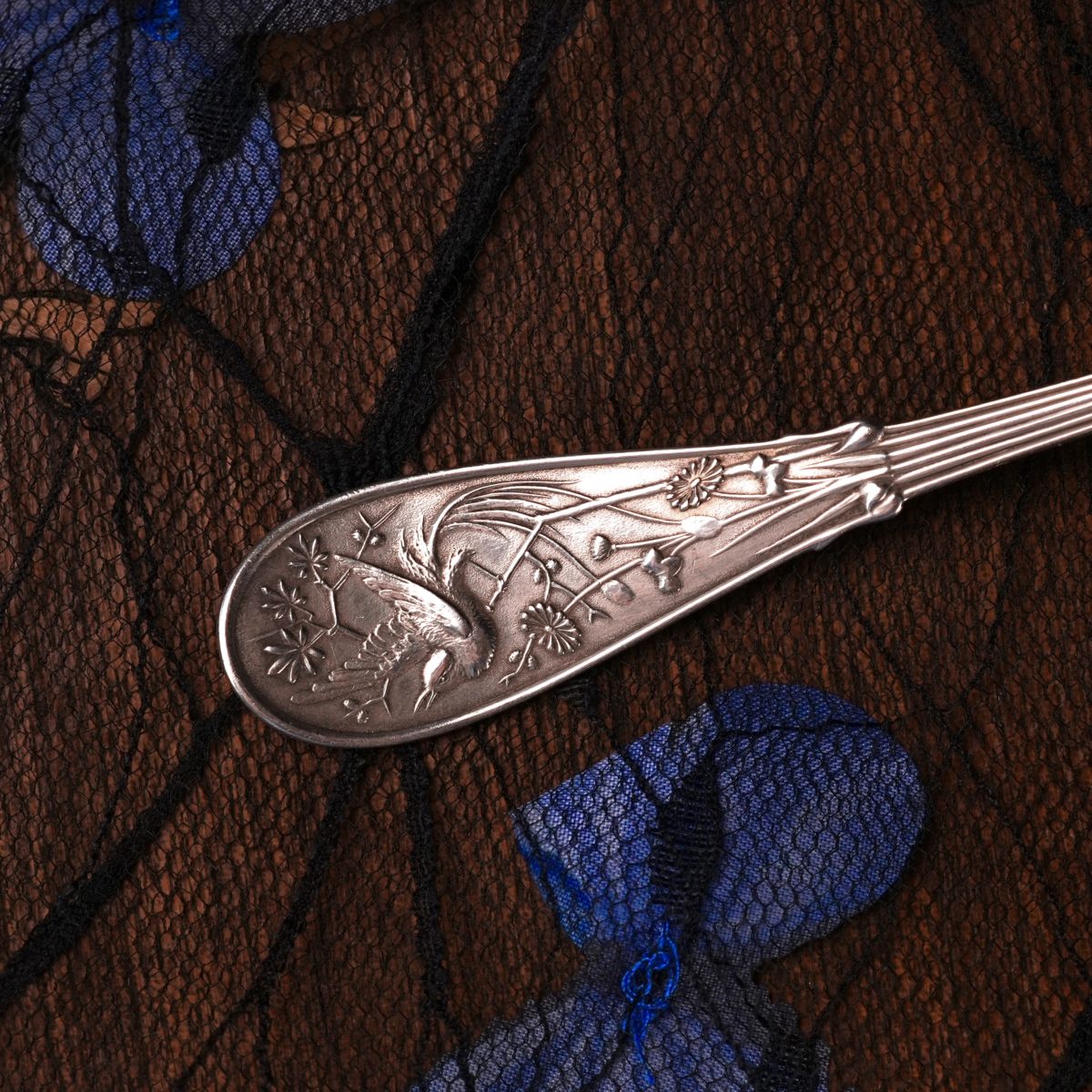
On this spoon: a long-billed wading bird stands in grasses among star-shaped blossoms on the front of the handle; turn it over and there is an entirely different spray — pine and feathered leaves — because Moore had the pattern decorated on both sides, and because he ordered eight different birds and many plants combined at random, so that scarcely two pieces in a service match. Collectors still hunt single pieces by which bird they carry.
And about that "Pat. 1871": Tiffany made Japanese from 1871 until around the turn of the century, then reissued it in 1956 as Audubon, which is still sold today. The two look nearly alike — but only the originals carry the patent stamp. This one does. It is between roughly 125 and 155 years old.
Pick it up and you notice the weight before anything else. It is 6.25 inches — teaspoon length — but it weighs 33 grams, where a standard sterling teaspoon of that length runs 20 to 25. That extra 40% is simply silver: Moore's Tiffany did not economise on metal, and the 19th-century pieces sit heavier in the hand than the modern reissues of the same design. The heft is its own kind of evidence.
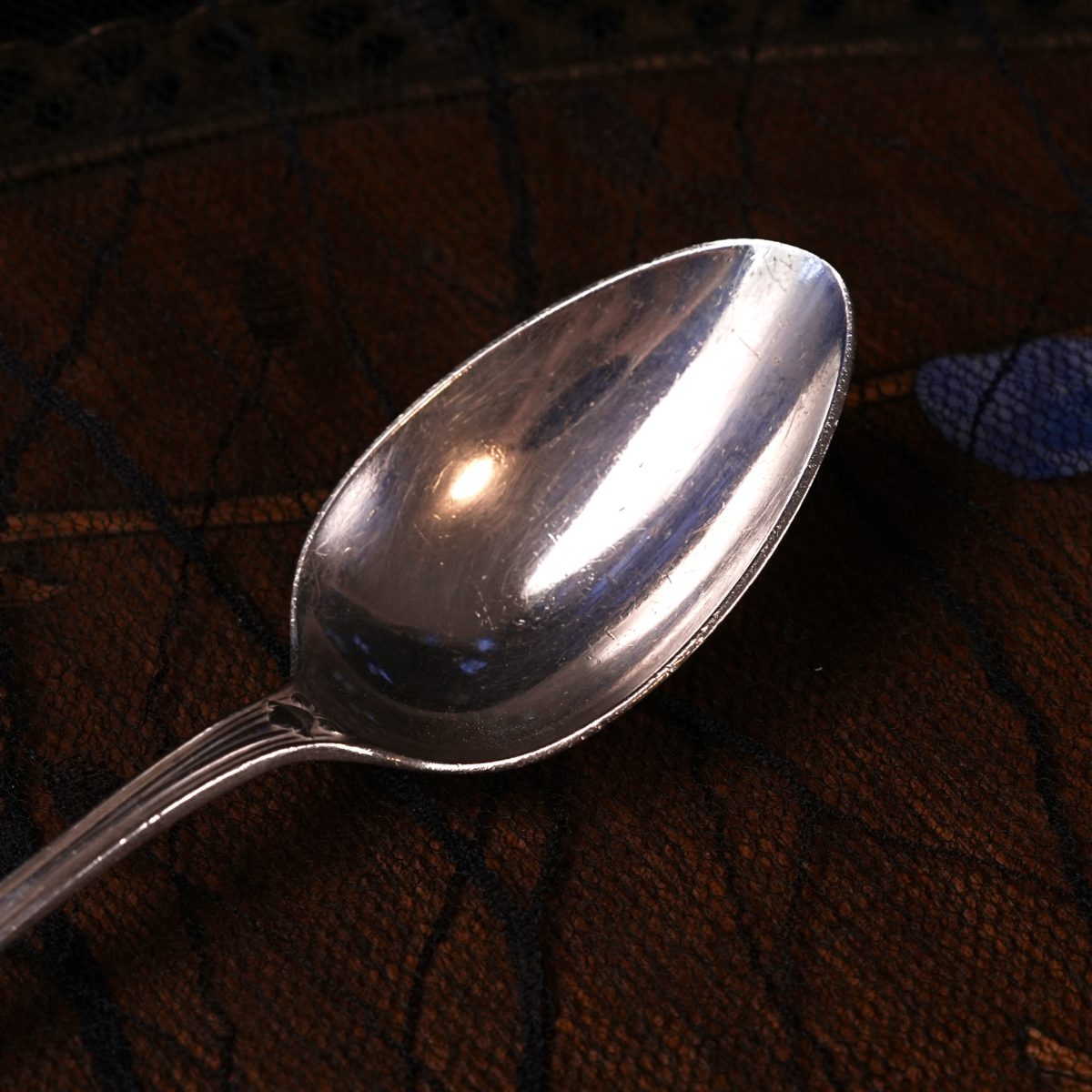
It has been used, too: the bowl carries the fine scratches of a long working life, and the silver has gone quietly dark in the recesses. The relief on the handle is unworn and crisp, which is the part that matters.
Details
- Type
- Sterling Silver Spoon
- Maker
- Tiffany & Co., New York
- Designer
- Edward C. Moore
- Pattern
- "Japanese" (patented 1871; reissued 1956 as "Audubon") — wading bird, blossoms, pine spray on reverse
- Era
- c. 1871–1900 (original production; Pat. 1871 stamp)
- Length
- 6.25" / 15.9 cm (measured)
- Weight
- 33 g (weighed) — around 40% heavier than a standard sterling teaspoon of this length
- Material
- Sterling silver (.925)
- Markings
- Tiffany & Co. · Sterling · Pat. 1871, stamped on handle reverse
Condition
Honest antique condition, used as intended for over a century. The bowl shows fine surface scratches throughout, visible in raking light, and the silver carries natural dark patina in the recesses — left as found, since patina is what makes relief read and aggressive polishing softens it. The handle relief is crisp and unworn, front and back, and all three stamps are clear and fully legible. No bends, splits, repairs, or solder. Please review all photos as part of the condition record.
Backstamp & Pattern
- Maker
- Tiffany & Co., New York
- Pattern
- "Japanese" (patented 1871; reissued 1956 as "Audubon") — wading bird, blossoms, pine spray on reverse
- Era
- c. 1871–1900 (original production; Pat. 1871 stamp)
- Mark on base
- Tiffany & Co. · Sterling · Pat. 1871, stamped on handle reverse
The base carries the maker's printed mark; the wording — especially “England” versus “Made in England” versus “Bone China” — together with any pattern or registration number are the main clues to its age.
Read the full backstamp & pattern guide →