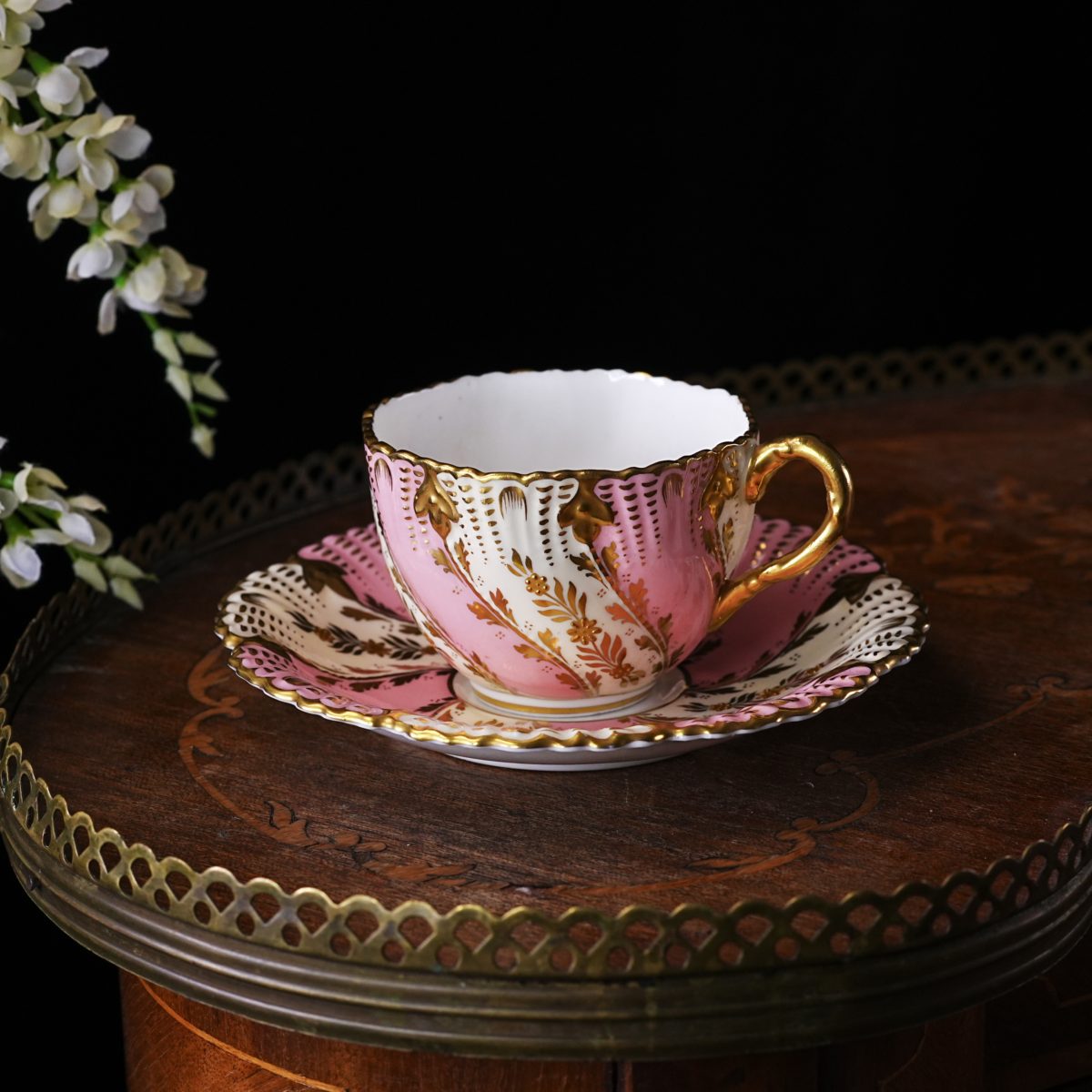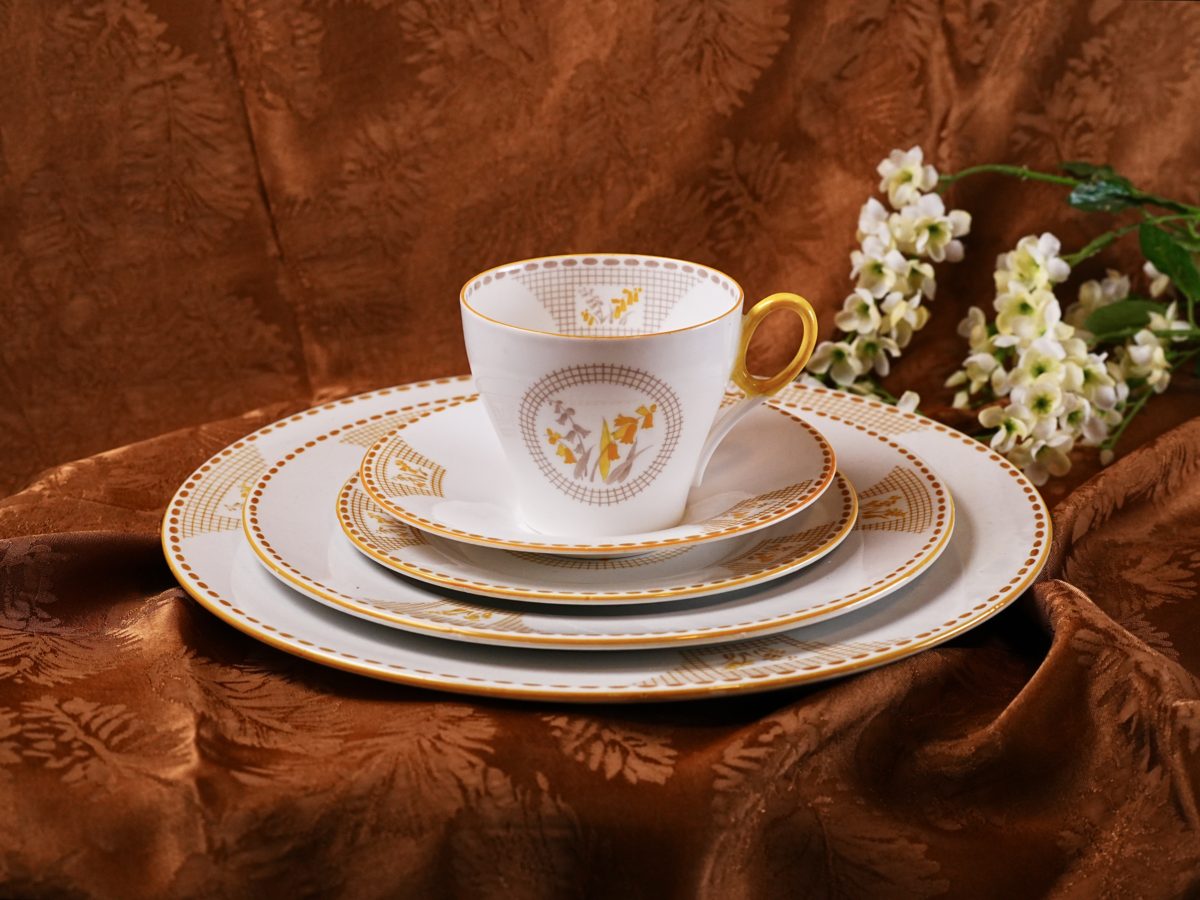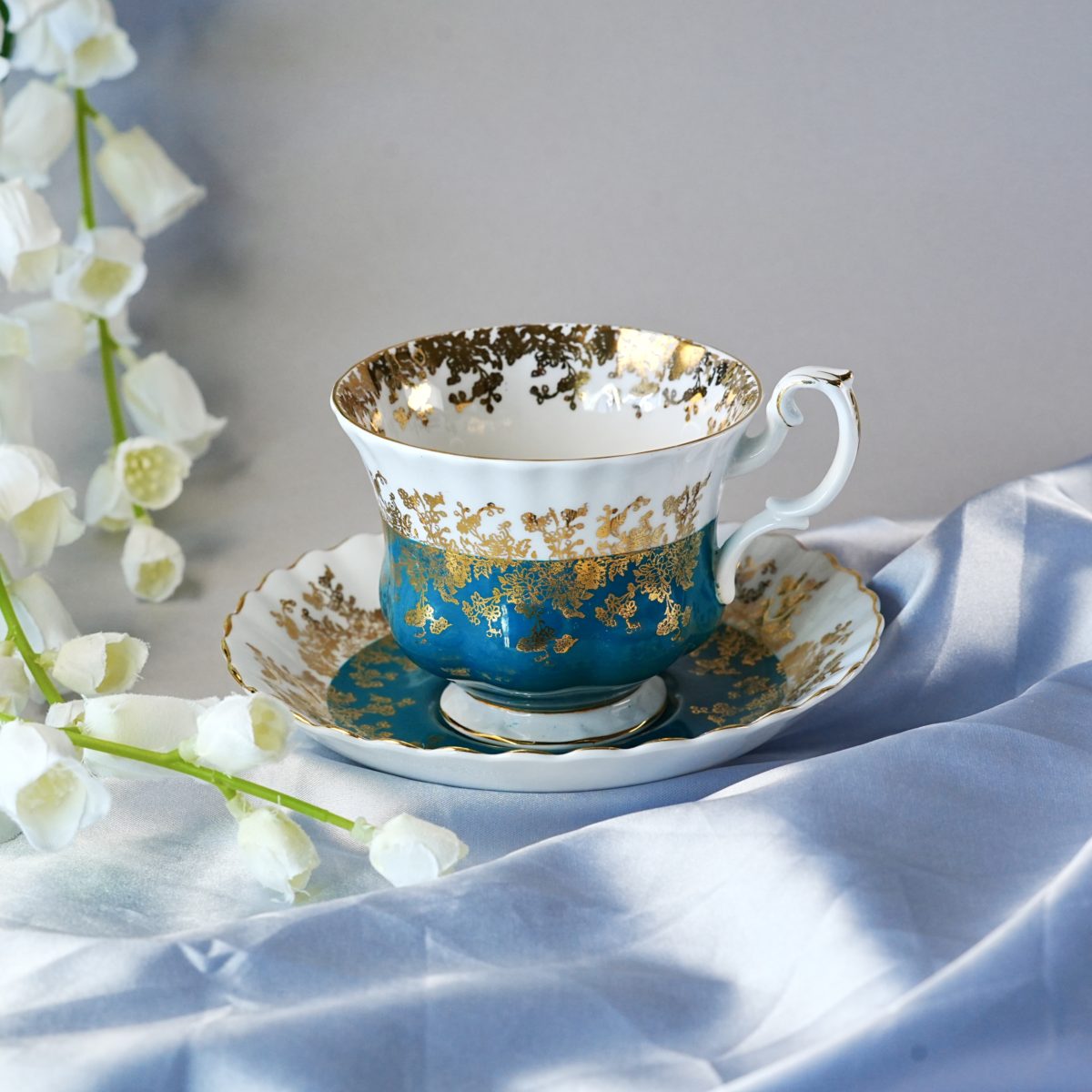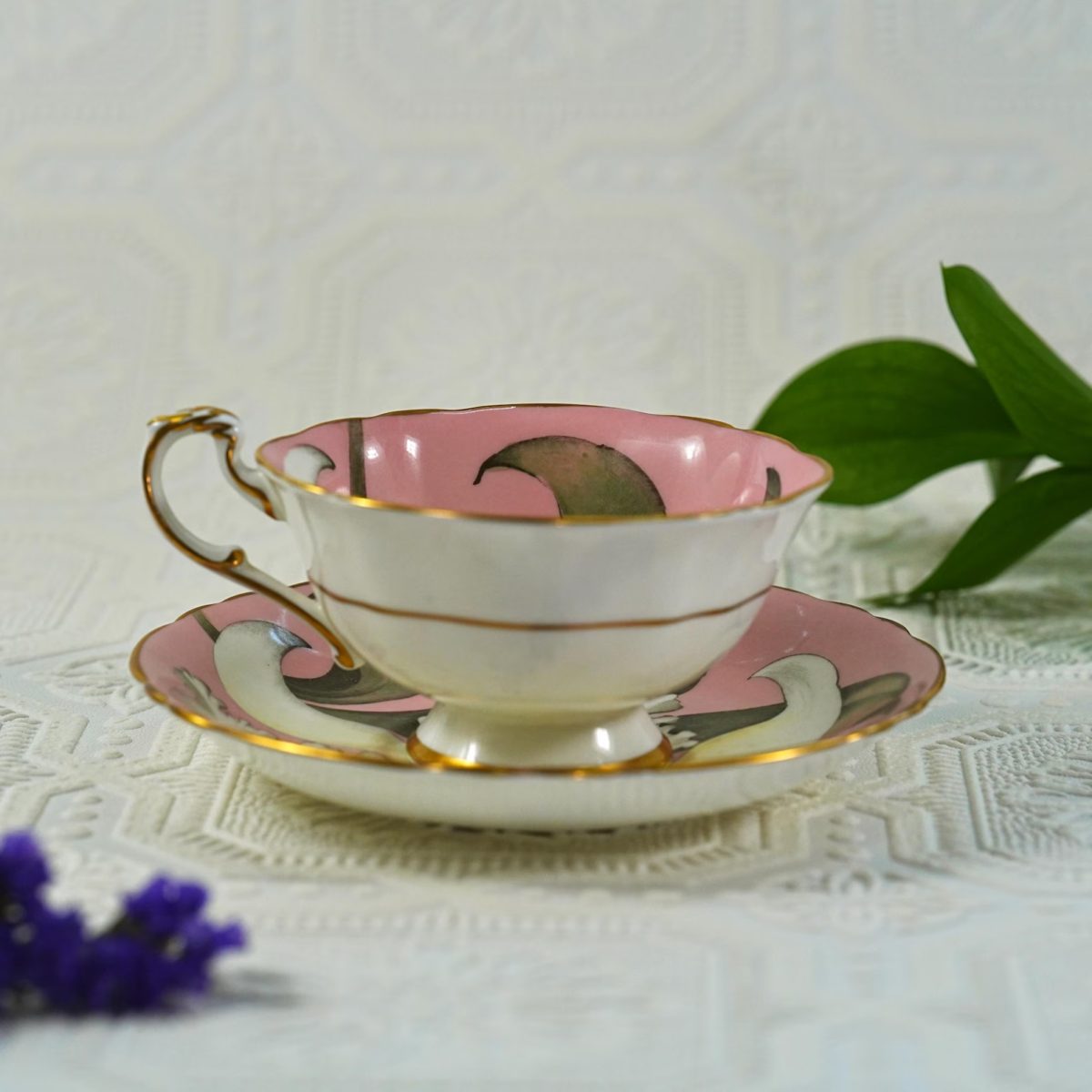
Vintage Aynsley Pink Corset Teacup & Saucer – Hand Painted Cabbage Rose Interior, Dusty Rose Glaze, Bone China, England 1960s
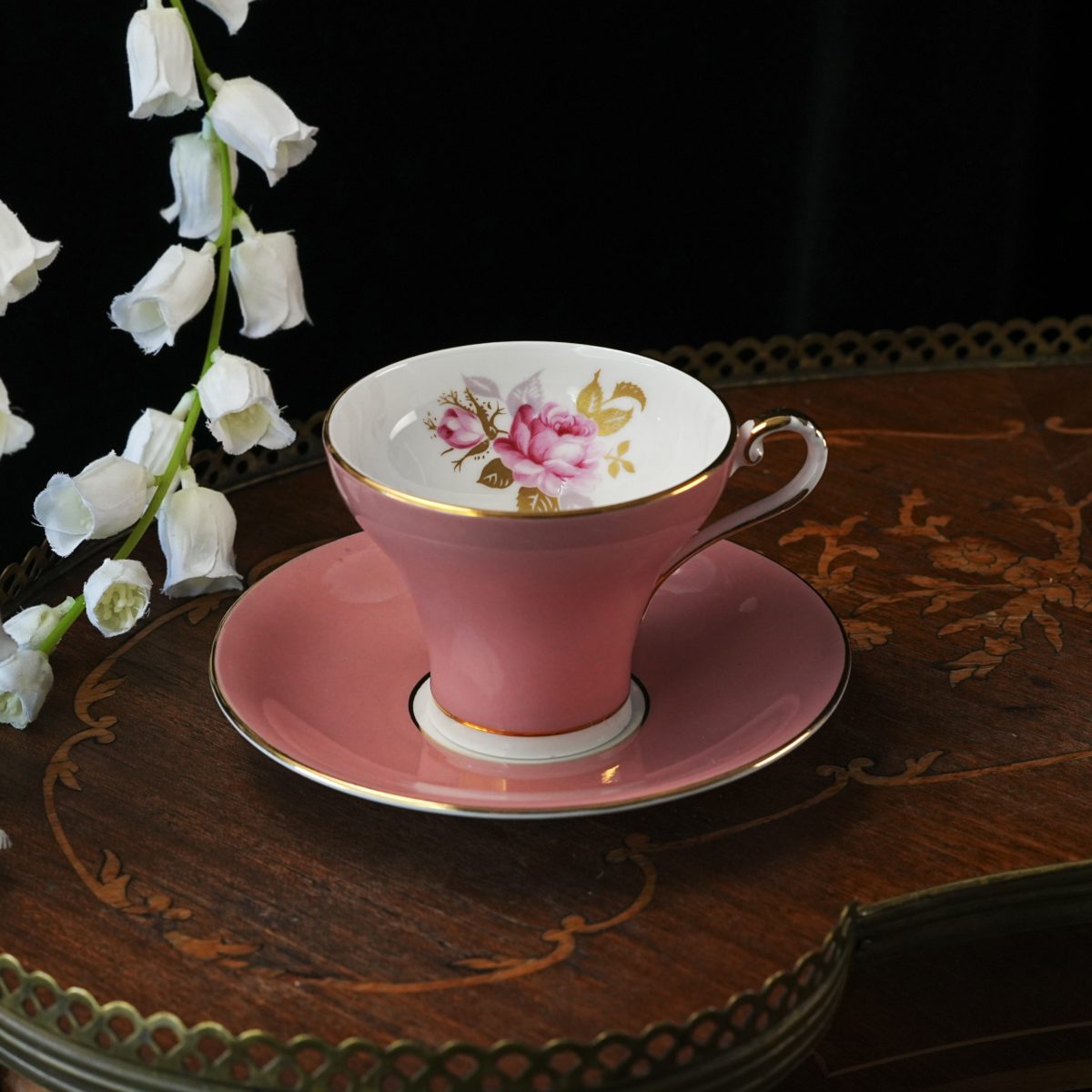
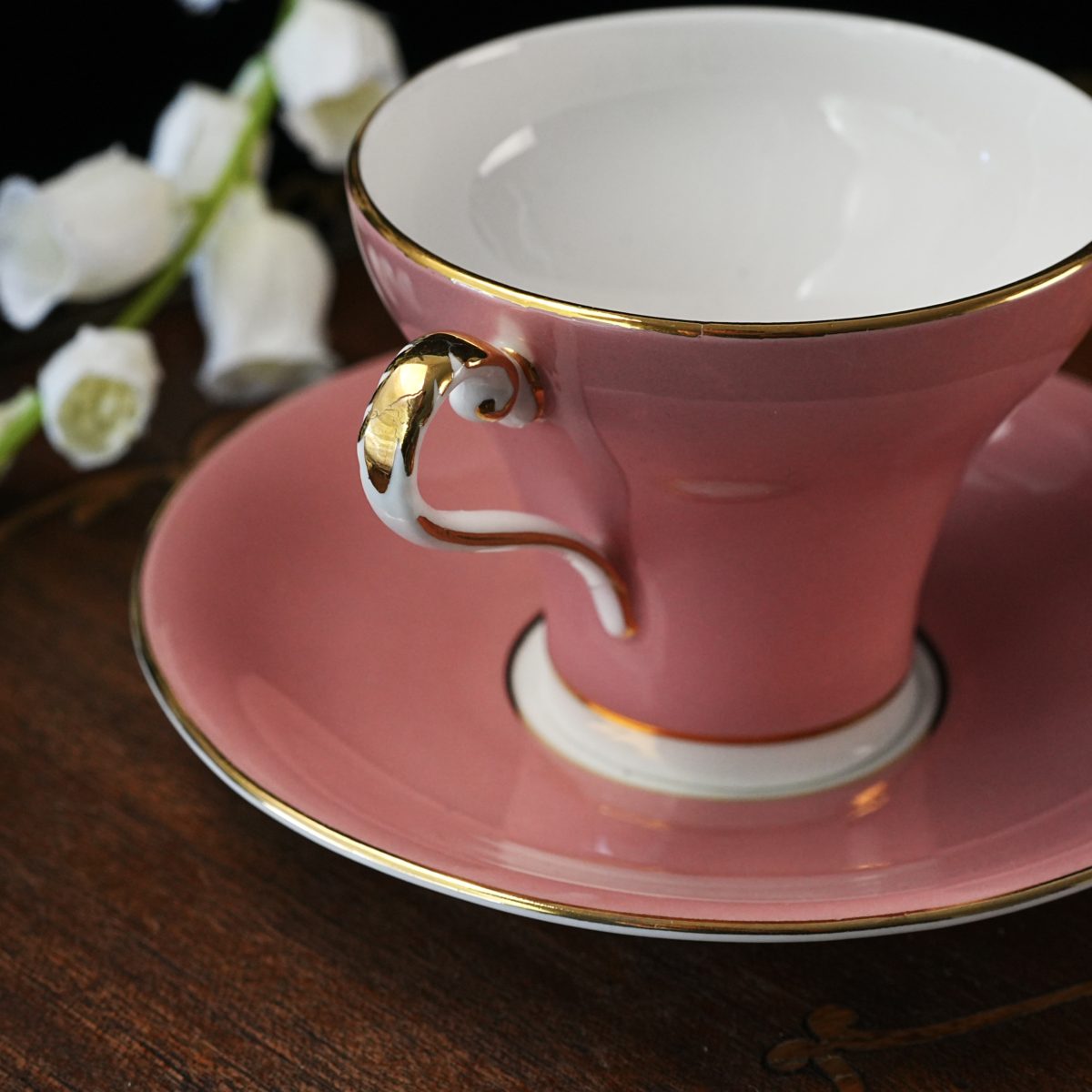
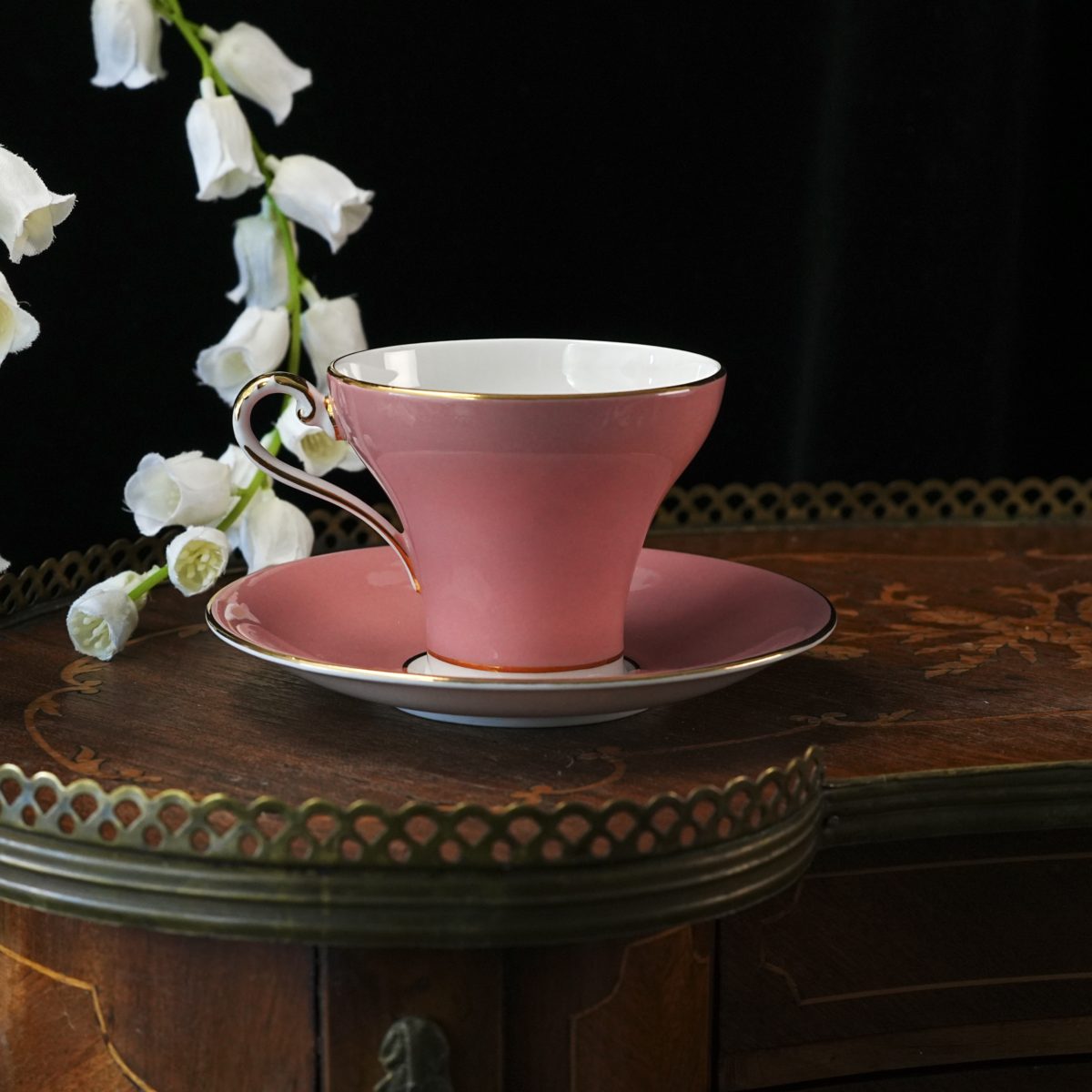
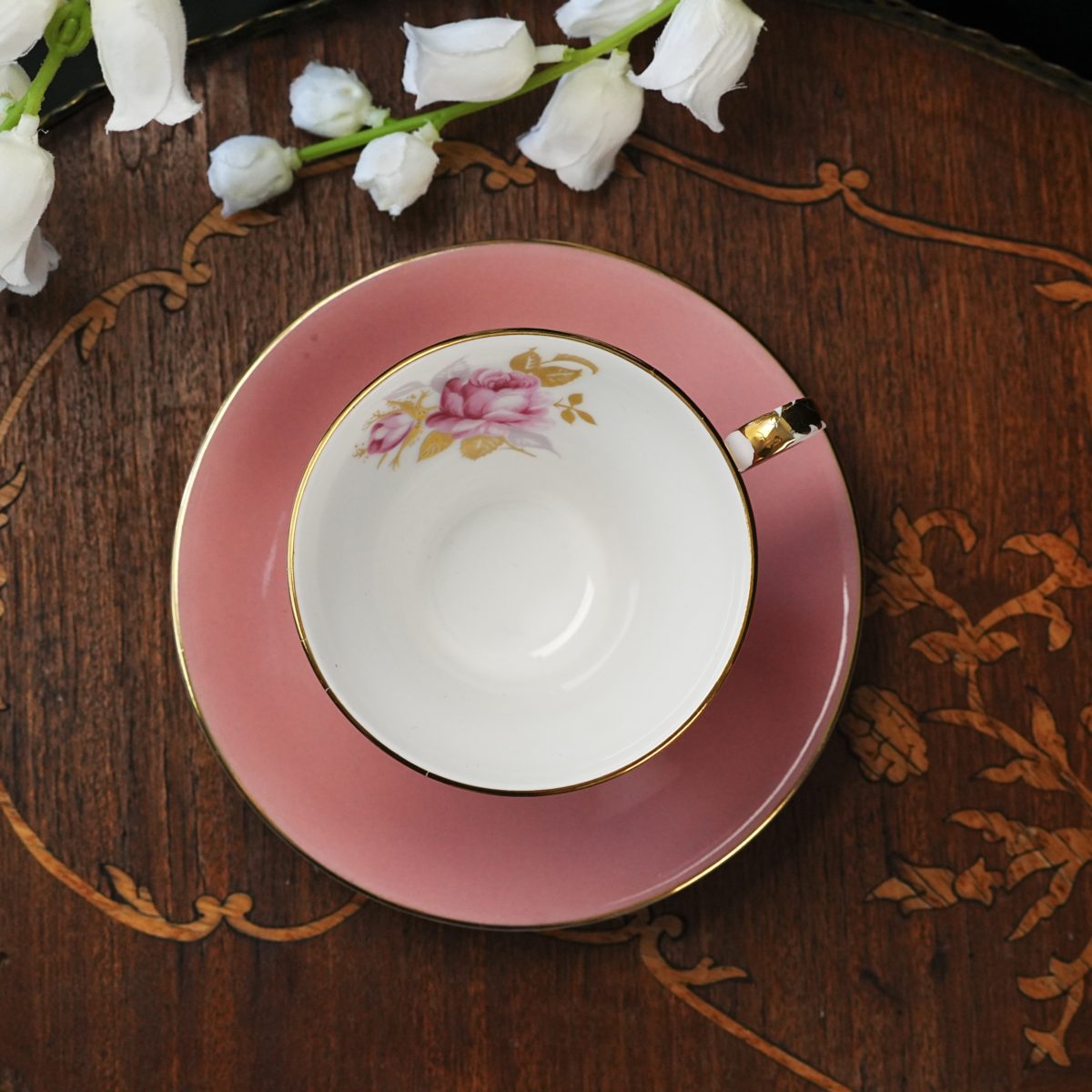
An Aynsley teacup and saucer in the firm's Corset shape — solid dusty-rose / coral pink exterior, white fine-bone-china interior, and a single hand-painted pink cabbage rose at the interior centre with gold-leaf-and-V-line filigree around it. The Corset cup is the flared trumpet shape Aynsley used through the 1950s and 60s for its high-end cabinet teaware: narrow at the foot, widening through the body, opening to a generous flared rim, finished with a high scrolled curl handle. The saucer matches in colour with a gilt-edged white well at the centre.
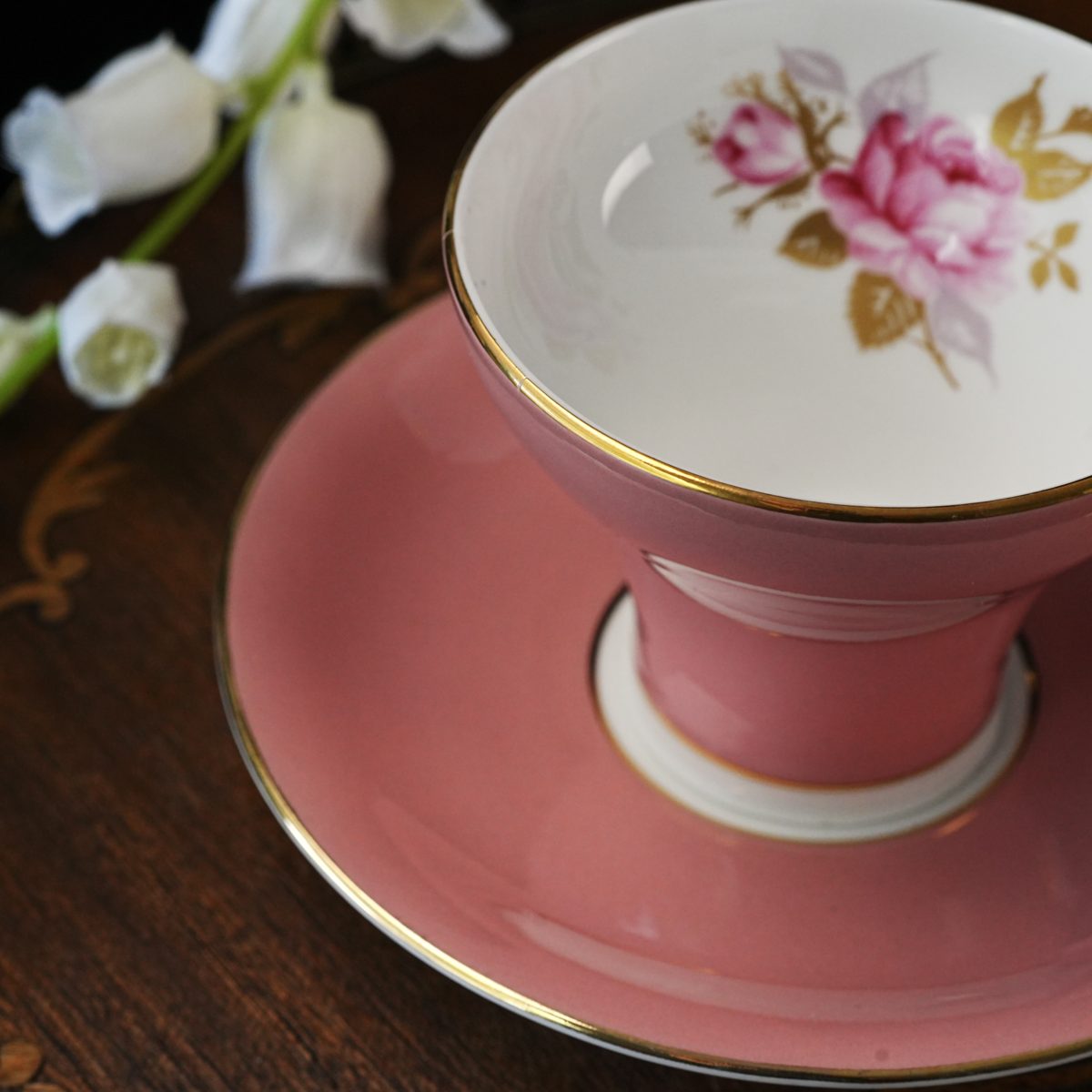
Tip the cup forward to look at the cabbage rose inside. The rose is hand-painted — not a transfer-only piece — and the painter has worked it in three pink tones: a deeper crease-pink at the centre, a mid-pink at the petal body, and a paler highlight at the outer petal tips. Two small green leaves sit below, each shaded darker along the underside, lighter along the upper vein. Around the rose runs a fine acid-etched gilt V-line trailing two or three small gold leaves — the cup's surprise gilt detail, not visible until you pick the cup up. This single-rose-inside-a-coloured-cup is one of Aynsley's most widely-recognised mid-century cabinet teacup designs — collectors usually refer to the design as the Aynsley Cabbage Rose teacup, and the firm produced it across multiple exterior colourways (pink, coral, blue, green, yellow, aqua, black, red) over the 1950s–70s window. This is the dusty-pink / coral version.
The dusty-rose exterior is a single dipped underglaze colour — even, mirror-smooth, no speckle, the technical achievement of solid-colour bone-china glazing at this tier. The colour itself is the muted pink Aynsley moved toward in the 1960s rather than the brighter raspberry of an earlier era — more cabinet, less daily-use.
The base reads in green-script Aynsley crown stamp + Est. 1775 / Made in England / Fine English Bone China — the standard Aynsley mark of the 1950s–70s window.
A cup-and-saucer for the Aynsley Cabbage Rose collector specifically (the named series is what most collectors chase), for the first-tier English bone-china cabinet, for the pink-and-rose interior theme, for the cottagecore / grandmillennial tea-shelf, or as a Mother's Day / bridal-shower / Valentine's / anniversary gift.
Details
- Type
- Teacup & Saucer Set
- Maker
- Aynsley (John Aynsley & Sons, established 1775), Longton, Stoke-on-Trent, England
- Era
- Circa 1950s–1970s
- Pattern
- Aynsley Cabbage Rose interior — dusty-rose / coral pink exterior + hand-painted pink cabbage rose at interior centre with gilt V-line and leaves
- Decoration
- Solid dusty-pink underglaze exterior + hand-tinted pink cabbage rose interior + acid-etched gilt V-line and leaves + 22K gilt rim, handle, and foot
- Shape
- Corset / flared-trumpet shape with high scrolled curl handle, pedestal foot
- Size
- Cup ~3.5" / 9 cm dia × 2.75" / 7 cm tall; Saucer ~5.5" / 14 cm dia
- Material
- Fine English Bone China
- Markings
- Aynsley / Est. 1775 / Made in England / Fine English Bone China in green script + crown emblem on base of both pieces
Condition
Excellent vintage condition. Dusty-pink glaze even and mirror-smooth; hand-tinted cabbage rose crisp with three colour tones intact; gilt V-line and leaves bright; rim, handle, and foot gilt fully present with no rub-through. No chips, cracks, hairlines, or crazing. Please review all photos as part of the condition record.
Backstamp & Pattern
- Maker
- Aynsley (John Aynsley & Sons, established 1775), Longton, Stoke-on-Trent, England
- Pattern
- Aynsley Cabbage Rose interior — dusty-rose / coral pink exterior + hand-painted pink cabbage rose at interior centre with gilt V-line and leaves
- Era
- Circa 1950s–1970s
- Mark on base
- Aynsley / Est. 1775 / Made in England / Fine English Bone China in green script + crown emblem on base of both pieces
Aynsley's crown-and-banner mark; the pattern and shape numbers help date it, with later marks adding “Est 1775.”
Read the full backstamp & pattern guide →