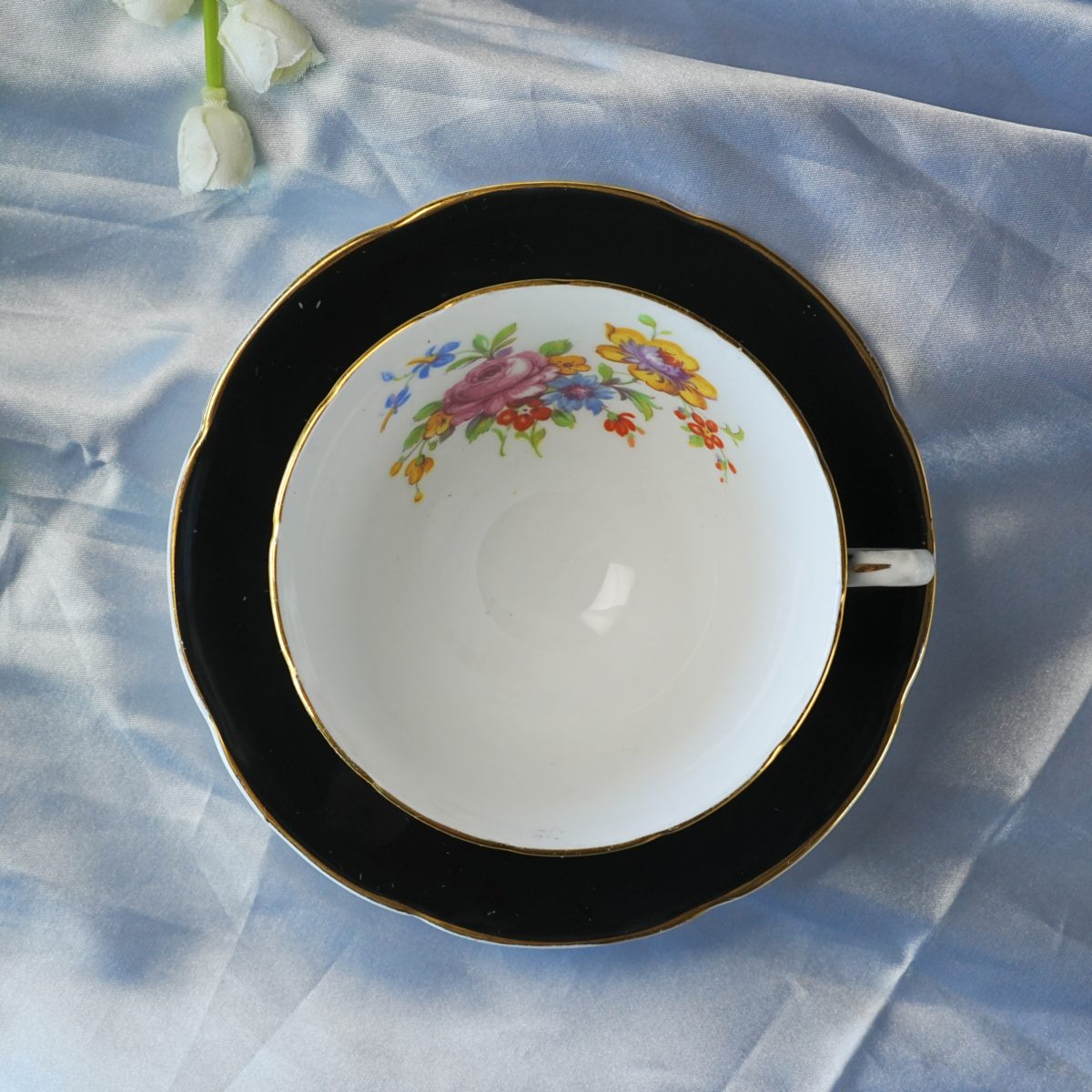
Vintage Collingwood Black Bone China Teacup & Saucer – Hand Painted Floral Bouquet Interior, Gilt Trim, England Estd 1796 Pattern 171
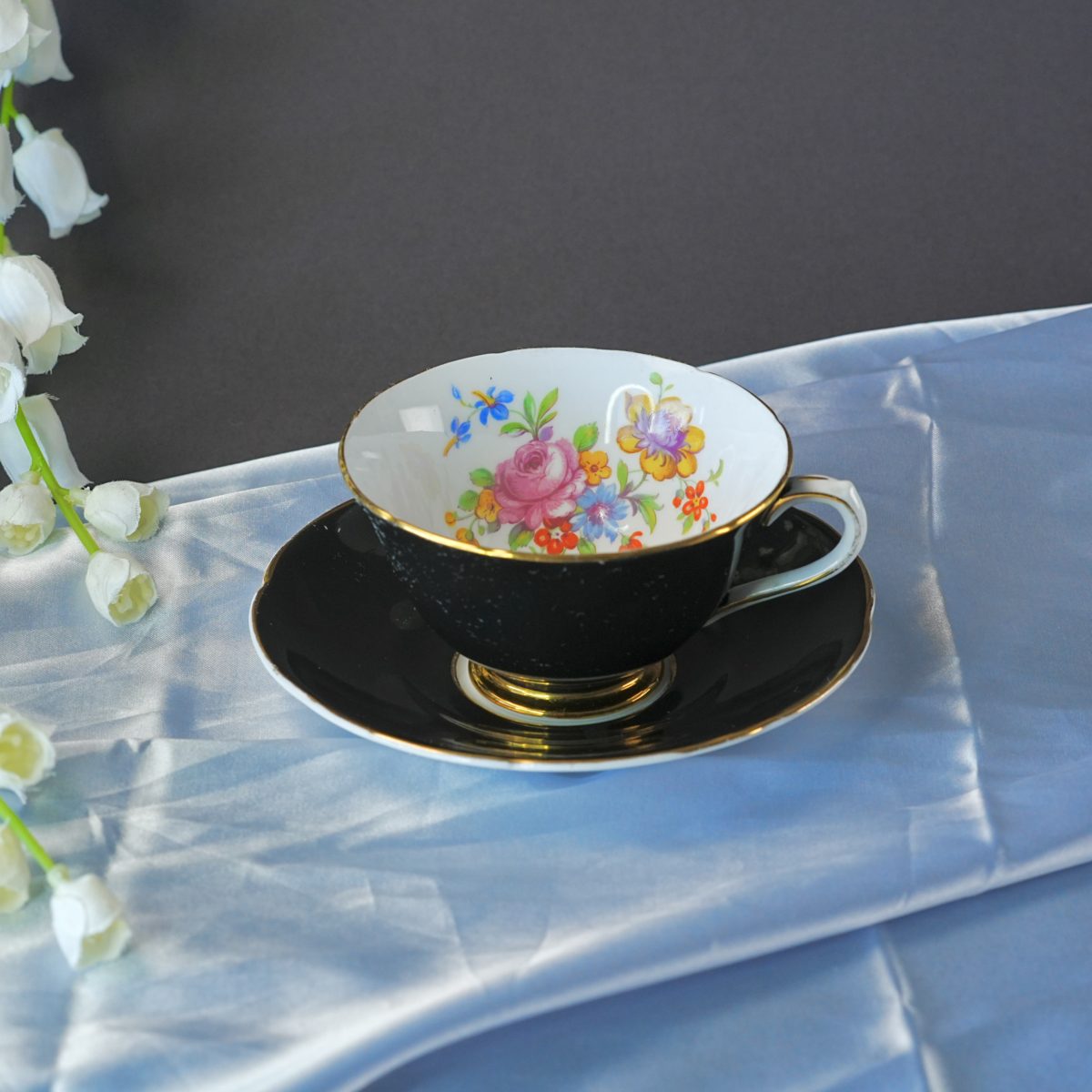
A Collingwood bone-china teacup and saucer that holds back its bouquet — glossy black on the outside, then opens to a clean white interior with a small painted cottage-garden composition tucked into the centre. The bouquet inside is a pink cabbage rose at the heart, with a blue cornflower, a yellow daisy, and a sprig of red berries gathered around it; the saucer is the same logic in reverse — black around the rim, a white well, gilt edging along the scalloped border.
Hold the interior up to the light and the painter's hand becomes legible. The cabbage rose is the practised motif of someone who has painted thousands of them — the petal shadows built up with two or three confident strokes rather than the slow hand-shaded edges you would find on a presentation piece. The blue cornflower beside it has the unmistakable single-stroke "windmill" petal of mid-century Longton flower painting, and the red berries each carry a tiny white catch-light dot, the kind of detail that doesn't read at arm's length but tells you the painter was working carefully rather than in haste. The hand-inked 171 on the base is almost certainly that same painter's stock-tracking note rather than a printed factory mark — its character matches the bouquet, not the printed Bone China / England.
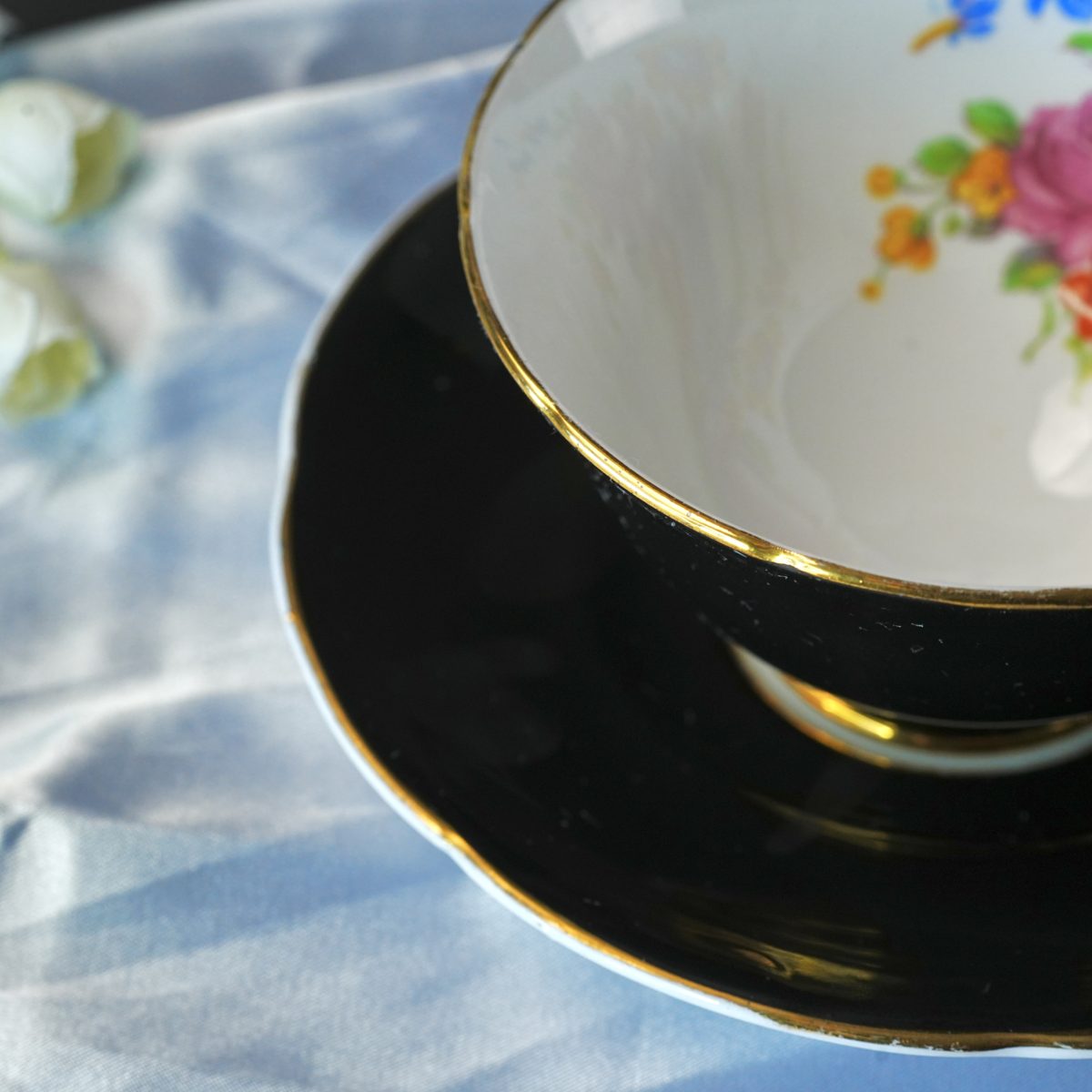
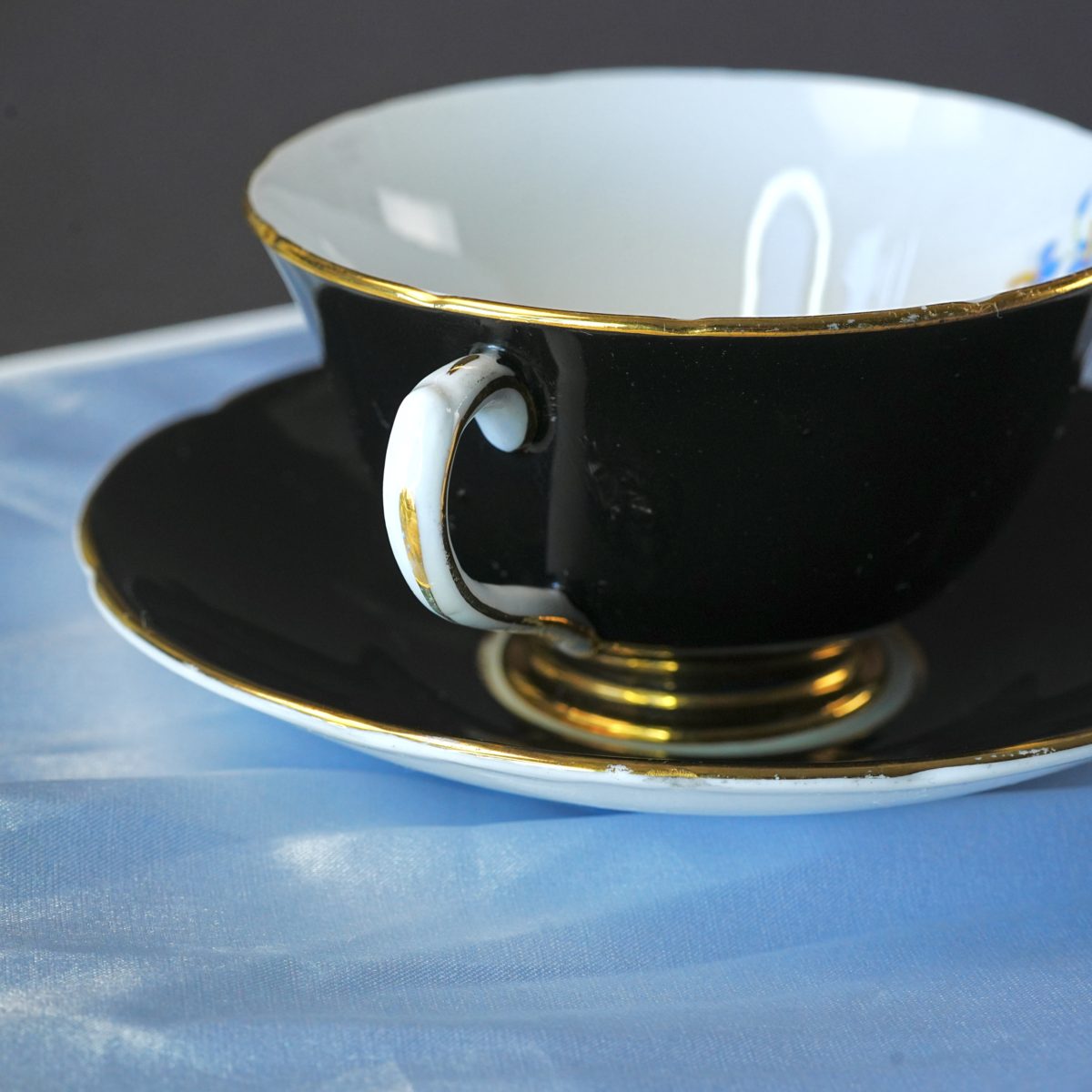
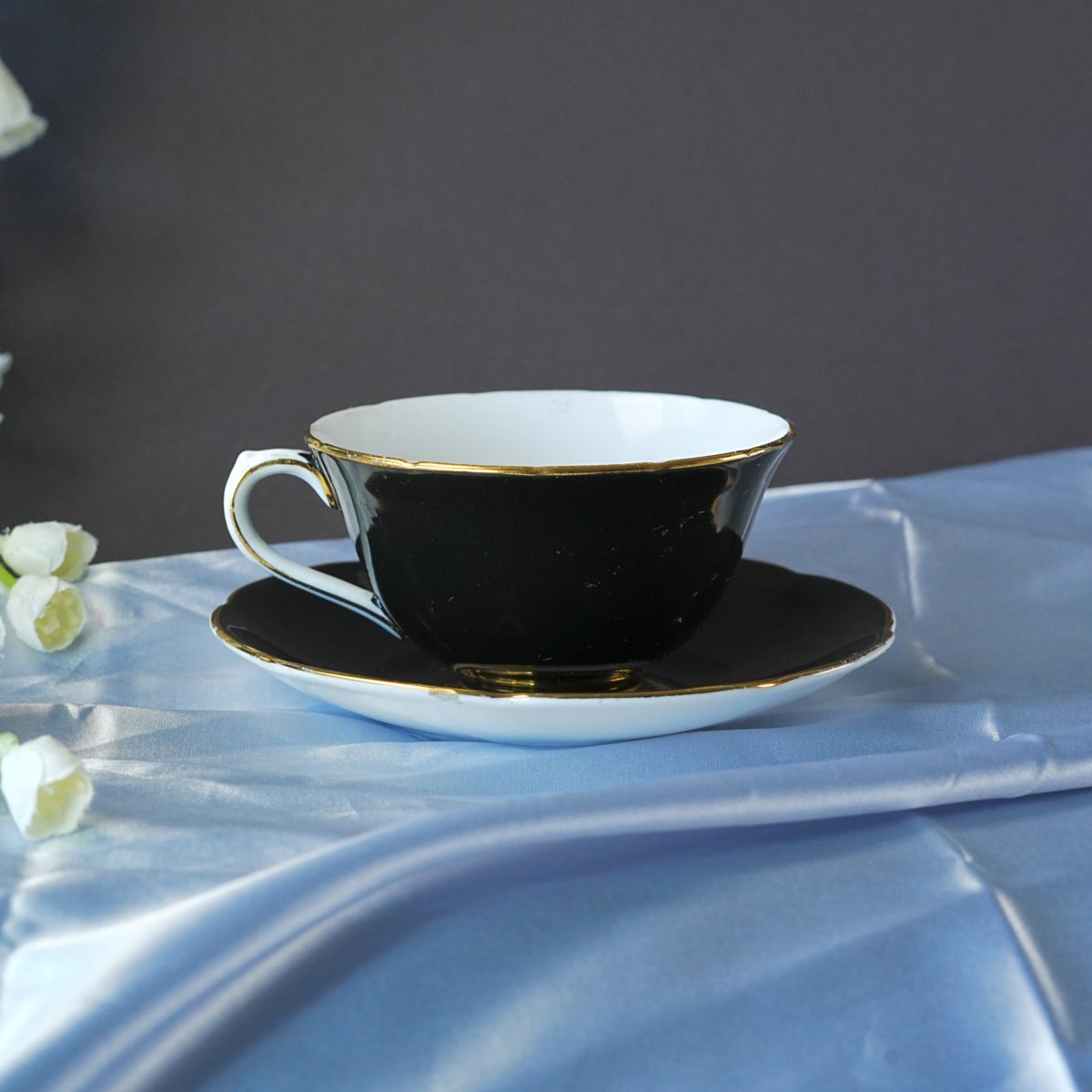
The black glaze on the outside is a single dipped layer, the strong-bodied gloss black Collingwood used in its late-period work — sombre on the cabinet shelf, then a quiet surprise when picked up. The 22K gilt line at the rim has held its brightness after seventy-odd years of cabinet life; small, even wear on the foot ring suggests careful display rather than daily use.
The base mark is the firm's horseshoe with ESTD 1796 through the centre, Collingwood / Bone China / England arched around it. Worth knowing on the date: the Collingwood brothers only registered the company in 1887, but the Estd 1796 is their claim to predecessor Longton businesses going back to the late eighteenth century — a common founding-date practice among the older Staffordshire firms. The factory closed in 1957, so this piece sits inside a finite window that no further production will extend.
A cup-and-saucer for the Collingwood collector specifically, for the art-deco / mid-century bone-china cabinet, for the black-and-floral / dark-academia tea table, or as a Valentine's / anniversary gift to someone who likes the something hidden inside gesture.
Details
- Type
- Teacup & Saucer Set
- Maker
- Collingwood Bros Ltd, Longton, Staffordshire, England (registered 1887, claims Estd 1796 lineage; factory closed 1957)
- Era
- Circa 1930s–1957 (production window — closes definitively at factory closure in 1957)
- Pattern
- No. 171 (hand-inked on base) — glossy black exterior + white interior with hand-painted multi-colour cottage bouquet (pink rose, yellow, purple, blue cornflowers, red berries, green foliage); 22K gilt rim, handle, and foot trim
- Shape
- Low broad athenia / Avon-style cup with flared rim, scrolled handle, low pedestal foot; scalloped saucer
- Size
- Cup ~3.75" / 9.5 cm dia × 2" / 5 cm tall; Saucer ~5.5" / 14 cm dia
- Material
- Fine Bone China
- Markings
- Horseshoe emblem + ESTD 1796 / Collingwood / Bone China / England + hand-inked pattern # 171 on base of both pieces
Condition
Very good vintage condition. Black gloss exterior even and mirror-like; hand-painted interior bouquet vivid with no fading; gilt rim, handle, and foot trim intact with no rub-through. No chips, cracks, hairlines, or crazing. Please review all photos as part of the condition record.
Backstamp & Pattern
- Maker
- Collingwood Bros Ltd, Longton, Staffordshire, England (registered 1887, claims Estd 1796 lineage; factory closed 1957)
- Pattern
- No. 171 (hand-inked on base) — glossy black exterior + white interior with hand-painted multi-colour cottage bouquet (pink rose, yellow, purple, blue cornflowers, red berries, green foliage); 22K gilt rim, handle, and foot trim
- Era
- Circa 1930s–1957 (production window — closes definitively at factory closure in 1957)
- Mark on base
- Horseshoe emblem + ESTD 1796 / Collingwood / Bone China / England + hand-inked pattern # 171 on base of both pieces
The base carries the maker's printed mark; the wording — especially “England” versus “Made in England” versus “Bone China” — together with any pattern or registration number are the main clues to its age.
Read the full backstamp & pattern guide →