Vintage Copeland Spode Jewel Teacup and Saucer – Embossed Beadwork, Pink Rose, Cream Scalloped, Pat. 1926, England 1930s
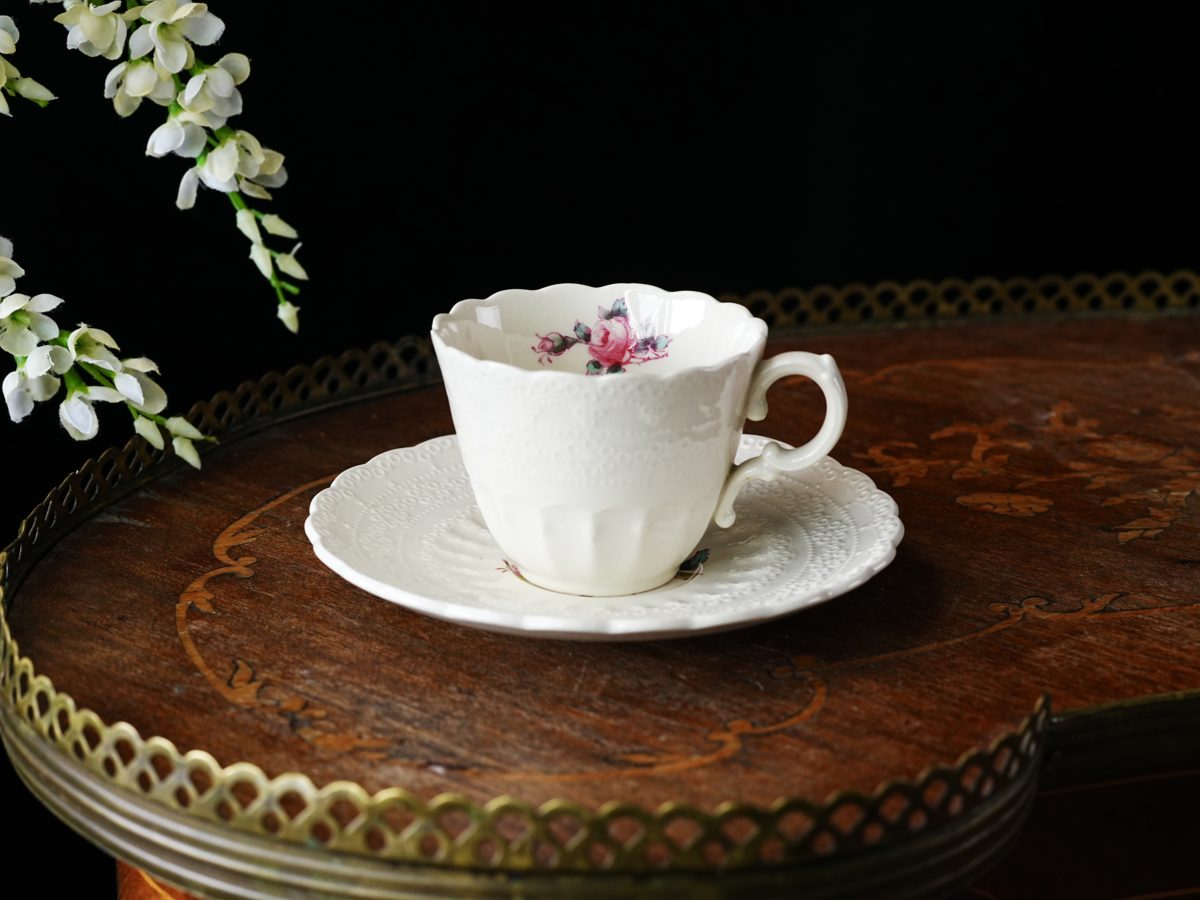
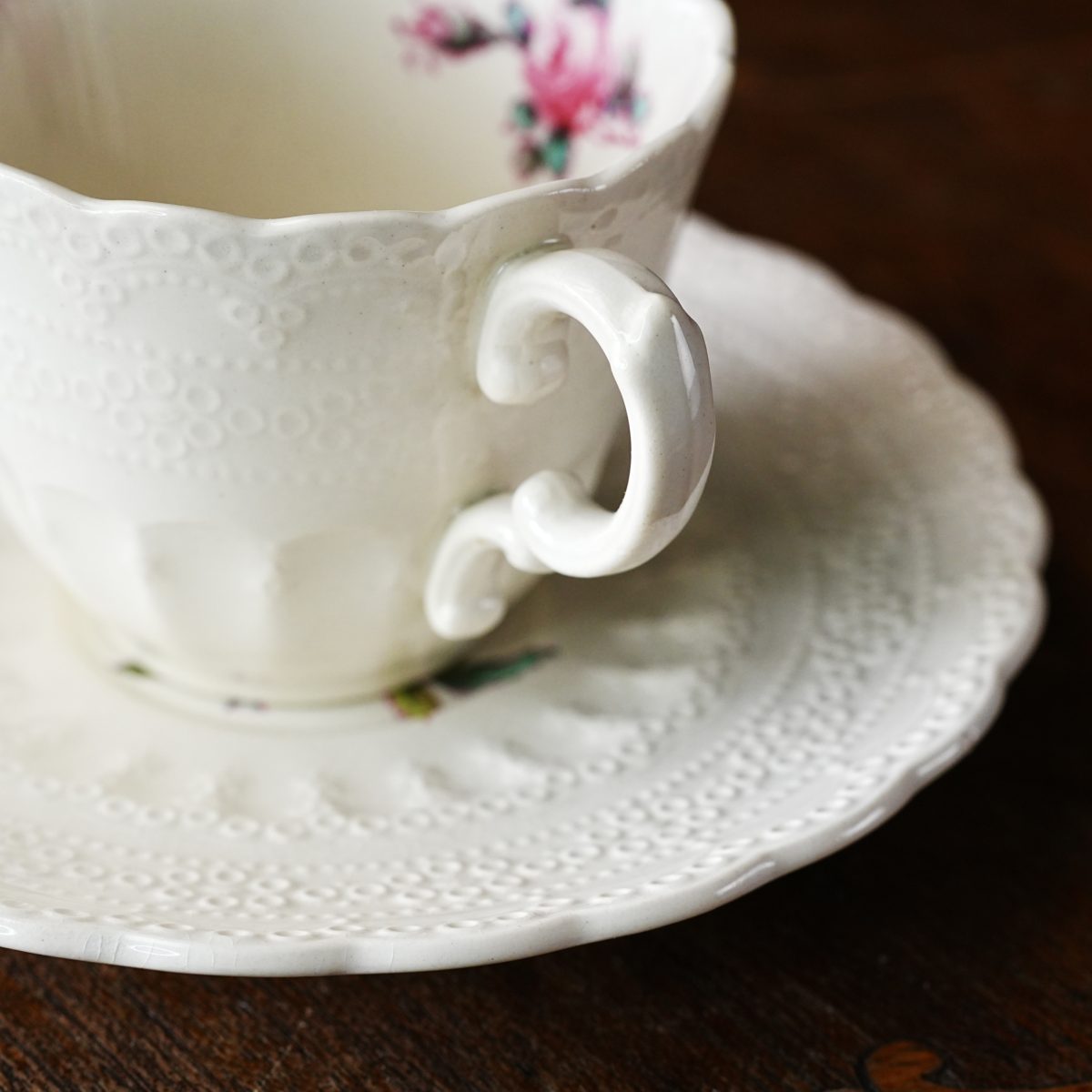
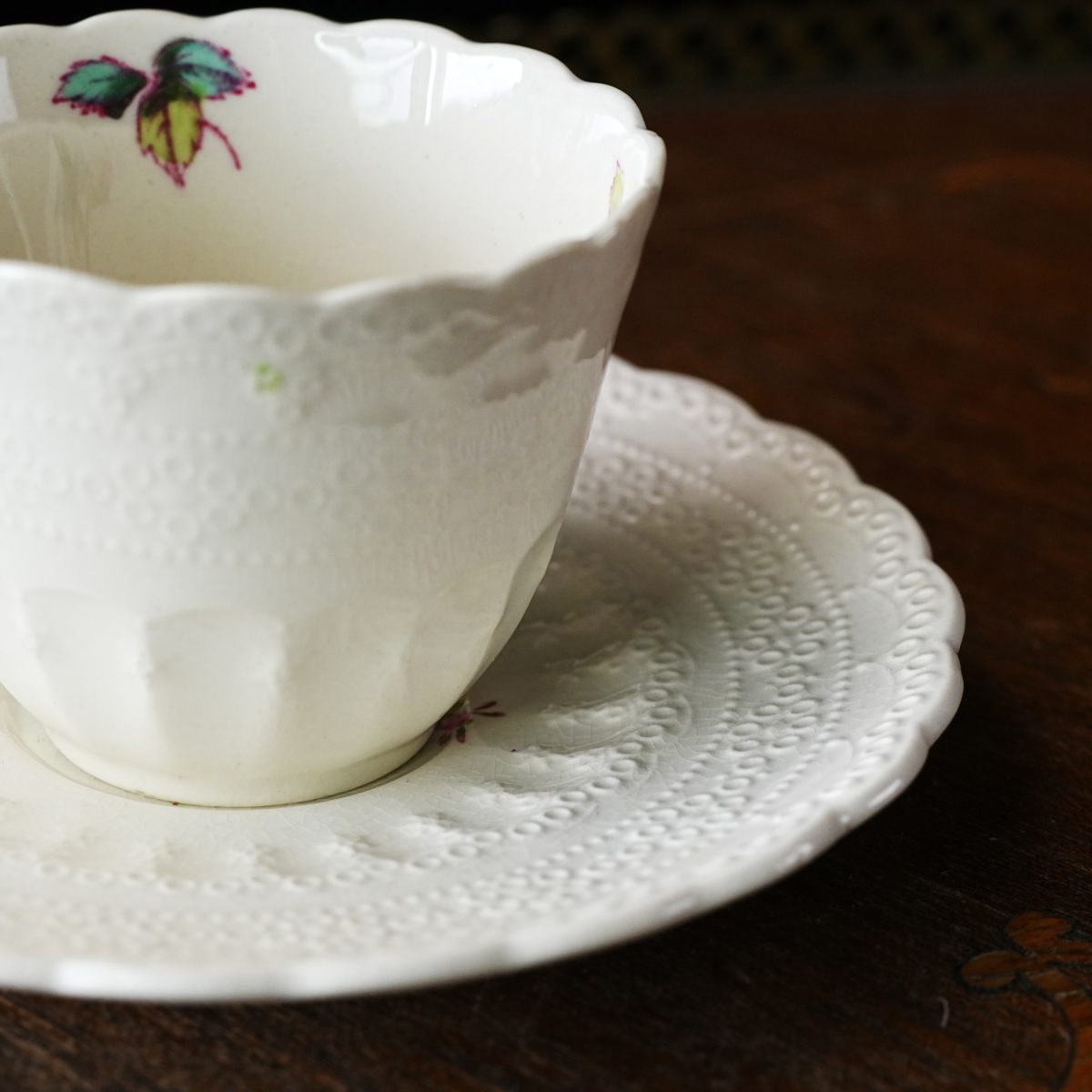
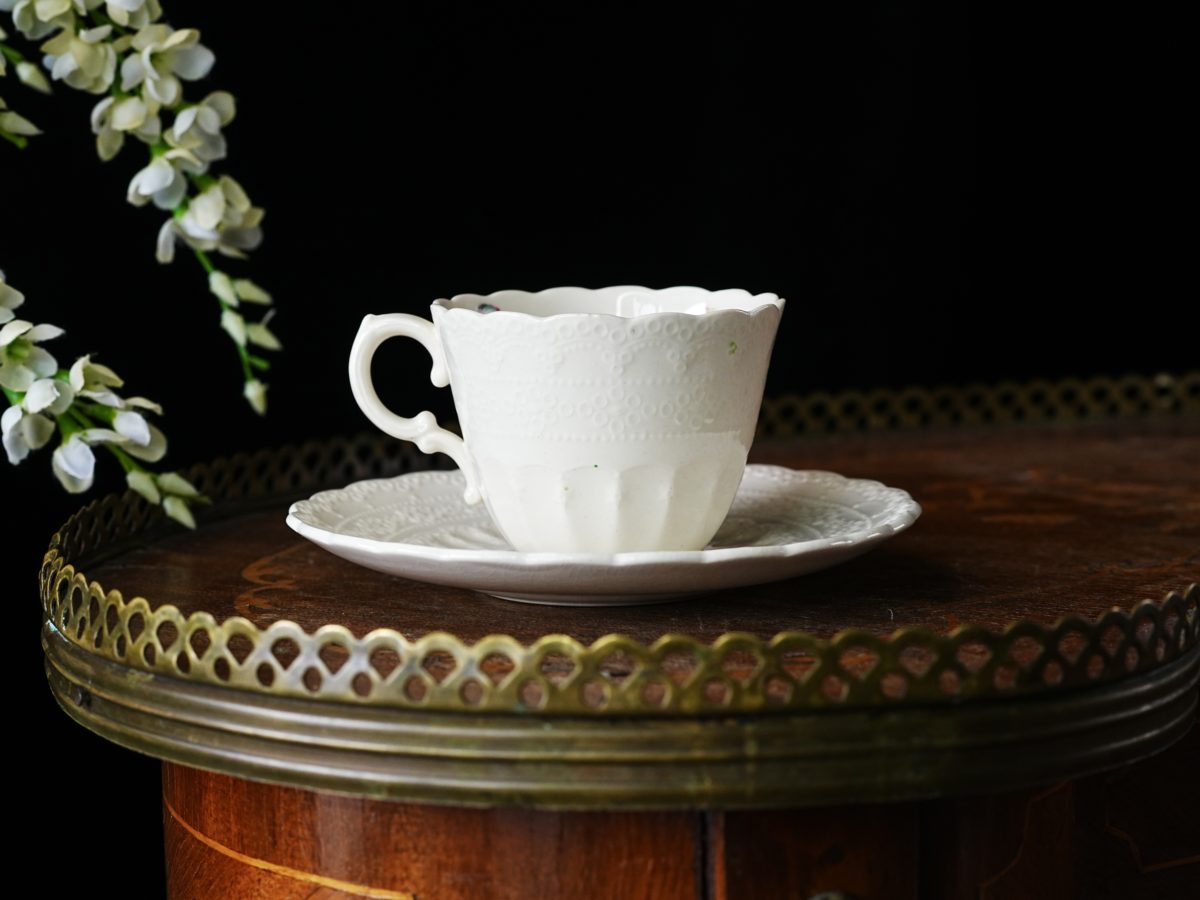
AvailableRun a fingertip across the surface and you'll feel it — hundreds of tiny embossed dots radiating in fans, arches, and scalloped waves across every inch of cup and saucer. This is Copeland Spode's patented Jewel body (U.S. Pat. 1926), a shape moulded to mimic the texture of antique lacework. The warm cream earthenware glows softer than white bone china, and in the right light the beadwork catches shadow like fine crochet.
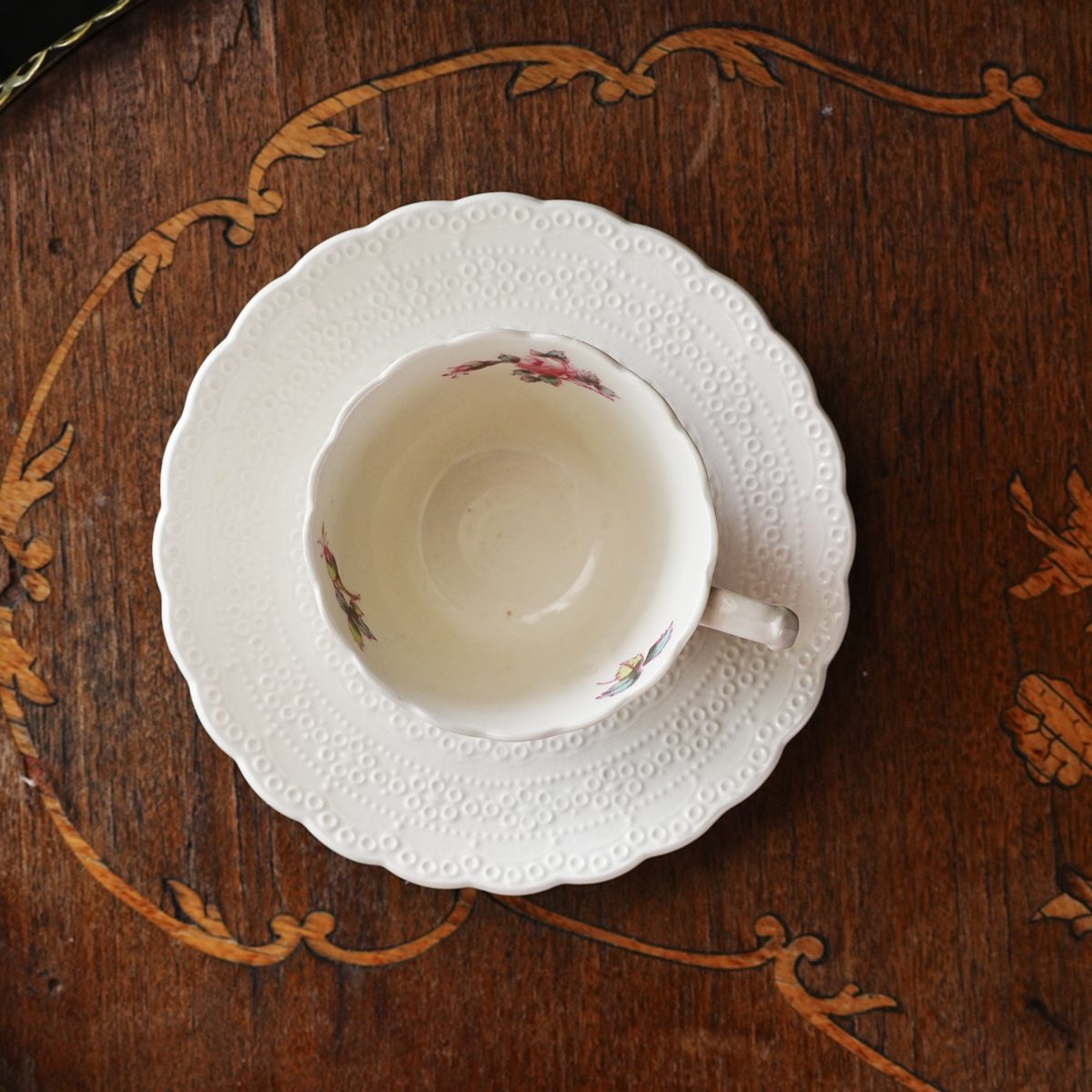
Tucked inside the cup, a ring of pink rosebuds and green leaves circles just below the rim — visible only when you lift the cup to drink or tilt it in your hand. The saucer carries a fuller bloom at its centre, framed by the same concentric beadwork. No gold anywhere — just texture, a few quiet roses, and a scalloped edge that follows the curve of each embossed arch.
Details
- Type
- Teacup and Saucer
- Maker
- Copeland Spode (W.T. Copeland & Sons)
- Origin
- England (Stoke-on-Trent, Staffordshire)
- Era
- Circa 1930s
- Pattern
- Jewel body with pink rose transfer
- Shape
- Wide cup with scalloped rim
- Size
- Saucer 4.5 in (11.4 cm) wide — smaller demitasse/coffee size
- Material
- Fine Earthenware (Spode's Jewel body)
- Decoration
- All-over embossed beadwork, pink rose transfers, scalloped edge
- Markings
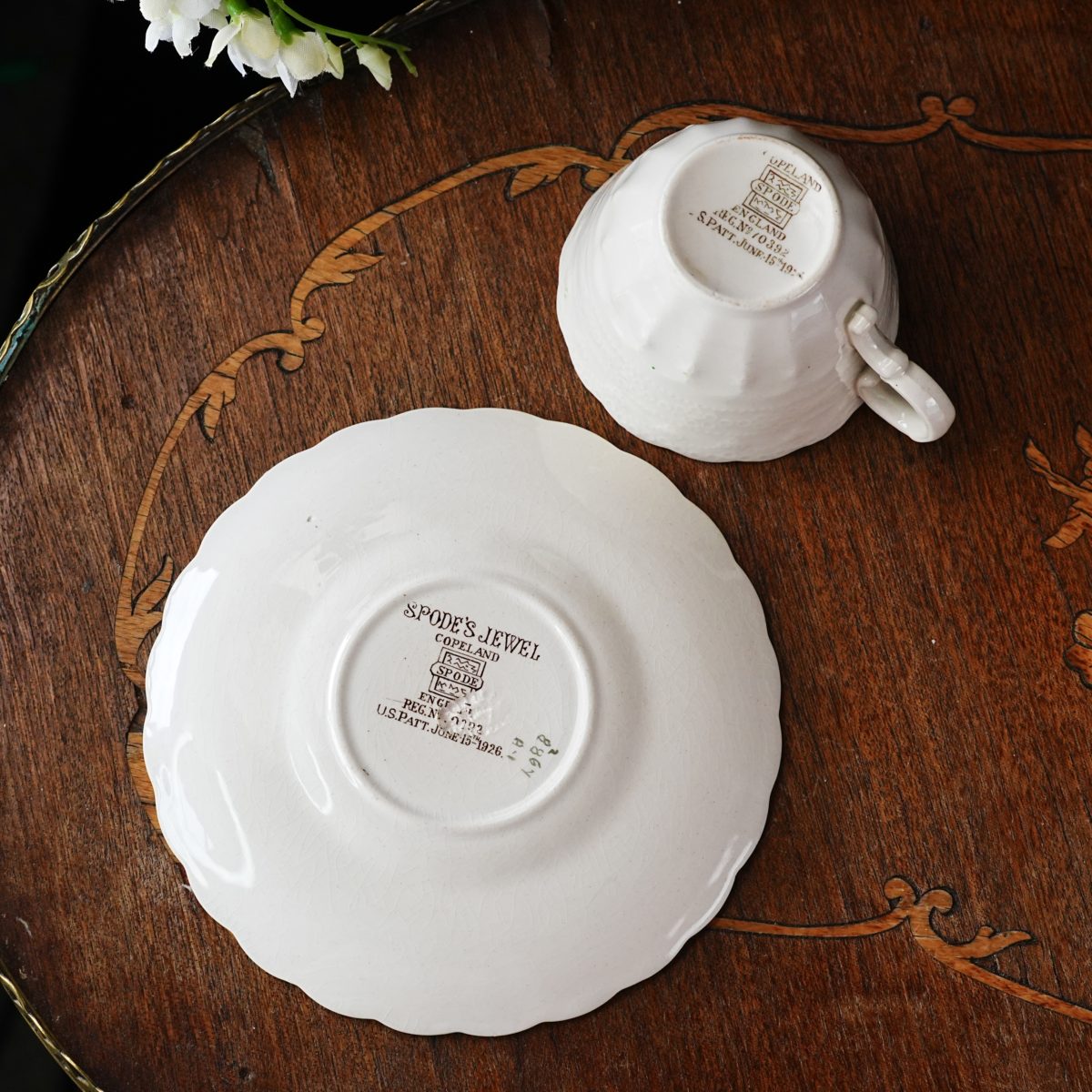
- "Spode's Jewel," Copeland Spode mark, "England," U.S. Pat. June 15, 1926, registration number
Backstamp & Pattern
- Maker
- Copeland Spode (W.T. Copeland & Sons)
- Pattern
- Jewel body with pink rose transfer
- Era
- Circa 1930s
- Mark on base
- "Spode's Jewel," Copeland Spode mark, "England," U.S. Pat. June 15, 1926, registration number
Copeland (Spode's successor) marks; the “Copeland” / “Copeland Spode” wording with “England” places it in the late 19th to 20th century.
Read the full backstamp & pattern guide →More in Demitasse & Coffee Cans
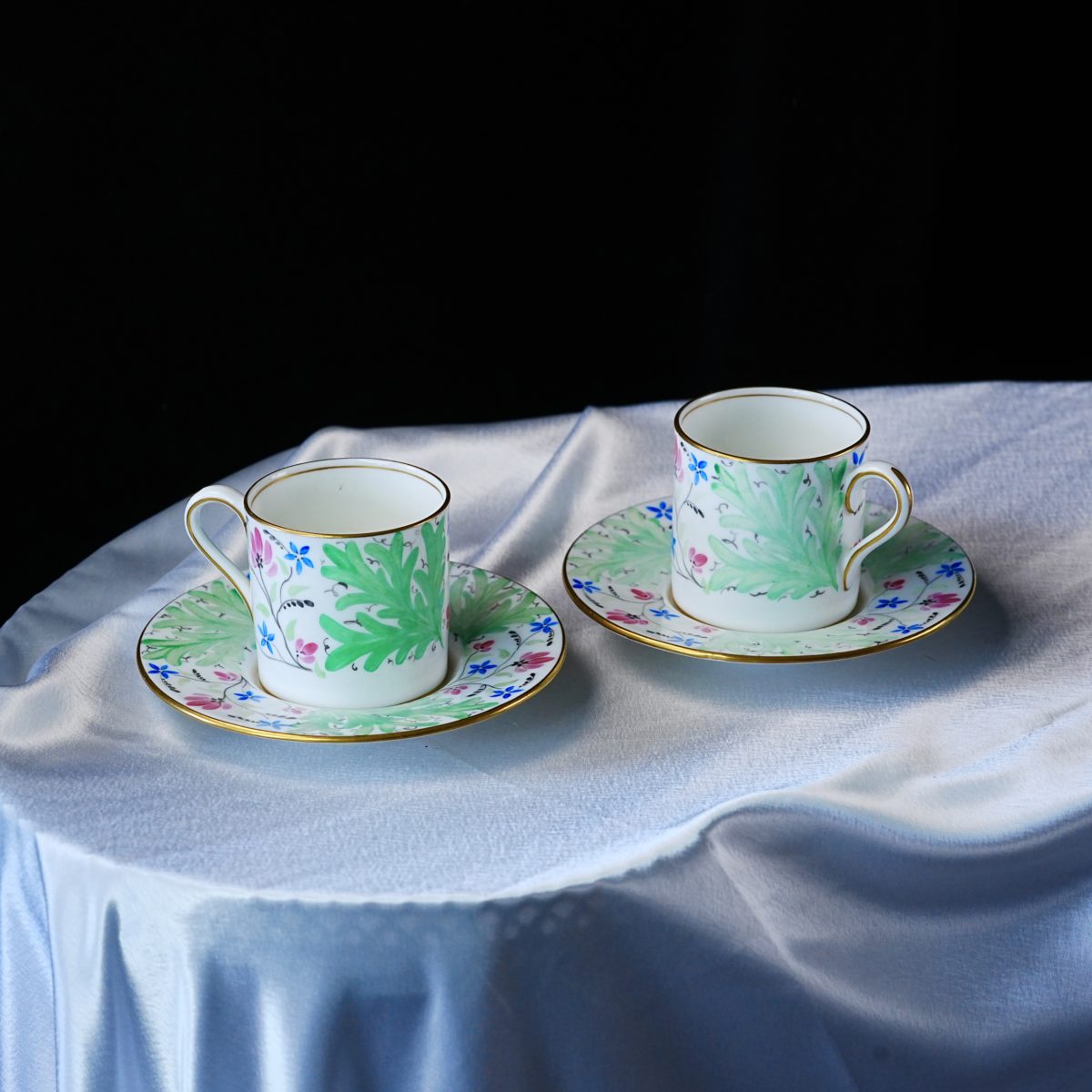
Vintage Wedgwood Hand-Painted Bone China Coffee Can Demitasse Pair
Antique Mintons for Birks Acid-Etched Gold Demitasse Cup & Saucer
Vintage George Jones Crescent Coffee Can and Saucer