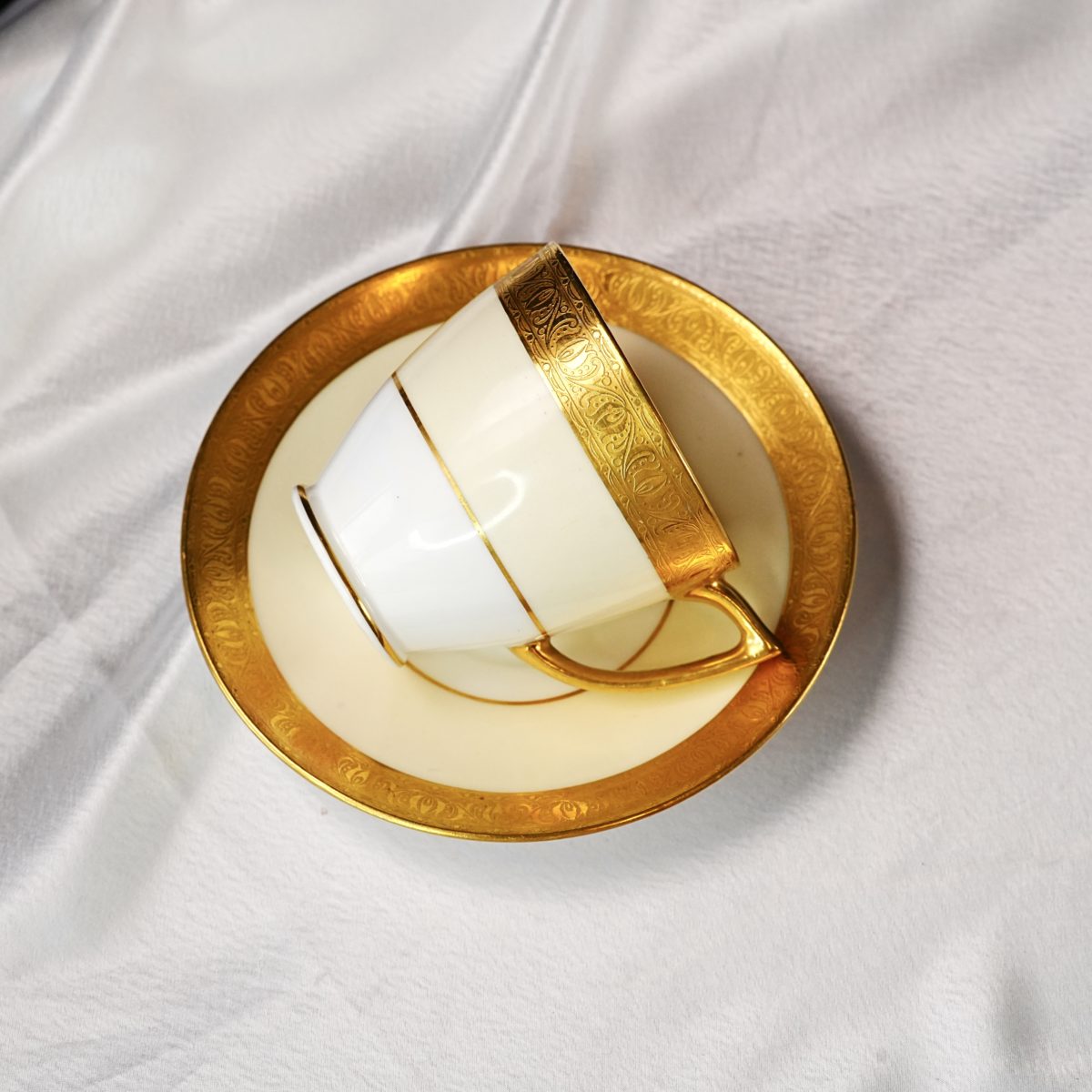
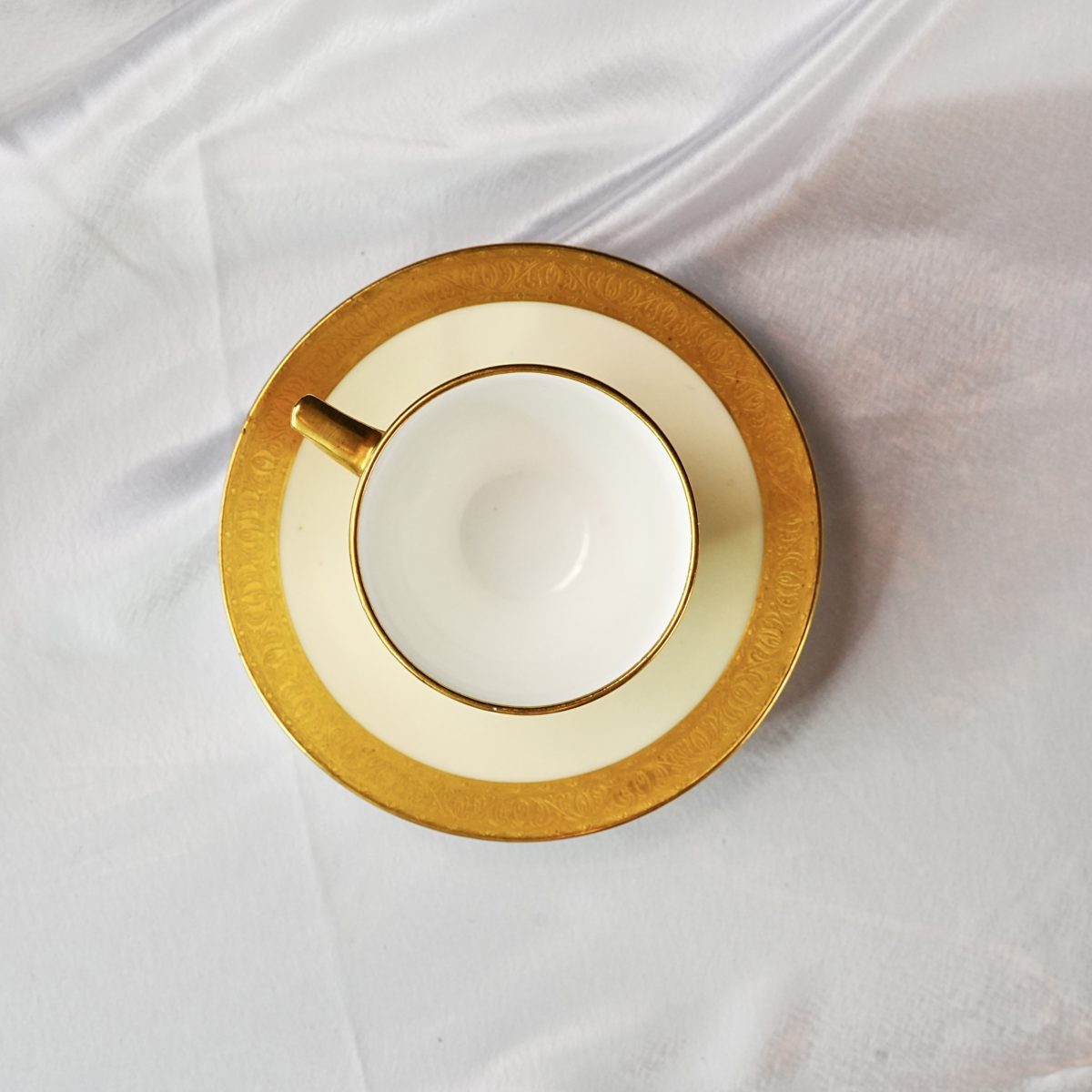
Antique Mintons for Birks Acid-Etched Gold Demitasse Cup & Saucer – Burnished Handle, Art Nouveau Cream Band, Bone China, England 1920s
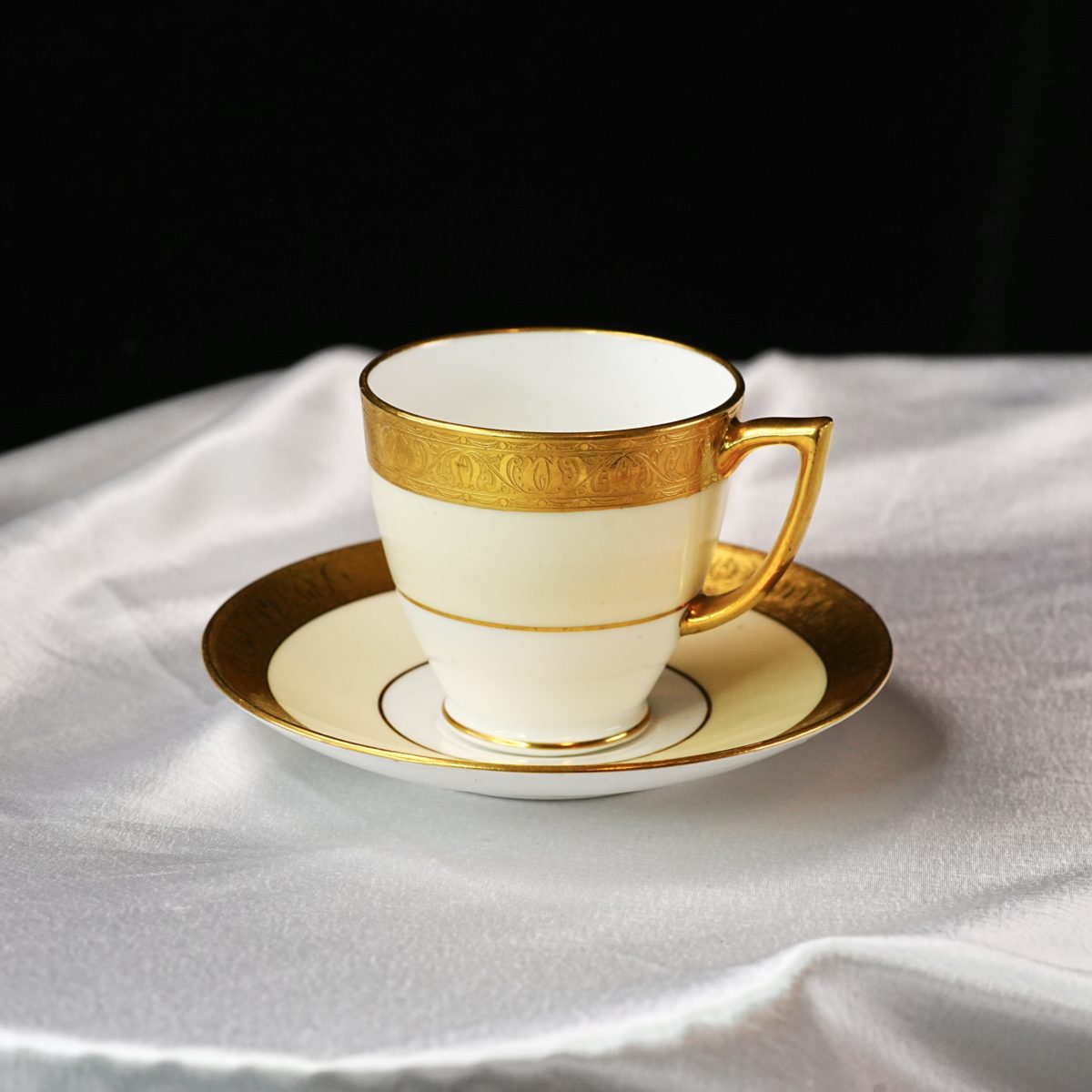
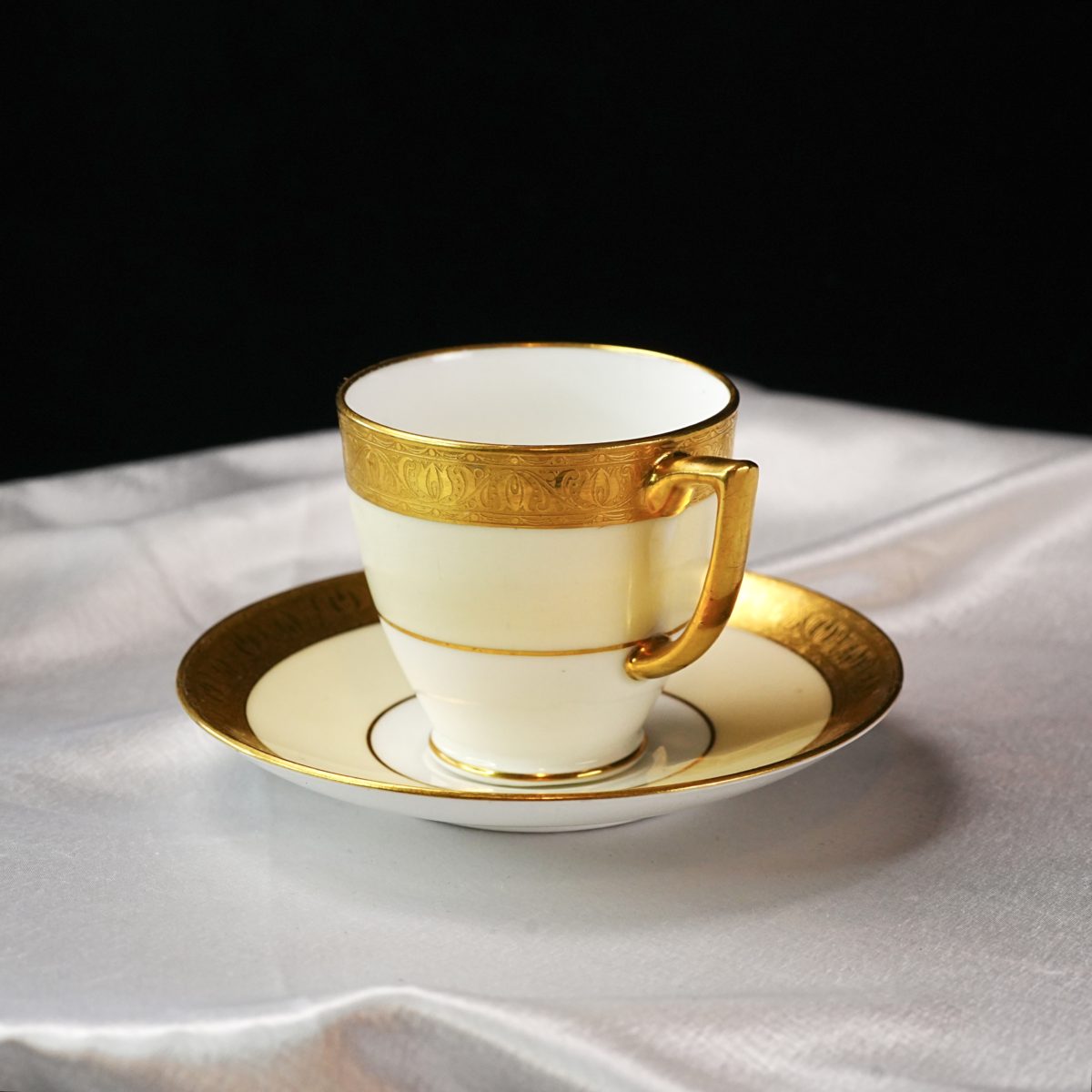
AvailableA Mintons demitasse for Birks of Montreal, with three distinct gold-work techniques layered on a single cup-and-saucer. The body is fired in pale cream-cream ground; a wide acid-etched gold encrusted band runs the cup rim and saucer rim — gold laid on thickly in liquid form, then chemically etched in deep relief to bring out Art Nouveau scrollwork, abstract tulips, and dot work that you can still feel with a fingertip. The angular handle and foot ring carry the second technique — burnished gold, hand-polished after firing with agate stone to a mirror finish that contrasts with the matte etched band. Fine liquid bright gold trim lines run around the cup body and double-band the saucer well. Three layered gold techniques on one small demitasse marks a Mintons piece as presentation china rather than ordinary stock.
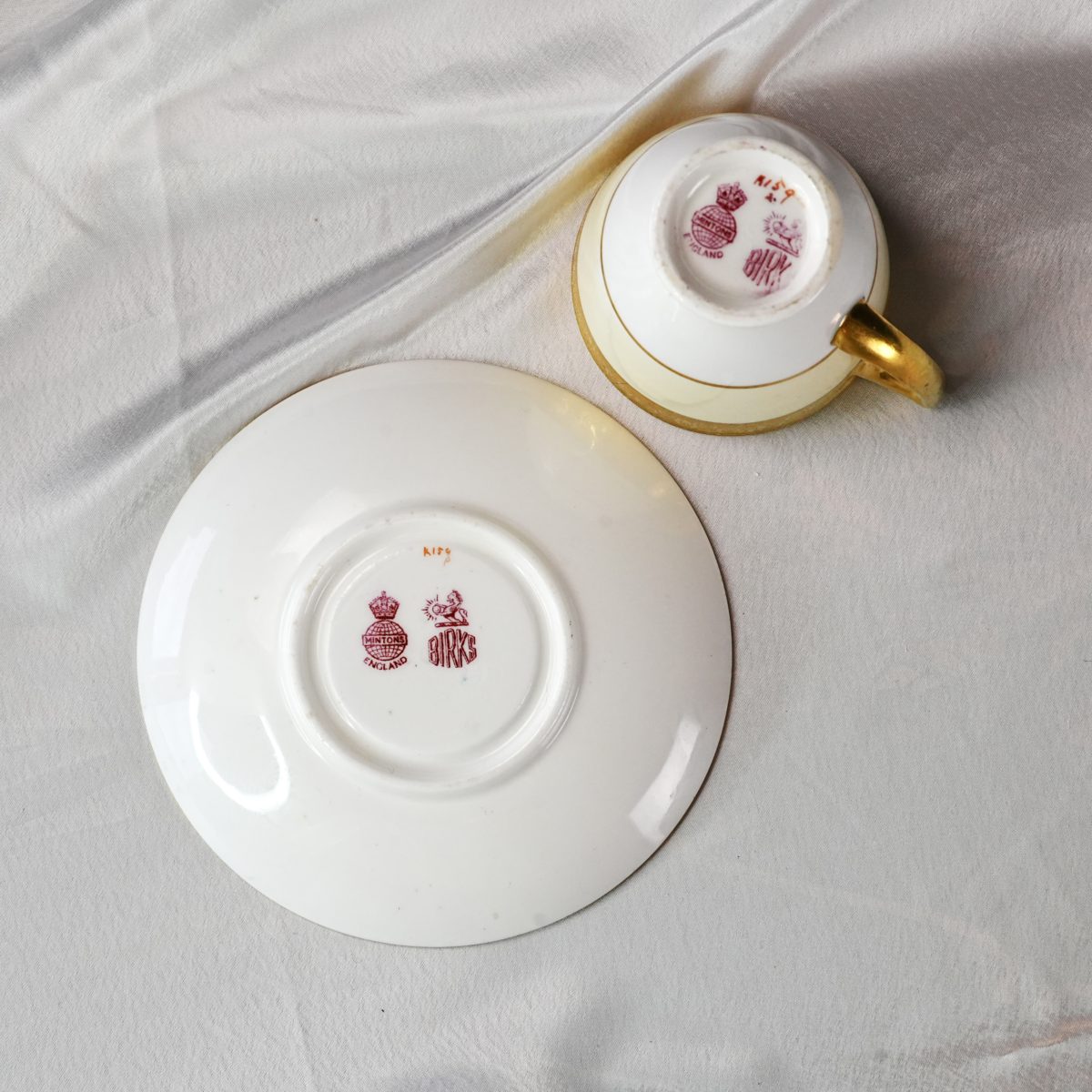
Mintons was founded in 1793 in Stoke-on-Trent, and by the late nineteenth century stood with Wedgwood and Royal Worcester as one of the three pinnacle English bone-china houses — distinguished above the other two for two specific techniques: pâte-sur-pâte (the white-on-coloured enamel work perfected by Marc-Louis Solon) and acid-etched gold encrusting, the technique on this piece. Mintons led the field on acid-etched gold; the rest of the industry followed. The technique was largely abandoned during WWII gold rationing and never rebuilt at scale — every surviving 1910s–30s Mintons acid-etched piece is finite supply now. The red Crown over Globe / MINTONS / ENGLAND mark on the base dates this piece to the narrow 1912–1950 window when that specific stamp was in use.
The second mark — Birks — is the Montreal jeweller (Henry Birks & Sons, est. 1879), the main Canadian distributor of high-end English bone china to the country's professional households through the early twentieth century. A double-marked Mintons / Birks piece was commissioned in from England rather than picked up off a shelf: a piece bought from Birks in the 1920s–30s for a Canadian dining room — the kind of provenance that places it above a plainly-marked Mintons of the same era.
A piece for the Mintons collector, for the Birks Canada nostalgic, for the demitasse / espresso-cup collector, for the Art Nouveau interior, for the old-money or grandmillennial aesthetic, or as a high-end wedding / anniversary / retirement gift.
Details
- Type
- Demitasse Cup & Saucer (After-Dinner Coffee)
- Maker
- Mintons, Stoke-on-Trent, England
- Retailer
- Birks (Henry Birks & Sons), Montreal, Canada
- Era
- Circa 1915–1930s (mark window 1912–1950)
- Pattern Number
- K159 (hand-painted in orange)
- Style
- Art Nouveau acid-etched gold encrusted band on cream ground
- Size
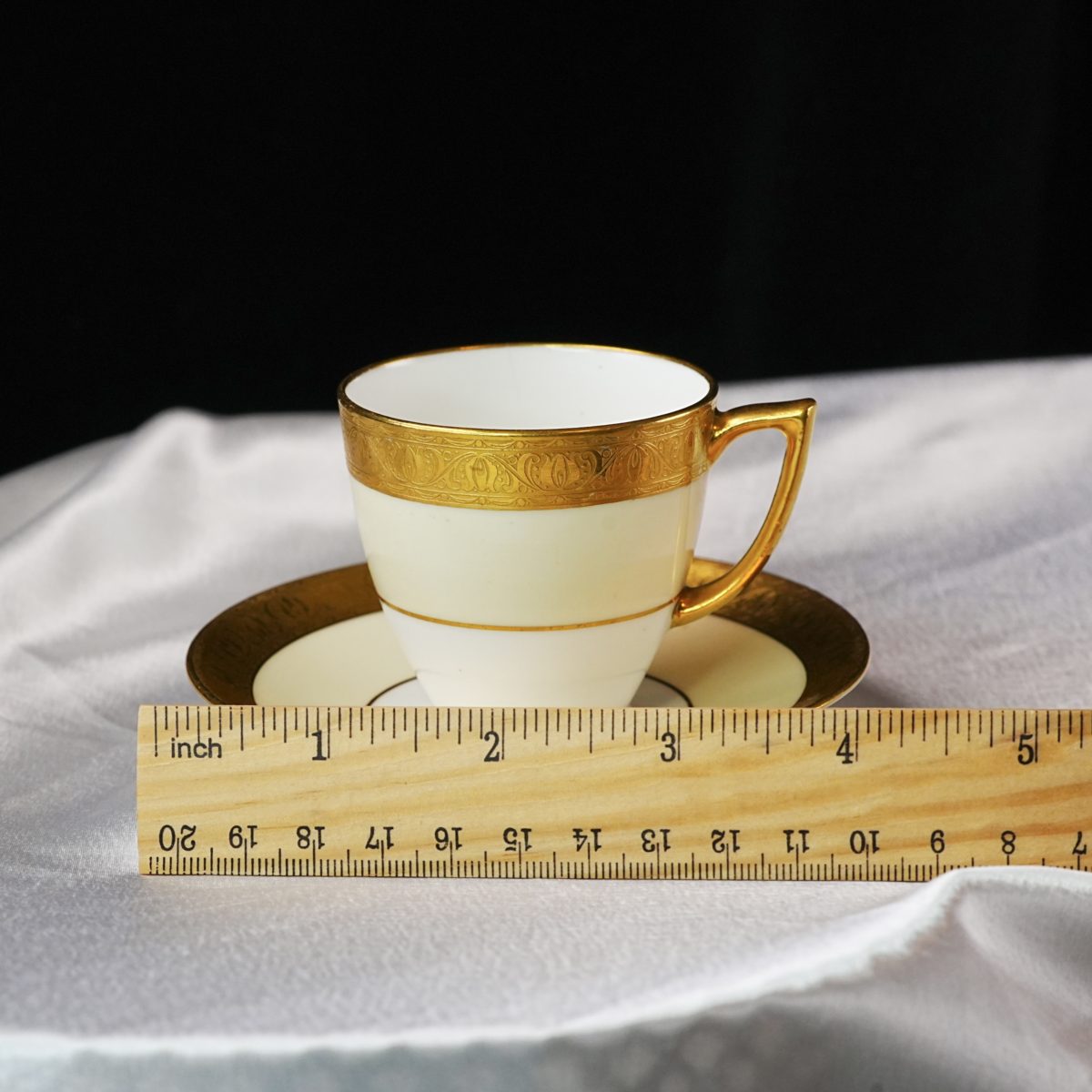
- Cup ~2.25" / 5.5 cm tall × 2.5" / 6 cm rim dia; Saucer ~4.5" / 11 cm dia
- Material
- Fine Bone China
- Decoration
- Three layered gold techniques — (1) wide acid-etched gold encrusted band with scrollwork + abstract tulips + dot work, (2) burnished gold on the angular handle, foot ring, and cup interior trim, (3) fine liquid bright gold trim lines on cup body and saucer well
- Markings
- Red Mintons crown-over-globe mark + Birks retailer mark on base of both pieces; hand-painted "K159" pattern number
Backstamp & Pattern
- Maker
- Mintons, Stoke-on-Trent, England
- Era
- Circa 1915–1930s (mark window 1912–1950)
- Mark on base
- Red Mintons crown-over-globe mark + Birks retailer mark on base of both pieces; hand-painted "K159" pattern number
Minton's globe mark, often with impressed date codes; “Bone China” and “Made in England” wording assist dating.
Read the full backstamp & pattern guide →More in Demitasse & Coffee Cans
Vintage Wedgwood Hand-Painted Bone China Coffee Can Demitasse Pair
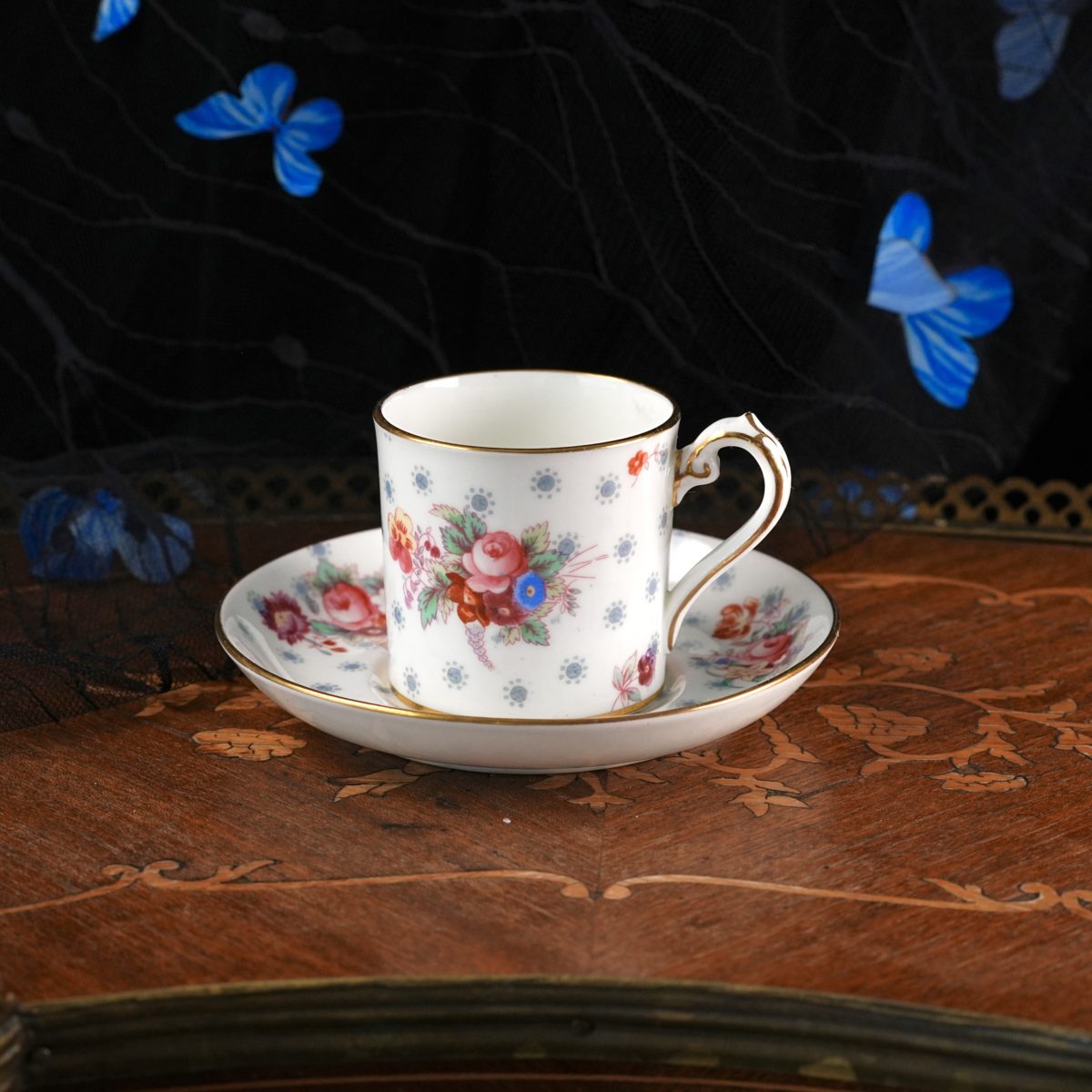
Vintage George Jones Crescent Coffee Can and Saucer
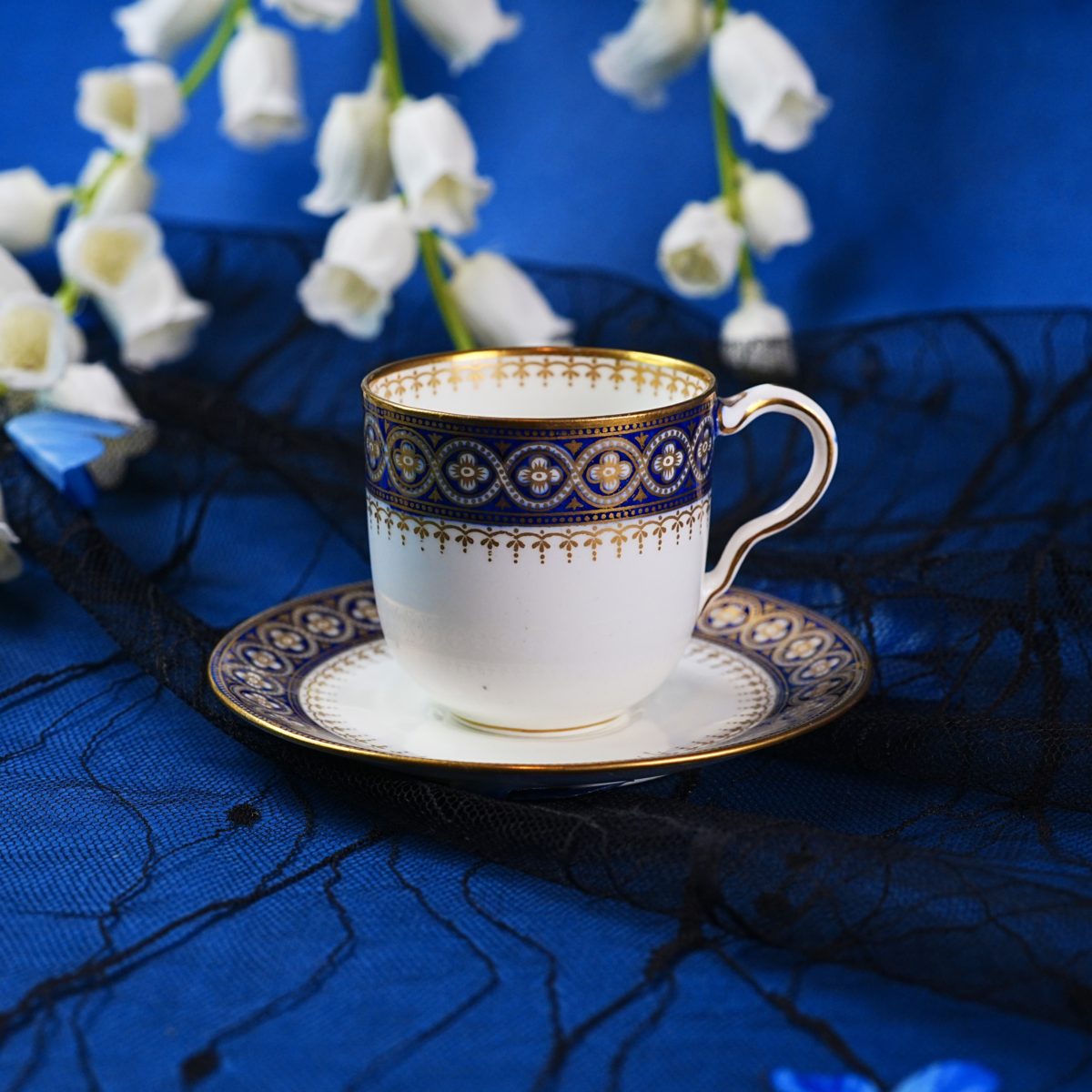
Vintage English Cobalt Blue & Gold Demitasse Cup & Saucer