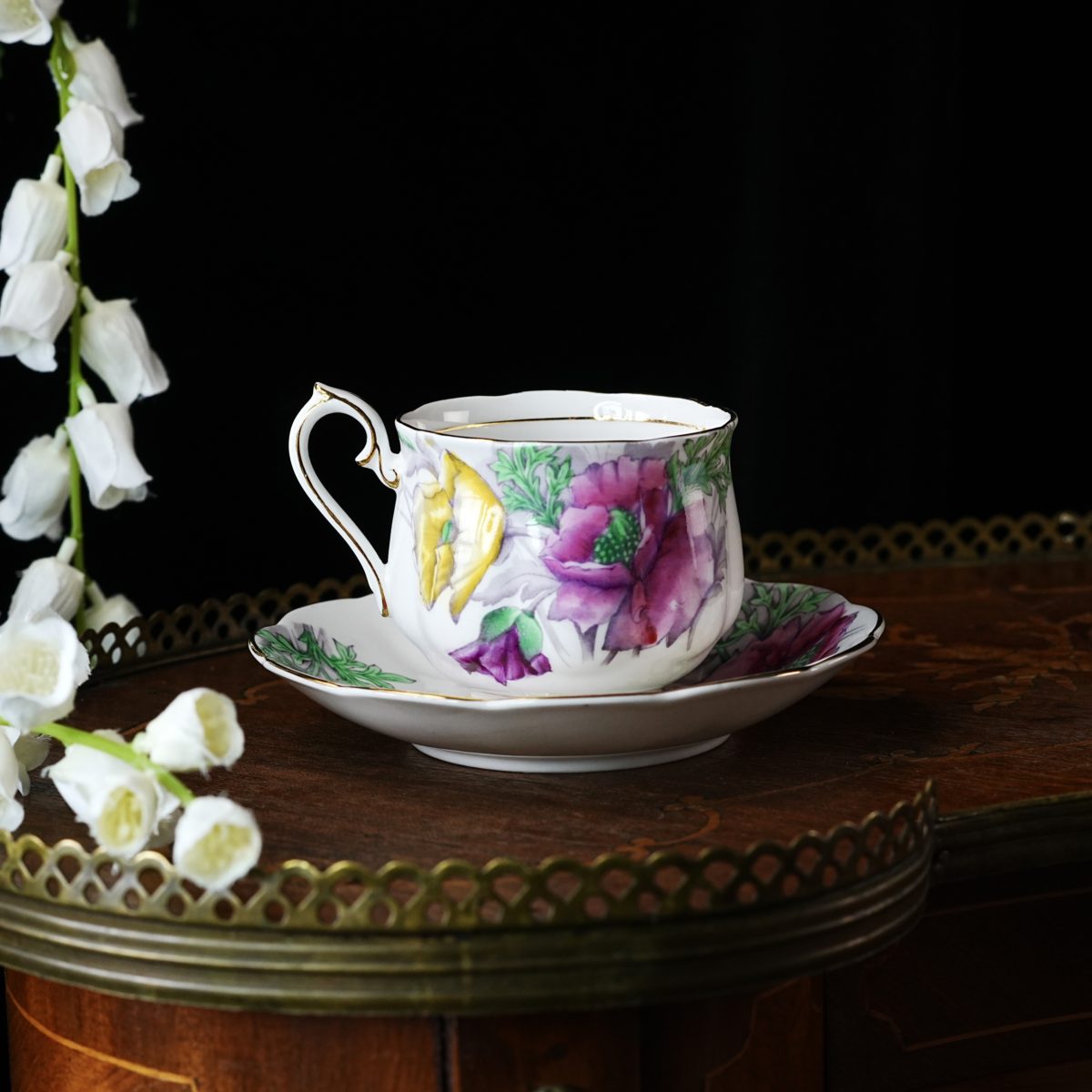
Vintage Royal Albert Flower Of The Month Series Poppy Teacup & Saucer – August No 8, Hand Painted, Bone China, England Cottagecore 1970s
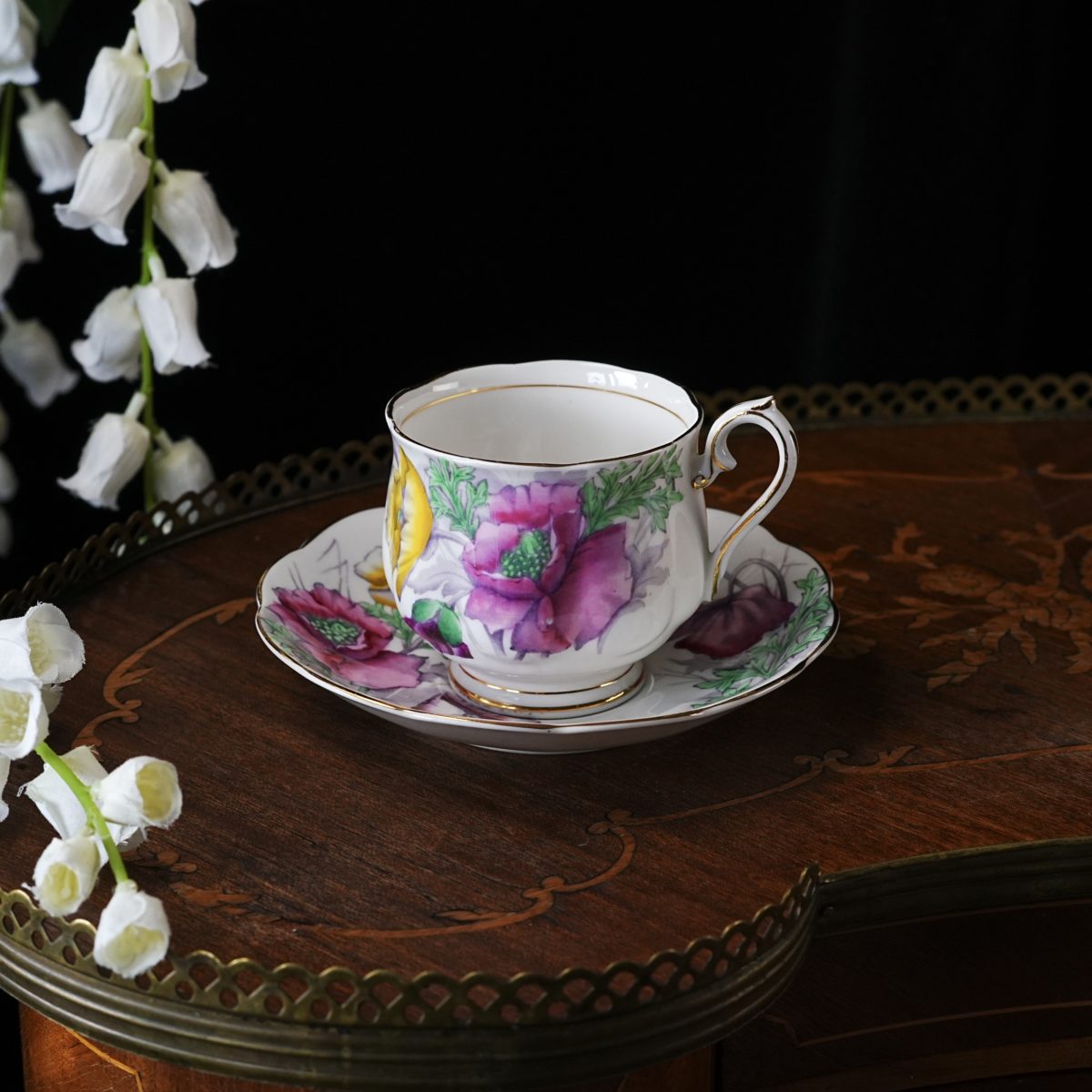
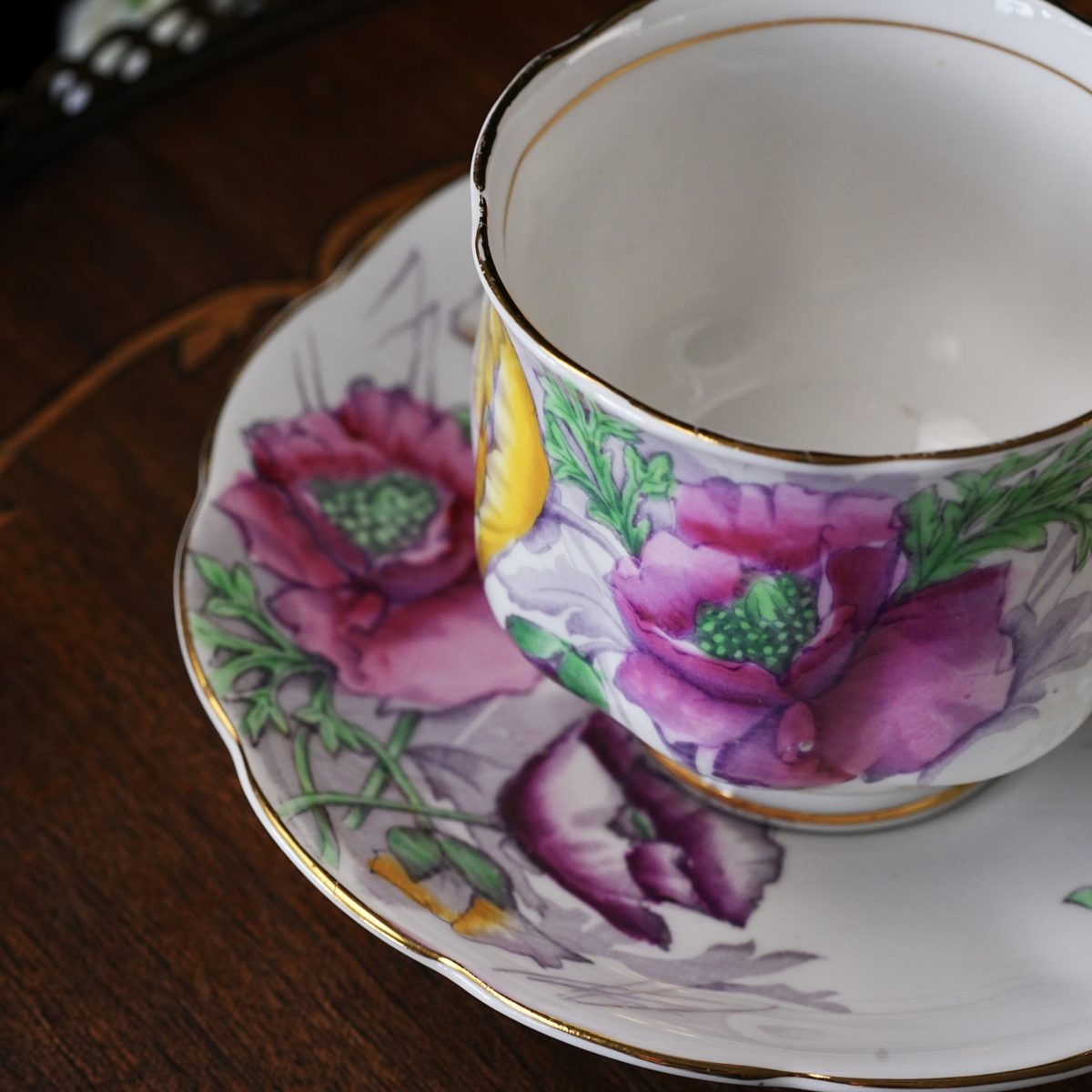
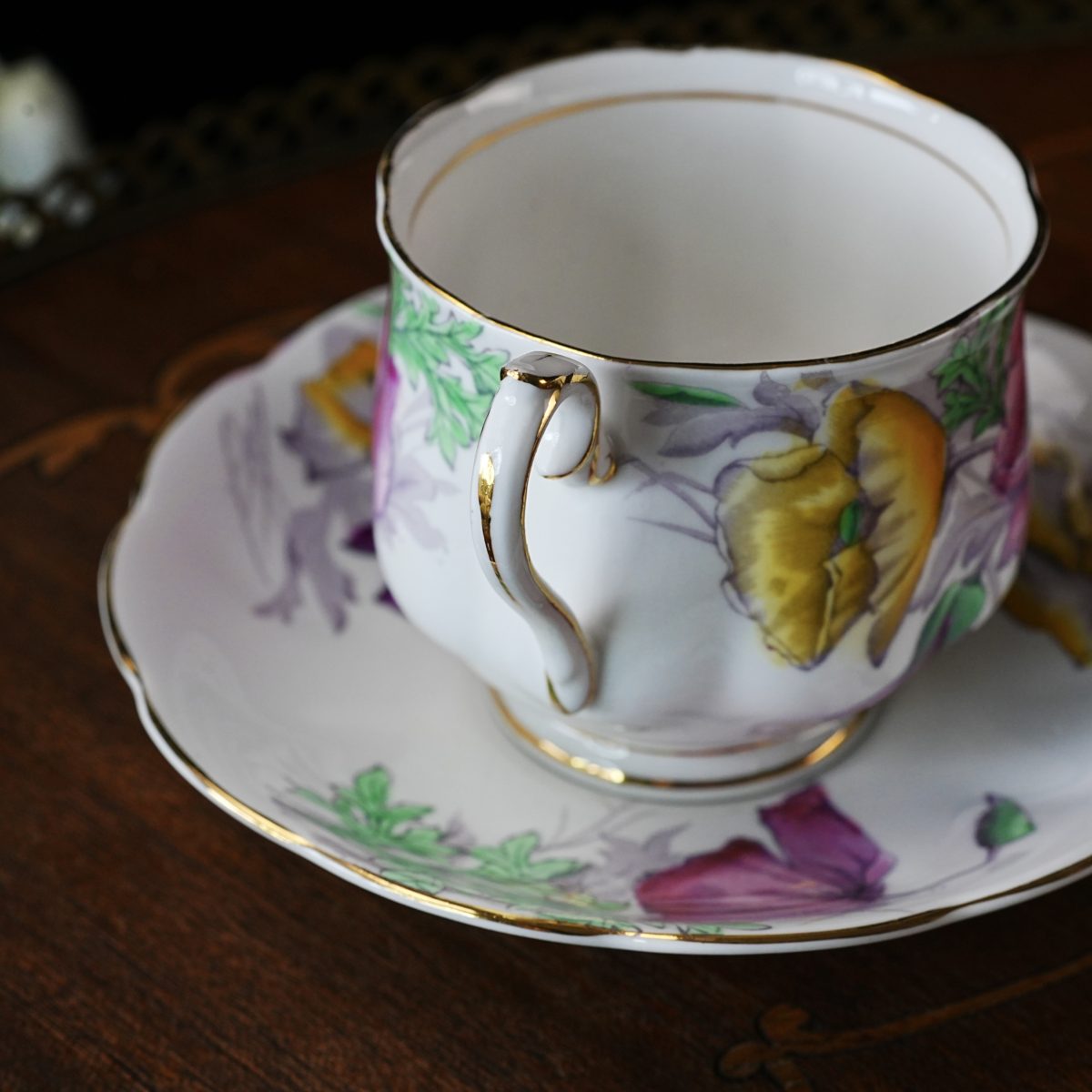
A Royal Albert teacup and saucer from the Flower of the Month Series — No. 8, August, Poppy — with the poppy painted across the cup body in deep magenta-pink, a small yellow Welsh poppy tucked beside it, and a slim pink bud rising from the stem. The leaves are the silvery sage-green of real poppy foliage rather than the brighter green most floral teacups settle for, and a single gilt line runs around the scalloped rim, foot, and handle.
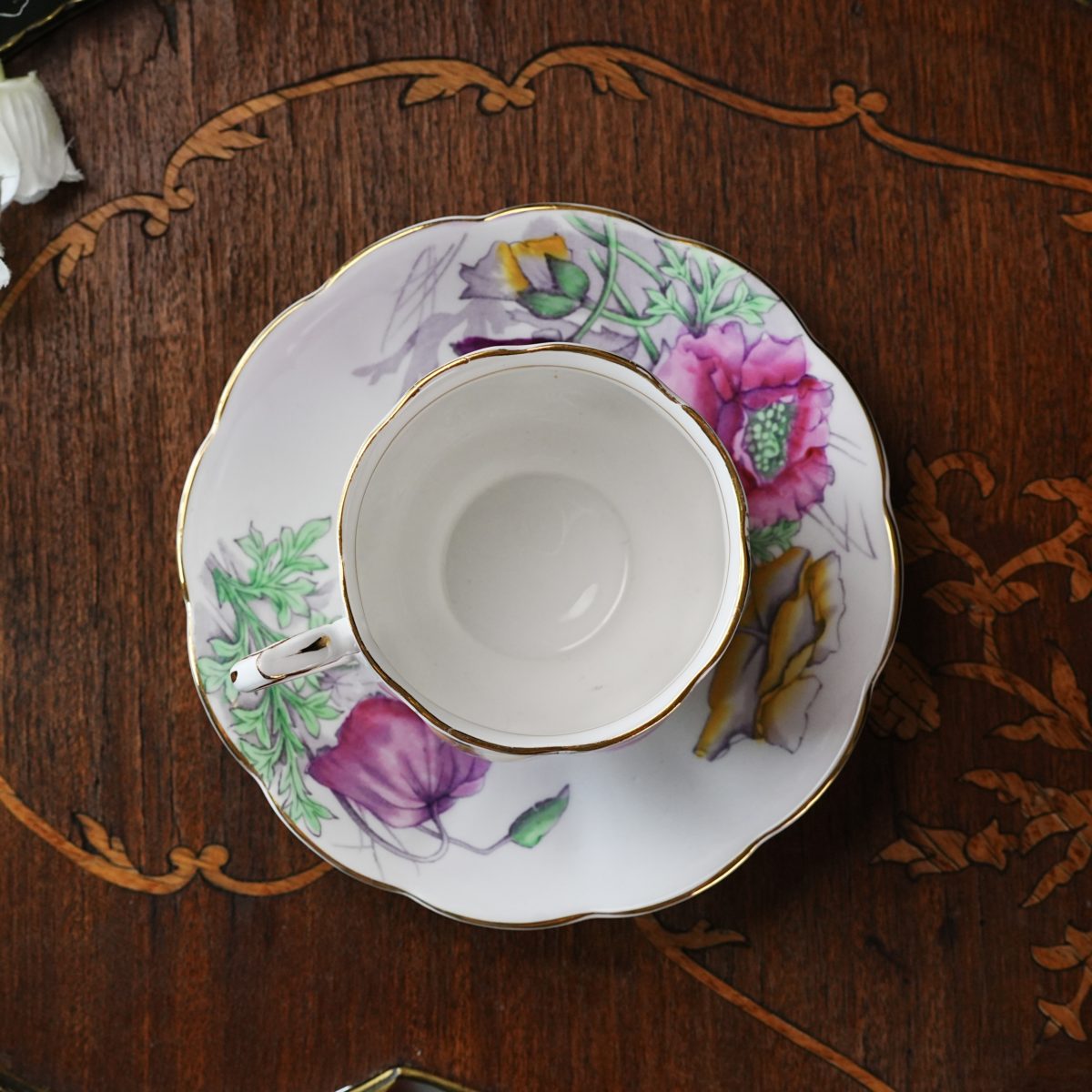
Lift the cup up and look at the largest poppy. Royal Albert called this series Hand Painted on the base for good reason — the petal is laid down first in transfer print, but the painter has come back over each petal with a deeper hand-mixed magenta along the inner crease and a paler lavender wash toward the outer edge, so the four petals catch light unevenly the way actual silk-textured poppy petals do rather than reading as a printed icon. The seedpod at the centre is built up in green-to-black gradient with individual tiny stamens, and the yellow Welsh poppy is shaded warm-yellow into the centre, cool-yellow at the petal tips — small painter's decisions that add up to a piece of botanical work rather than a stamped decoration. The saucer carries a different arrangement of the same flowers (not a mirror of the cup) — the painter has lain a darker poppy down at the lower left, a yellow Welsh poppy at the upper right, a single magenta bud at the centre, the foliage running between.
The base reads in full: Royal Albert crown stamp + Bone China / England / Flower of the Month Series / Set of Twelve / No. 8 / Hand Painted and the flower name Poppy marked in the small script below. The Flower of the Month Series runs January through December — Snowdrop, Violets, Daffodil, Sweet Pea, Lily of the Valley, Rose, Sweet William, Poppy, Aster, Cosmos, Chrysanthemum, Carnation — so collectors approach it either as a birth-month gift (this one is the August teacup) or as a twelve-cup collecting project, picking up the months one at a time. The Poppy is the August one; it sits in the middle of the collecting sequence, harder to find than the springtime months for collectors who build the set in order.
A cup-and-saucer for the Royal Albert Flower of the Month collector completing the set, for the August birthday / birth-month-flower gift (the poppy is the traditional August flower in English garden tradition), for the botanical / hand-painted floral cabinet, for the poppy-themed display, or as a Mother's Day / anniversary / cottagecore-tea-shelf gift.
Details
- Type
- Teacup & Saucer Set
- Maker
- Royal Albert, Longton, Stoke-on-Trent, England
- Series
- Flower of the Month Series — Set of Twelve — No. 8 — August — Poppy
- Era
- Circa 1970s–1990s
- Decoration
- Hand-painted (transfer print + hand-tinted highlights) — magenta-pink Oriental poppy + yellow Welsh poppy + pink bud + silver-sage foliage on white bone china; 22K gilt rim, handle, and foot
- Shape
- Royal Albert standard Crocus shape — rounded body, flared rim, scrolled handle, pedestal foot, scalloped saucer
- Size
- Cup ~3.25" / 8.5 cm dia × 2.75" / 7 cm tall; Saucer ~5.5" / 14 cm dia
- Material
- Fine Bone China
- Markings
- Royal Albert crown stamp + Bone China / England / Flower of the Month Series / Set of Twelve / No. 8 / Hand Painted / Poppy on base of both pieces
Condition
Excellent vintage condition. Poppy painting vivid; hand-tinted shading intact across petals, foliage, and saucer; gilt rim, handle, and foot bright with no rub-through. No chips, cracks, hairlines, or crazing. Please review all photos as part of the condition record.
Backstamp & Pattern
- Maker
- Royal Albert, Longton, Stoke-on-Trent, England
- Era
- Circa 1970s–1990s
- Mark on base
- Royal Albert crown stamp + Bone China / England / Flower of the Month Series / Set of Twelve / No. 8 / Hand Painted / Poppy on base of both pieces
A crown over “Royal Albert” with “Bone China England”; “Made in England” and a named pattern generally indicate a mid-20th-century or later date.
Read the full backstamp & pattern guide →