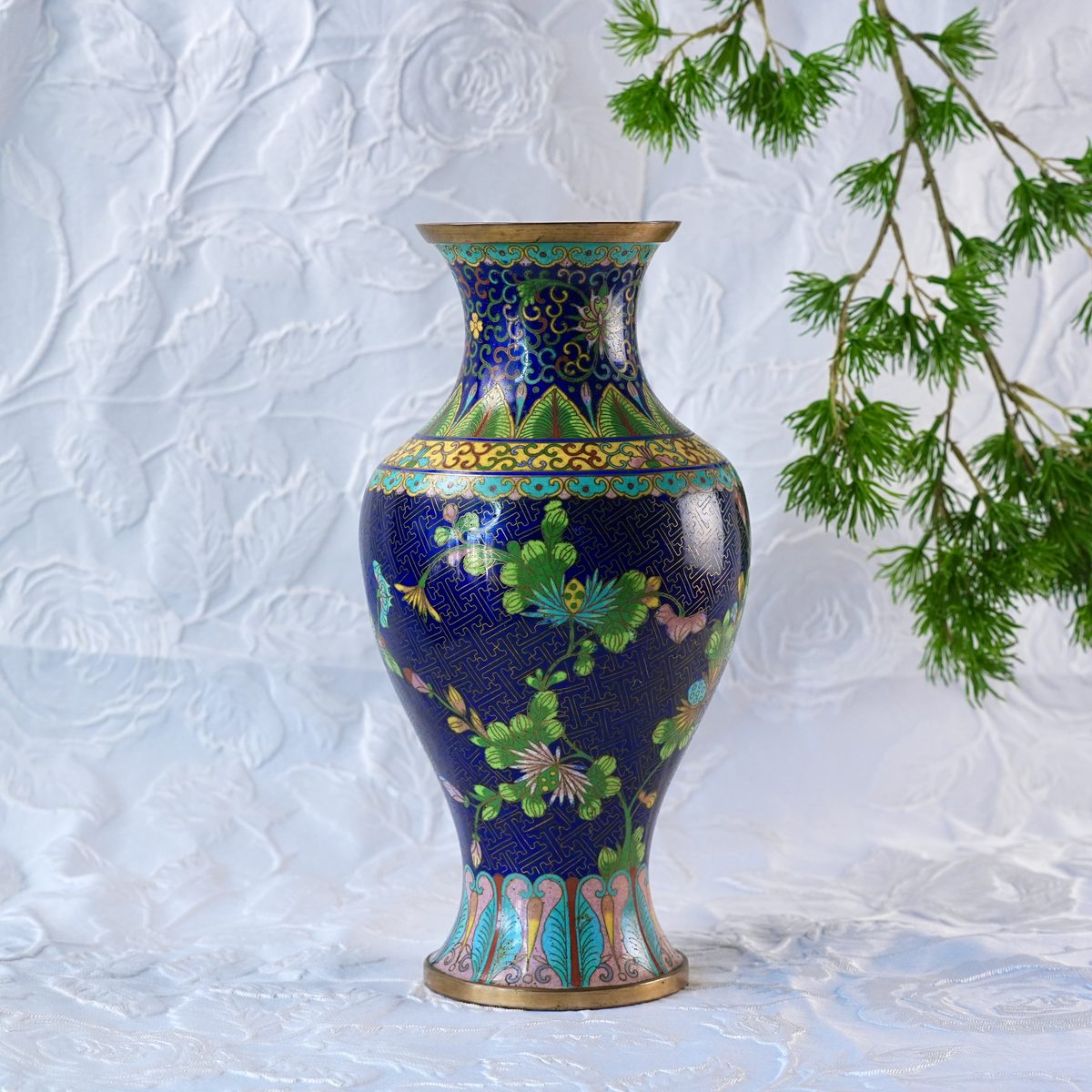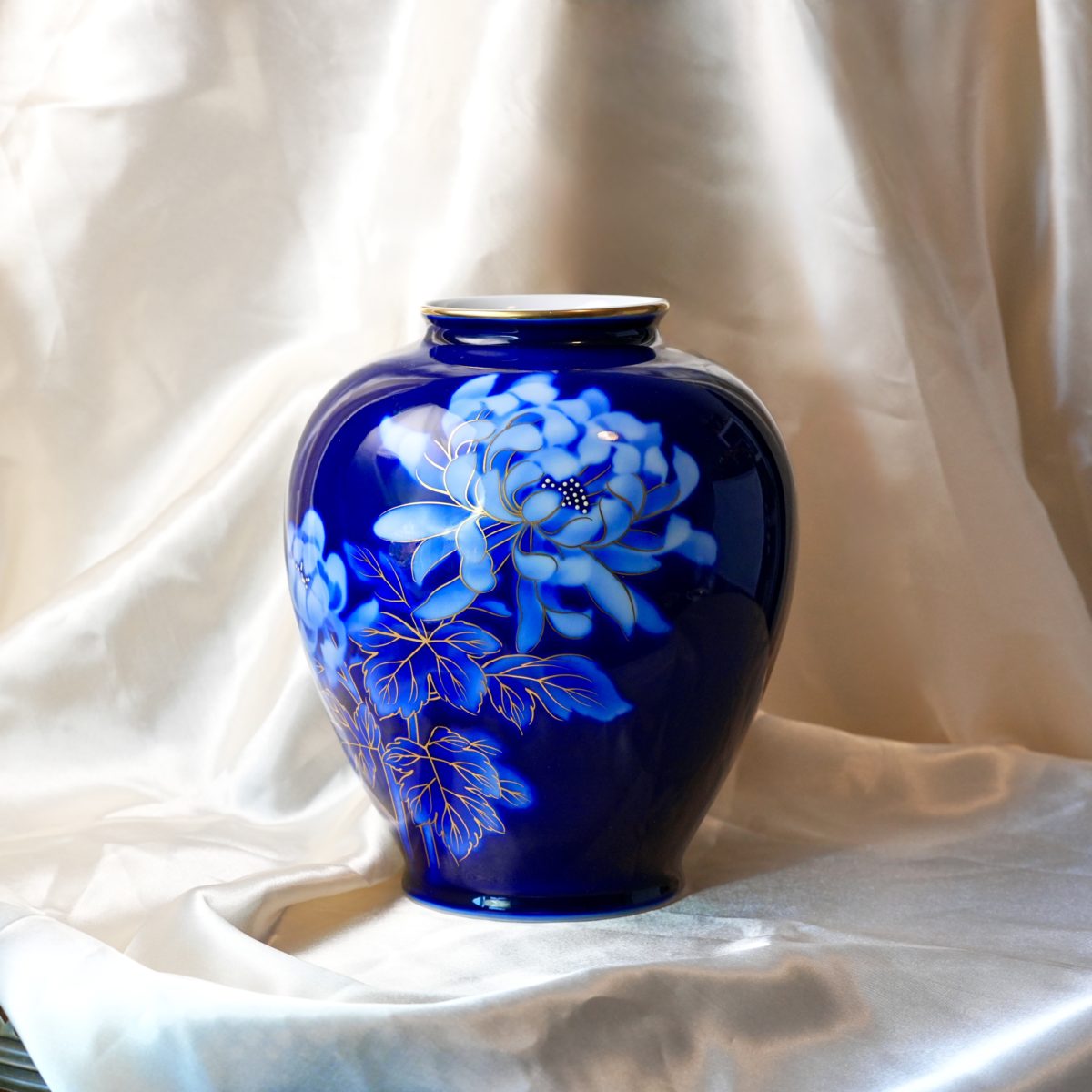
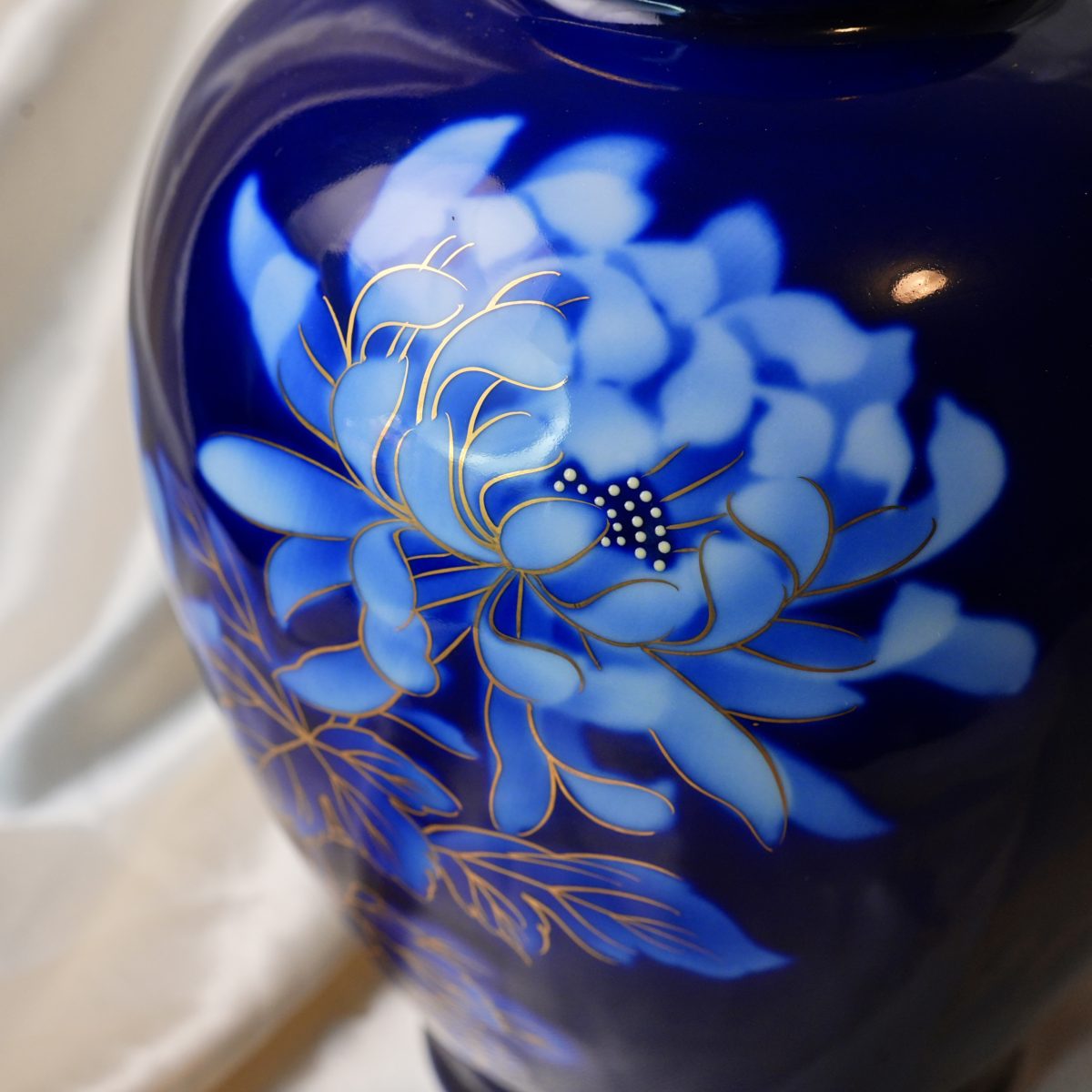
Vintage Fukagawa Cobalt Blue Porcelain Vase – Hand Painted Peony, Gold Leaf Veins, Gilt Rim, Ruri Glaze, Signed Arita Japan, 1950s–1970s
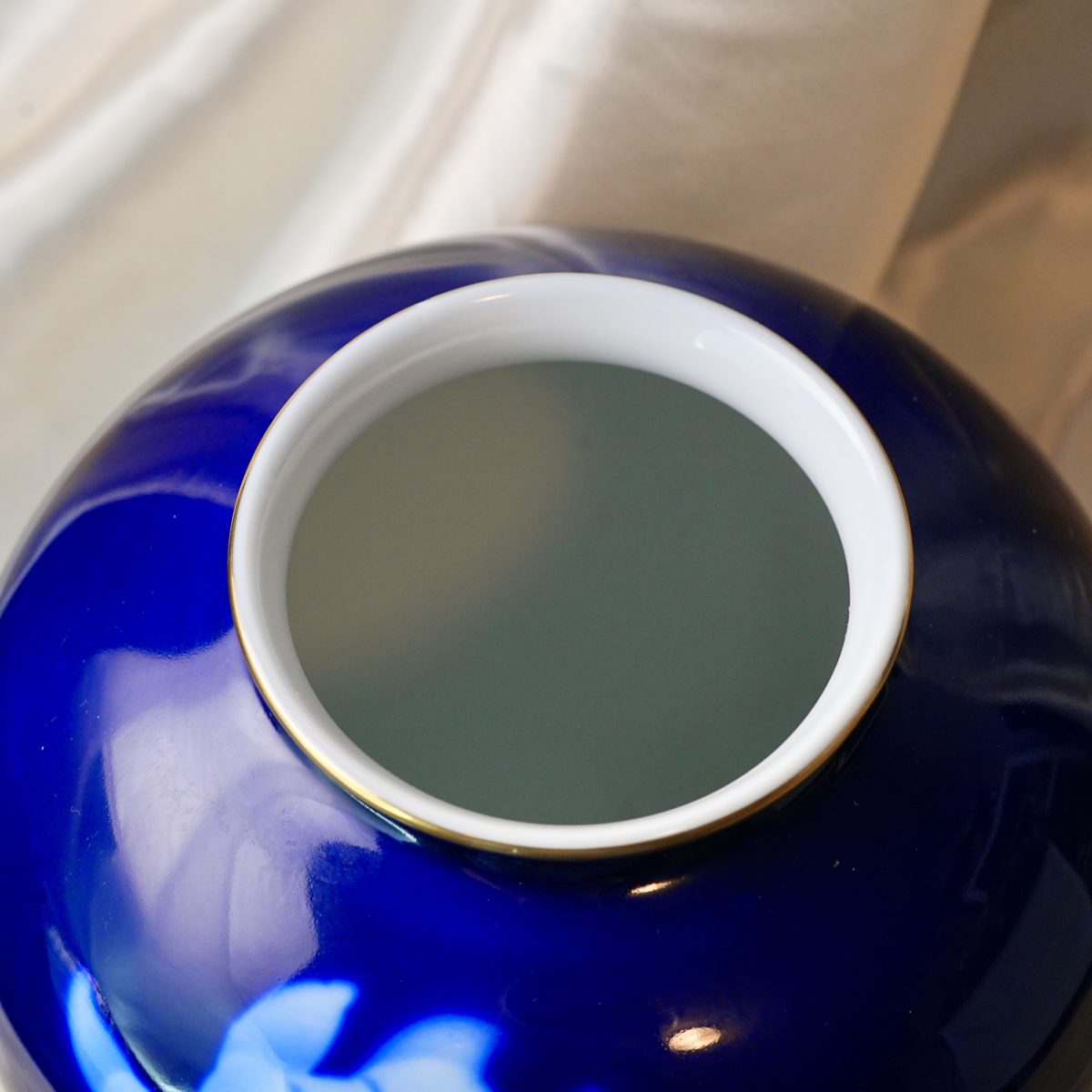
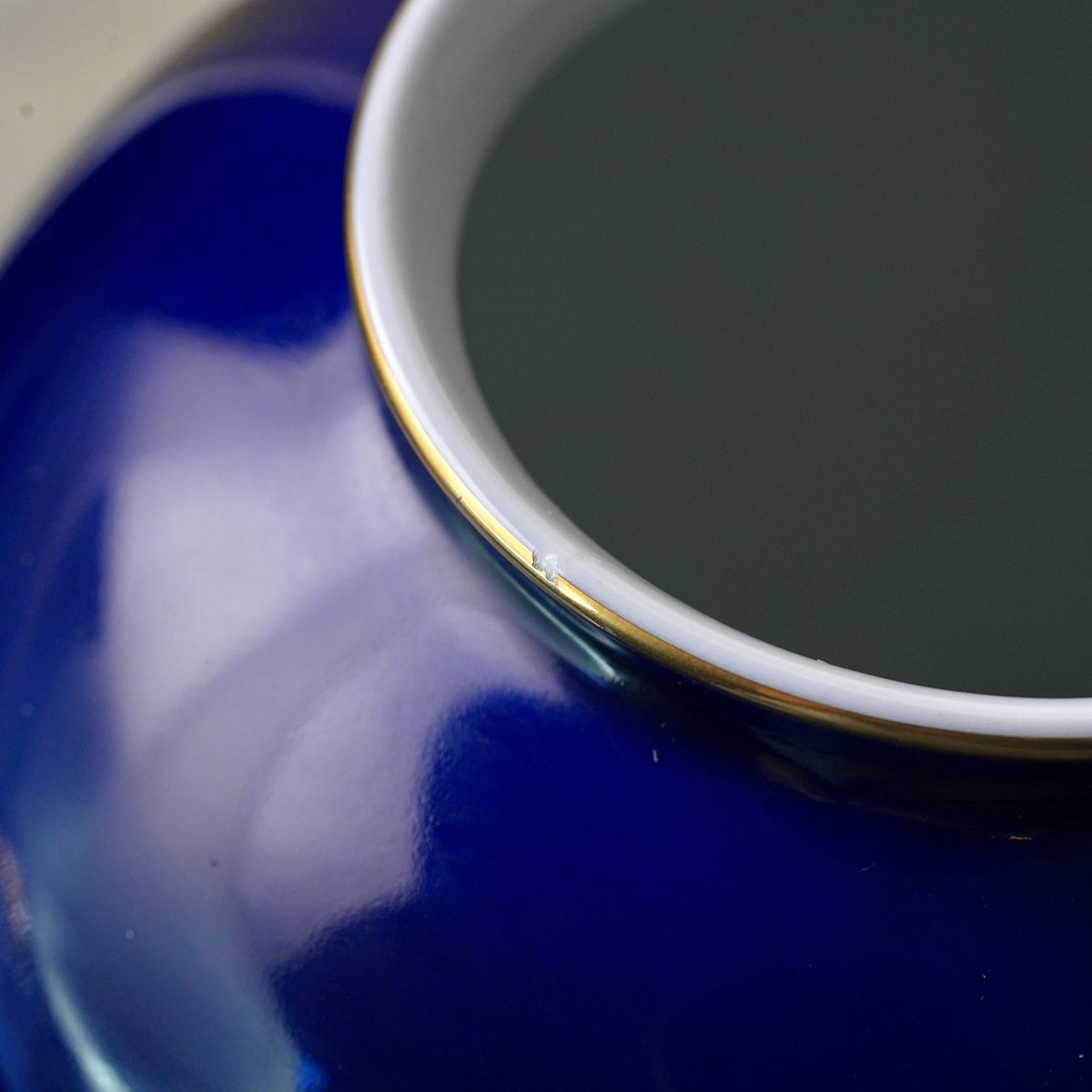
AvailableA deep cobalt vase from Fukagawa of Arita — one of the great names in Japanese porcelain, and a purveyor to the Imperial Household since 1910. Against the glassy blue ground a spray of peonies is painted blue on blue: paler cobalt shading the petals over the darker field, the leaves and outlines drawn in fine gold, a gilt line at the rim. That deep, even lapis glaze is Fukagawa's signature — fuka-ruri — and the tonal blue-on-blue peony is the hardest and most characteristic thing they did.
The base carries the underglaze Fukagawa mark — the character 深 (fuka) and the firm's little Mount-Fuji device, partly obscured by old label residue — together with a "Made in Japan" foil label. That label is worth reading honestly: Japanese export porcelain marked Nippon dates to 1891–1921, while Made in Japan foil stickers belong to the post-war Shōwa years. So this is a mid-century Fukagawa (c. 1950s–1970s), not a Meiji antique — the same celebrated house and glaze, from a later era, priced as such.
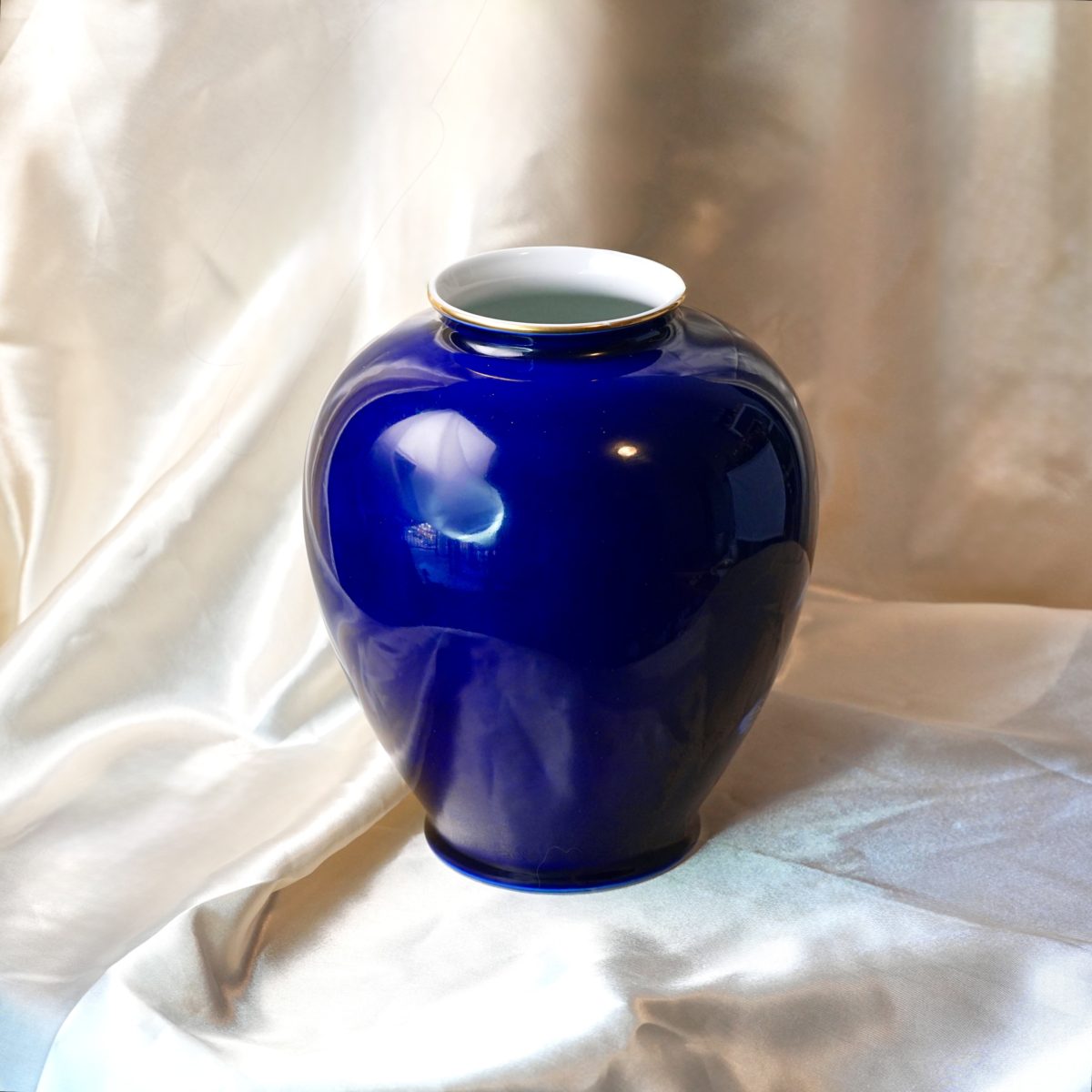
A baluster jar form, about 8 inches, decorated on one face with the plain cobalt reverse turned to the wall — the usual way these were meant to stand.
Details
- Type
- Porcelain vase
- Maker
- Fukagawa (深川), Arita, Japan
- Era
- c. 1950s–1970s, Shōwa (Made in Japan foil label)
- Pattern
- Tonal blue-on-blue peony with gold outlines on deep cobalt (fuka-ruri) ground
- Shape
- Baluster / ginger-jar form, gilt rim
- Size
- ~8" / 21 cm tall (measured against rule)
- Material
- Porcelain, underglaze cobalt with gilding
- Markings
- Underglaze Fukagawa mark (深 + Mt-Fuji device, partly obscured by old label residue); "Made in Japan" foil label
Backstamp & Pattern
- Maker
- Fukagawa (深川), Arita, Japan
- Pattern
- Tonal blue-on-blue peony with gold outlines on deep cobalt (fuka-ruri) ground
- Era
- c. 1950s–1970s, Shōwa (Made in Japan foil label)
- Mark on base
- Underglaze Fukagawa mark (深 + Mt-Fuji device, partly obscured by old label residue); "Made in Japan" foil label
The base carries the maker's printed mark; the wording — especially “England” versus “Made in England” versus “Bone China” — together with any pattern or registration number are the main clues to its age.
Read the full backstamp & pattern guide →